You book a salon appointment and say you want to go a few shades lighter. Your colorist asks what level you are. You have no idea what level means. Ten minutes of vague gesturing later, you both agree on something and hope for the best. Hair color names solve exactly this problem, but only if both sides are using the same vocabulary.
Professional hair color naming works across two parallel systems that rarely translate into each other without friction. The first is the level system, a number from 1 to 10 that measures depth from darkest black to lightest platinum. The second is the descriptive vocabulary used in beauty marketing and everyday conversation: chestnut, auburn, honey blonde, ash brown. The color name finder handles a similar kind of gap in digital design, matching any hex code to its closest CSS named color. In hair, the distance between technical and descriptive naming causes most miscommunication between clients and colorists.
Understanding both systems makes conversations about hair color far more precise, whether you are booking a salon appointment, writing a character description, or building a reference palette for a portrait illustration.
How the Professional Hair Color Level System Works
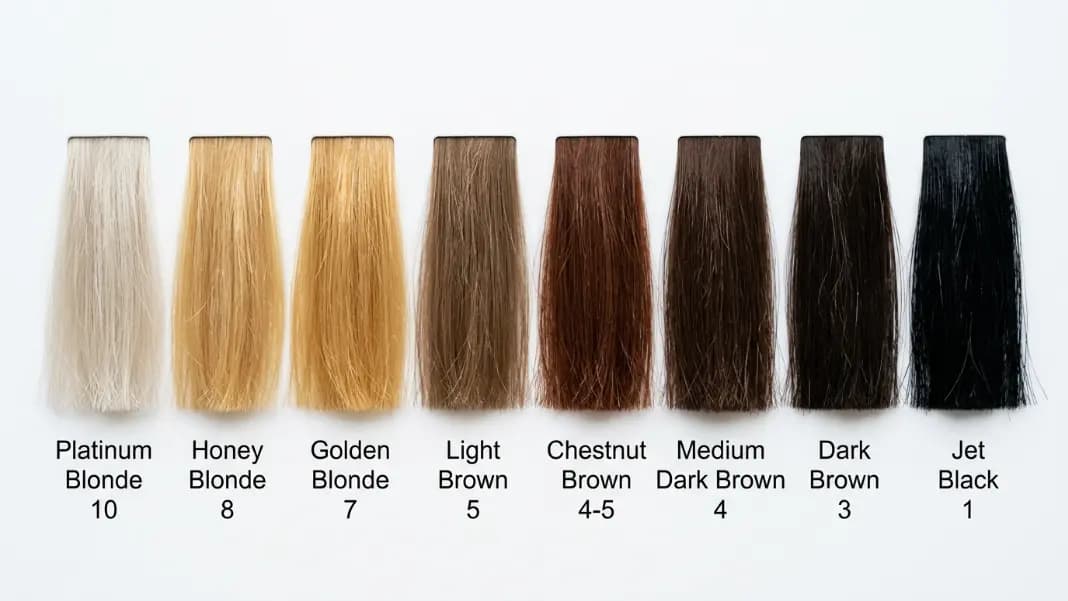
Hair color depth runs on a 1 to 10 scale, where Level 1 is the darkest black and Level 10 is the lightest platinum blonde. Every professional hair color product is formulated to a level, and every natural hair color falls somewhere on this scale.
| Level | Name |
|---|---|
| 1 | Black |
| 2 | Softest Black |
| 3 | Darkest Brown |
| 4 | Dark Brown |
| 5 | Light Brown |
| 6 | Dark Blonde |
| 7 | Medium Blonde |
| 8 | Light Blonde |
| 9 | Very Light Blonde |
| 10 | Lightest Blonde / Platinum |
The level tells a colorist how much lift the hair needs to reach a target shade and which developer strength to use. A Level 4 (dark brown) moving to Level 7 (medium blonde) requires three levels of lift. That determines the processing time and chemical strength needed, and whether the result can be achieved in a single session.
What the level system does not capture is undertone. Two people can both be Level 5 (light brown), one with warm golden undertones and one with cool, ashy undertones. The number is the same; what any color treatment produces on each person will be quite different. The undertone descriptor is the second half of every complete hair color name, even when it goes unstated.
Natural Hair Color Names: Black and Brown Shades
Black hair sits at Levels 1 and 2 and is not a single flat color.
Jet Black (Level 1): The deepest black with no detectable warmth. Approximate hex: #1A0A00. Jet black as a natural color is rare globally. Most hair visually perceived as black actually sits at Level 2 or 3.
Soft Black (Level 2): A deep brown-black. Approximate hex: #2A1510. This is the most common level for hair described as black in everyday language. In direct light, a slight brown warmth is visible.
Darkest Brown (Level 3): Where dark brown becomes its own distinct visual character. Approximate hex: #3D2010. Hair at Level 3 reads as very dark brown in most lighting conditions, and near-black in dim light.
Brown shades become distinctly visible as brown starting at Level 4.
Dark Brown (Level 4): The canonical brunette shade. Approximate hex: #5A2E18. Level 4 is the most common self-described "brown hair" level. Dark brown in makeup and beauty vocabulary almost always refers to this level.
Chestnut Brown: A warm reddish-brown sitting near Level 4 to 5. Approximate hex: #954535. The defining quality is the reddish warmth. Plain "brown" carries no such implication. Different brands define chestnut slightly differently, but the warm red cast is consistent across uses.
Chocolate Brown: A mid-level warm brown with red-brown depth, roughly Level 4 to 5. Approximate hex: #6B3A2A. Chocolate implies richness rather than the neutral quality of "medium brown." It is one of the most requested shade categories in salons.
Coffee Brown: A slightly cooler, slightly darker brown than chocolate, not as deep as espresso. Approximate hex: #4A2018. Coffee implies depth with moderate warmth rather than the full richness of chocolate or chestnut.
Espresso Brown: A very dark warm brown at the darkest end of the recognizably brown range, sitting at Level 2 to 3. Approximate hex: #2E1208. Espresso as a hair descriptor implies near-black depth with visible brown warmth in strong light.
Light Brown (Level 5): The transition point between brunette and blonde. People at Level 5 are often called "dirty blonde" or "dishwater blonde" in casual speech, though "light brown" is technically the correct level name. Approximate hex: #8B5E3C.
Blonde Hair Color Names: From Ash to Platinum
Blonde is the most granularly named section of the hair color vocabulary. The commercial significance of blonde distinctions drives the naming detail.
Dark Blonde (Level 6): The lightest shade that clearly reads as blonde in most lighting conditions. Warm dark blondes lean golden or honey. Cool dark blondes read as mousy or ashy. Approximate hex: #B08040. Many people describe themselves as "dirty blonde" when they are at this level.
Golden Blonde: A warm Level 7 to 8 with distinct yellow-gold warmth. Approximate hex: #D4A850. Golden is the most marketed blonde shade because it photographs brightly and reads as the aspirational warm blonde.
Honey Blonde: Similar to golden but with deeper amber warmth. Often describes Level 7 with strong warm undertones. Approximate hex: #C09048. Honey implies a richer, slightly deeper warmth than golden.
Ash Blonde: A blonde with cool, blue-green undertones that cancel the yellow warmth typical of bleached hair. Can sit from Level 7 to 9. Approximate hex for Level 8 ash: #C0C0A0. Ash is the most common toning category used after bleaching to neutralize orange or yellow brassiness.
Strawberry Blonde: A light blonde with visible red pigment creating a warm peachy-pink gold. Approximately Level 8 with strong red undertones. Approximate hex: #D08858. Strawberry blonde is one of the most precise and evocative hair color names in common use. It names both the level and the undertone simultaneously.
Champagne Blonde (Level 9): Pale and slightly golden, with a soft warmth that platinum does not have. Approximate hex: #E0D0A0. Champagne is used to describe a very light blonde that still reads as warm rather than cool.
Platinum Blonde (Level 10): The lightest blonde with almost no yellow pigment remaining. Approximate hex: #F0EDE0. Platinum implies a cool, metallic paleness. Natural Level 10 is extremely rare. Most platinum hair results from chemical lightening followed by a violet or silver toner to remove any residual warmth.
Red Hair Color Names: The Full Natural Spectrum
Natural red hair results from the MC1R gene variant that produces phaeomelanin rather than eumelanin. It exists on a spectrum with distinct names at each point.
Strawberry Blonde: The lightest natural red, barely distinguishable from warm blonde without direct light. This shade lives at the blonde-red boundary, typically Level 8 with a warm pink-orange undertone.
Copper: A bright, vivid orange-red with an almost metallic quality in sunlight. Approximate hex: #B46030. True copper hair is naturally rare. The shade has high visual impact and reflects light distinctly differently from blonde or brown hair.
Auburn: A deep red-brown with enough red to be clearly warm but enough brown to read as darker and richer than copper. Approximate hex: #882010. Auburn is the most commonly used professional term for naturally dark red hair. In fiction and beauty writing, auburn is the default word for any dark warm red.
Titian: A warm golden-red named after the Venetian painter whose portraits frequently depicted this shade. Less common as a casual term but specific and historically precise in fine arts and literary contexts. Approximate hex: #C87050.
Chestnut Red: A warm brown with a strong red cast where the red component is secondary to the brown base. Approximate hex: #8A3020. Chestnut red sits darker and less vivid than copper, with more brown and less orange.
Red hair as a natural occurrence is relatively rare globally, estimated at 1 to 2 percent of the world's population. The vocabulary for naming it is proportionally detailed, reflecting how culturally visible and discussed the shade has historically been.
Gray and Silver Hair Color Names
As pigment production decreases with age, hair lightens through a distinct sequence of shades with specific names at each stage. These same shades also exist as deliberate fashion color choices for all ages.
Salt and Pepper: The transition stage where gray hairs mix visually with remaining pigmented hairs. Salt and pepper describes a ratio and texture rather than a single hex value. The visual blend creates a gray-brown or gray-black depending on the original hair level.
Steel Gray: A cool, blue-toned gray. Approximate hex: #8090A0. Steel gray describes both natural aging hair and a popular fashion dye result. It reads as intentional and modern rather than faded.
Silver: A pale, cool gray with a metallic brightness. Approximate hex: #C0C8D0. Silver hair, whether natural or dyed, has a reflective quality that distinguishes it from matte gray. The silver hair trend in the 2010s created demand for silver dye specifically, separate from the gray that comes naturally with age.
Charcoal Gray: A deep, dark gray. Approximate hex: #5A6070. As a fashion color, charcoal gray is popular for the near-black depth it provides with visible gray character.
Platinum Gray: The very pale, cool gray result of either full natural depigmentation or extensive chemical lightening combined with violet or blue toning. Approximate hex: #E0E5EC.
White: Complete loss of pigment. Natural white hair can read warm or cool depending on any residual tone. As a fashion result, white hair requires extensive bleaching followed by toning to remove yellow.
Technique Names: What Balayage, Ombre, and Highlights Actually Mean
Hair color technique names describe how and where color is applied, not the color itself. These terms are frequently misused in client-colorist conversations, which is worth knowing before the next salon visit.
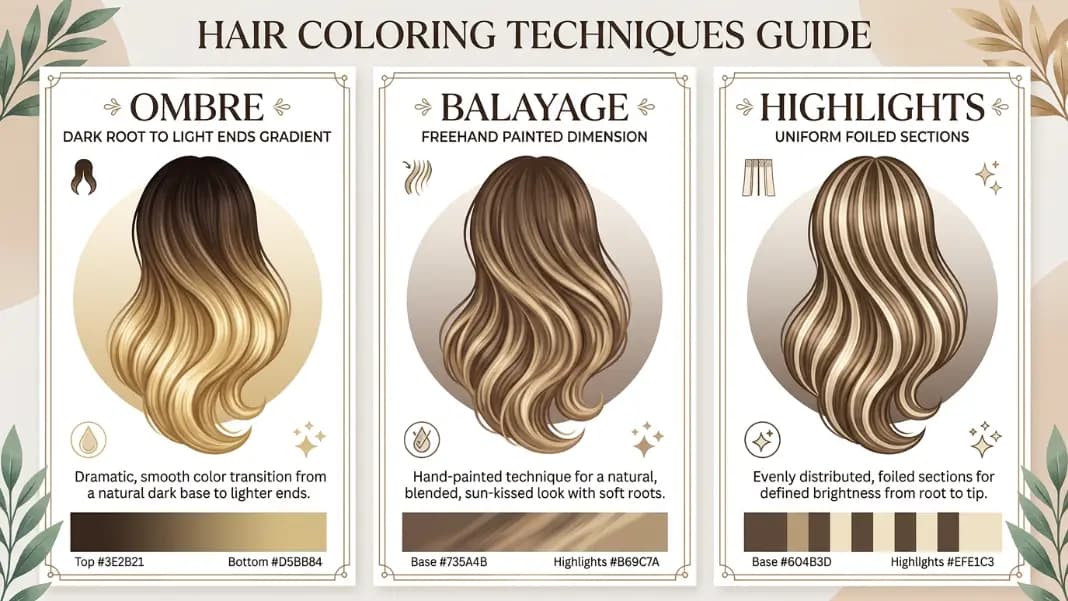
Highlights: Sections of hair lightened above the base color using bleach or high-lift color, placed in foils. Standard highlights create uniform bright sections throughout the hair and make the overall result appear lighter. The visibility of highlights depends on the contrast between the highlight shade and the base, and on how much of the hair is highlighted.
Lowlights: Color applied to sections of lighter hair to add depth below the base tone. Lowlights make hair appear thicker, richer, and more dimensional. Most natural-looking lived-in color results use highlights and lowlights together, even if only one technique is named in the service menu.
Balayage: A French freehand technique meaning "to sweep." Lightener or color is painted onto the hair surface without foils, using a sweeping motion. The result is soft, graduated highlights that are more concentrated toward the midshafts and ends. Balayage creates a natural, sun-kissed appearance because the color placement is irregular rather than uniform. This is a technique name, not a color name, and it can be executed in any shade combination.
Ombre: A gradient from a darker shade at the roots to a lighter shade toward the ends, with a visible transition zone. Standard ombre has a defined line between dark and light sections. Sombre, or soft ombre, blends the transition more gradually and is often described as a more natural-looking result.
Babylights: Very fine highlights applied in small sections to mimic the way children's hair lightens from sun exposure over a summer. Babylights use narrower sections than standard highlights and aim for seamless, dimensional color that appears naturally varied rather than placed.
Bronde: A marketing term for the color result of certain highlight or balayage combinations that sit between brown and blonde without reading clearly as either. Neither a specific technique nor a single hex value.
Dyed and Fashion Hair Color Names
Rose Gold: A pink-toned warm gold created by combining pink and blonde dye tones. Approximate hex: #E8A898. Rose gold requires lifting hair to at least Level 9 before the pink dye can appear at full vibrancy, making it a two-step result on most natural hair colors.
Burgundy: A deep red-wine shade with purple depth. Approximate hex: #5C1020. Burgundy reads as wine-toned rather than the warm, brown-leaning quality of auburn. The distinction from cherry red is depth: burgundy is darker and purple-adjacent.
Cherry Red: A vivid red with both orange and blue undertones creating a clear, classic red result. Approximate hex: #C01020. On dark hair, cherry red requires significant lightening before the dye can read at full vibrancy.
Mahogany: A dark reddish-brown with warm depth, sitting at the dark end of the auburn spectrum. Approximate hex: #5A1E10. As a professional dye result, mahogany can be achieved at lower lift levels than brighter reds because the brown base absorbs more of the original hair tone.
Copper (Dyed): When achieved as a fashion color rather than a natural shade, copper sits in the vivid orange-red range. Approximate hex: #C05020. Dyed copper results vary depending on the underlying base tone left after bleaching, since orange-toned bleach bases produce more vivid copper results.
Balayage Palette Terms: Common balayage shade names in salon marketing include caramel, honey, butterscotch, and toffee. These describe warm blonde highlight shades between Level 8 and Level 10. Caramel sits at the darker, amber end. Honey and butterscotch are medium warm. Toffee implies golden depth with slight orange warmth.
Finding Hex Codes for Hair Colors
For illustration, portrait work, or digital design, finding an accurate hex code for a specific hair color is more reliable from a reference image than from a descriptive name. The same word, "auburn" for example, can describe a hex range from #882010 to #B05030 depending on the speaker and the context.
The image color picker extracts exact hex values from any uploaded photo. Upload a reference image showing the hair color and it returns the dominant hex codes directly from the pixels. This is more accurate than estimating from a text description.
Once you have a hex code, paste it into the color name finder to identify the nearest CSS named color. Most hair colors sit outside the CSS named color set, which was not designed with hair tones in mind, but the comparison shows where a shade falls in the broader color space.
For building a tonal palette for hair illustration, the tints and shades generator produces 11 steps from white to black through any input hex. This gives you the highlight, midtone, and shadow variants needed to render the full depth of a hair color in digital art.
For converting between hex, RGB, and HSL for use in a design system or stylesheet, the color format converter handles all three directions. The full set of palette and conversion tools is in the color tools section.
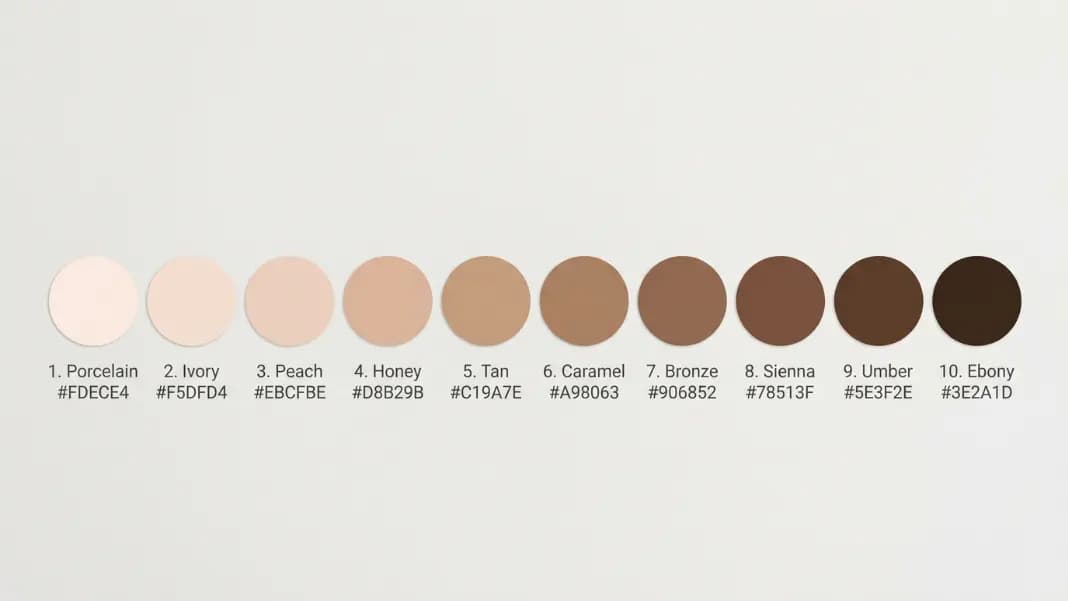
Hair color, skin tone, and eye color share the same underlying pigment system. The skin color names guide covers the professional shade vocabulary from porcelain to ebony with hex codes, and the eye color names guide covers the full spectrum of human iris colors ranked by global rarity — both are useful references for portrait and character design work alongside hair color matching.