Free Random Decision Tools Online
Spin the wheel, roll dice, flip a coin, generate random numbers, split groups into teams, run countdown timers, and draw tournament brackets. Every random picker tool runs free in your browser with no account required.
Wheel Spinner
Spin the wheel for classrooms, giveaways, and decisions.
Yes or No Wheel
Spin the yes or no wheel for instant random decisions.
Dice Roller
Roll any dice type online: D4 through D100.
Coin Flip
Flip a fair digital coin and get instant heads or tails.
Random Number Generator
Generate random numbers between any minimum and maximum.
Team Generator
Split any list of names into randomly balanced teams.
Countdown Timer
Free countdown timer that runs entirely in your browser.
Card Picker
Draw random cards from a standard 52-card deck.
Bracket Generator
Generate randomized single-elimination tournament brackets.
Snow Day Calculator
Calculate the probability of a school snow day based on weather conditions.
Random Letter Generator
Generate random letters A–Z. Choose uppercase, lowercase, vowels, or consonants.
9
Random tools
D4–D100
Dice supported
Crypto API
Randomness source
100%
Browser-based
Tool use cases
Random student picker, team splits, countdown timer
Dice roller, card picker, wheel spinner, bracket generator
Yes/No wheel, coin flip, number generator
Raffle draws, team generator, elimination brackets
Random decision tools for every situation
Random decision tools serve one common need: a fair, unbiased result that no person controls. Whether you need to pick a winner from a list, decide between two options, assign tasks, or settle a group disagreement, the right random picker removes the bias and pressure from the decision. All nine tools on this page run entirely in your browser using cryptographic randomness, so every result is statistically fair and independent of all previous outcomes.
The tools cover four main decision categories. Quick single-answer decisions use the wheel spinner, yes or no wheel, coin flip, and random number generator. Group and team decisions use the team generator and bracket generator. Game and entertainment decisions use the dice roller and card picker. Timed decisions and classroom management use the countdown timer.
Spin the wheel: random picker for names and options
The wheel spinner is the most versatile random picker on this page. Enter any list of names, options, tasks, or items and the tool divides the wheel into equal segments with one entry per slot. Every spin uses cryptographic randomness to determine the outcome, giving every segment an identical probability regardless of how many entries are on the wheel. Use it for student name picking in classrooms, giveaway draws, deciding where to eat, assigning chores, or any situation where a visible, animated result adds engagement to the decision.
The yes or no wheel is a focused version built for binary decisions. When you need a quick random yes or no answer and want something more engaging than a plain coin flip, the yes or no wheel delivers an animated, visually clear result. It works for daily decisions, games, and classroom activities where students respond to yes or no questions with a random selector.
Dice roller and coin flip: classic random generators online
The dice roller supports every standard tabletop RPG die: D4, D6, D8, D10, D12, D20, and D100. Roll multiple dice simultaneously and see individual results plus the total. The tool is useful for tabletop RPG sessions when physical dice are not available, for board game decisions, probability exercises, and any activity that calls for a specific die type. Each face has equal probability on every roll regardless of what was rolled before.
The coin flip tool provides a simple heads or tails result with a visual flip animation. It is the fastest random decision maker on this page, ideal for breaking ties, settling disputes, choosing who goes first, or any two-outcome decision. The result is cryptographically random, not pseudo-random, so it produces a genuine 50/50 split over any large sample.
Random number generator and team generator
The random number generator accepts any minimum and maximum range and optionally enforces unique results so no number appears twice in a sequence. This makes it suitable for lottery draws, raffle number selection, bingo caller sequences, classroom random seat assignments, and any scenario where a fair numbered draw is needed. Set your range, choose how many numbers to generate, enable unique mode if needed, and copy the results.
The team generator splits any list of names into balanced random groups. Enter the full list of participants and choose how many teams to create. The tool distributes names evenly and randomly, producing groups with no human favoritism. It is widely used by teachers for group work assignments, sports coaches for practice drills, event organizers for workshop breakouts, and office teams for random pairing exercises.
Countdown timer and bracket generator
The countdown timer is a free browser-based timer with a large, visible display suitable for classroom projection, presentation time limits, cooking timers, workout intervals, and meeting segments. Set any duration in hours, minutes, and seconds, start the timer, and the display counts down with an alert when time expires. No installation or app download is needed.
The bracket generator creates randomized single-elimination tournament brackets from any list of participants or teams. Enter the names, generate the bracket, and the tool randomly seeds the matchups. Use it for office tournaments, gaming competitions, fantasy sports leagues, classroom quiz bowls, or any event that needs a structured elimination format. The bracket updates automatically as rounds progress.
How randomness works in these tools
Every tool uses the browser's crypto.getRandomValues() API, which is a cryptographically secure random source. This is fundamentally different from Math.random() used in basic JavaScript applications, which is a pseudo-random generator with predictable patterns over long sequences. Cryptographic randomness has no pattern and cannot be predicted or reverse-engineered.
None of the tools have memory of previous results. The dice roller does not adjust probabilities based on recent rolls. The wheel spinner does not weight segments based on past spins. The coin flip does not compensate for a streak of heads. Every result is statistically independent, which is the standard behavior expected from physical dice, coins, and wheels.
Frequently asked questions
Yes. All random tools use the browser's built-in cryptographic random number source via crypto.getRandomValues(), which produces statistically uniform results with no predictable patterns. Coin flip, dice roller, number generator, and wheel spinner all use this source directly. None of the tools have memory of previous results, so each spin, roll, flip, or draw is fully independent.
Enter any list of names, options, or items into the wheel spinner. The tool divides the wheel into equal segments, one per entry, and uses cryptographic randomness to determine where the wheel stops. Every segment has exactly equal probability regardless of how many entries are on the wheel. You can customize colors, add or remove entries, and spin as many times as needed.
A random decision maker is any tool that removes human bias from a choice by producing an outcome based on pure chance. Use one when you need a fair, uncontested result: picking a winner from a group, deciding between two options with equal merit, assigning tasks randomly, or any situation where an impartial outcome matters more than a deliberated one.
Yes. The random number generator accepts any minimum and maximum range and optionally enforces unique results so no number is drawn twice. Set the range to match your ticket numbers, enable unique mode, and draw as many numbers as you need. All results use cryptographic randomness and are not influenced by previous draws.
Yes. Every random decision tool is fully usable on touch screens. Buttons are sized for fingers, wheels spin on tap, and all controls adapt to any screen width without horizontal scrolling.
Yes. The wheel spinner, team generator, and countdown timer are the most commonly used tools for classroom settings. The wheel spinner accepts any list of student names for random calling, the team generator splits a class into balanced groups instantly, and the countdown timer provides a visible on-screen timer for timed exercises and transitions.
No data is sent to any server. Some tools retain your last input in browser memory for convenience during the same session, but nothing is stored permanently and nothing leaves your device.
The dice roller supports every standard tabletop RPG die type: D4, D6, D8, D10, D12, D20, and D100. You can roll multiple dice of the same type simultaneously and the tool shows individual results alongside the total. All rolls use cryptographic randomness with equal probability for every face.
From the blog
All articles →
10 min read
Online Countdown Timer: Classroom, Presentation, and Event Uses
How a visible countdown timer changes group focus, optimal durations for different use cases, and how to run a countdown for classrooms, presentations, and events.

10 min read
Heads or Tails Probability: Is a Coin Flip Really 50-50?
A physical coin flip is not exactly 50-50. How same-side bias works, what the Diaconis research found, and why digital coin flips are fairer.

10 min read
Online Dice Roller: D4 to D20 and Why Digital Dice Are Fair
Roll any polyhedral dice online from D4 to D100. How digital dice work, the probability behind each die type, and when to use digital versus physical dice.

10 min read
Random Card Picker: 9 Ways to Settle Any Group Decision
A random card picker resolves group decisions without argument. Nine ready-to-use methods for turn order, task assignment, party games, and meeting rotation.
12 min read
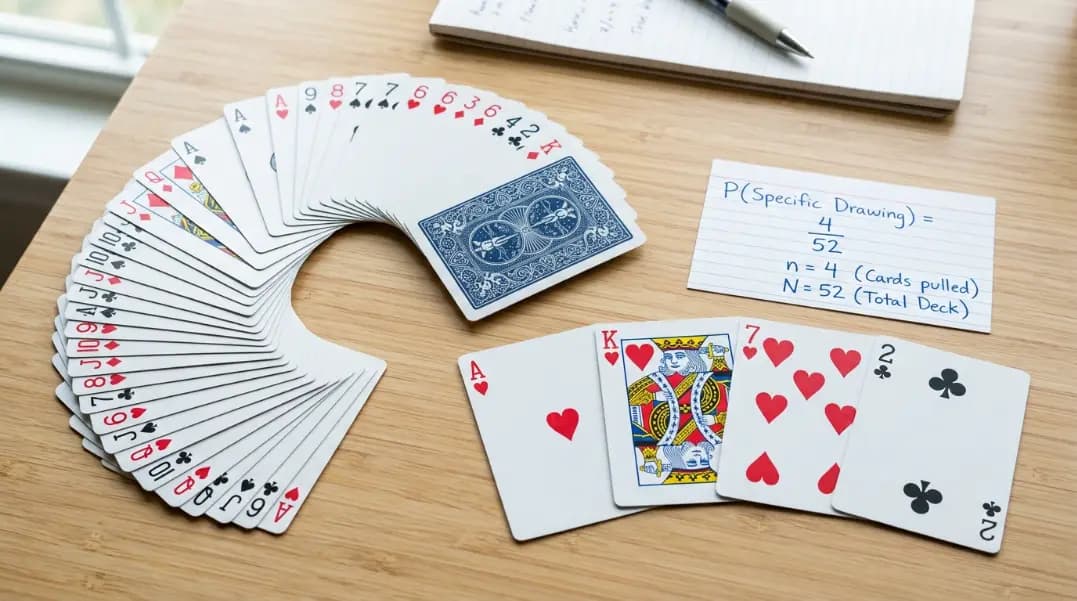
Playing Card Probability: Complete Reference for Every Draw
The complete playing card probability reference: single-draw odds, conditional probability after each draw, poker hand frequencies, and Blackjack hit decisions.
11 min read
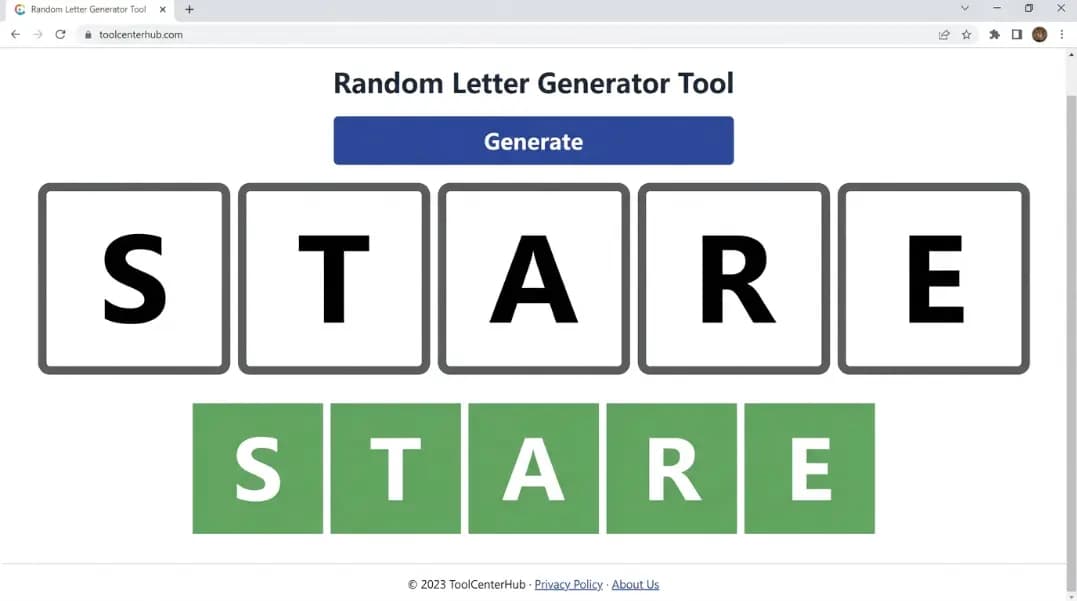
Random 5 Letter Word Generator: Wordle Practice and Word Games
E appears in 72% of 5-letter Wordle answers. How to use the random letter generator for Wordle practice, word game constraints, and anagram challenge formats.