Free Ideal Body Weight Calculator Online
The ideal body weight calculator finds your healthy weight range using four established clinical formulas: Devine, Robinson, Miller, and Hamwi. Enter your height and sex to calculate ideal body weight in kg or lbs instantly. Supports metric and imperial. Free, no account needed.
♀ 45.5 + 2.3 × (inches above 5′)
♀ 49 + 1.7 × (inches above 5′)
♀ 53.1 + 1.36 × (inches above 5′)
♀ 45.4 + 2.2 × (inches above 5′)
How to use the ideal weight calculator
- Select your unit system: metric (cm, kg) or imperial (ft/in, lbs).
- Enter your height in the input fields.
- Select your sex (male or female).
- The online ideal weight calculator displays results from all four formulas instantly.
- Optionally enter your current weight to see your percent ideal body weight (%IBW).
Ideal body weight calculation formula: how each method works
All four ideal body weight formulas share the same structure: a base weight at exactly 5 feet (60 inches) plus a fixed increment for every inch above that. They differ only in the base weight and the per-inch increment. Here are all four with the actual numbers:
- Devine (1974): Men: 50 kg + 2.3 kg per inch above 60 in. Women: 45.5 kg + 2.3 kg per inch above 60 in.
- Robinson (1983): Men: 52 kg + 1.9 kg per inch above 60 in. Women: 49 kg + 1.7 kg per inch above 60 in.
- Miller (1983): Men: 56.2 kg + 1.41 kg per inch above 60 in. Women: 53.1 kg + 1.36 kg per inch above 60 in.
- Hamwi (1964): Men: 48 kg + 2.7 kg per inch above 60 in. Women: 45.4 kg + 2.2 kg per inch above 60 in.
Worked example: a man who is 5 ft 10 in (70 inches) is 10 inches above 5 feet. Using the Devine formula: IBW = 50 + (2.3 x 10) = 73 kg. Using Robinson: IBW = 52 + (1.9 x 10) = 71 kg. The four results together define a range of roughly 68 to 76 kg for this individual. That range is your healthy weight zone, not a single fixed number.
For metric input the calculator converts centimeters to inches automatically (divide by 2.54), applies the formula, then converts the result back to kilograms or pounds depending on your selected unit. The ideal weight in kg is the native output of all four formulas since they were developed using metric units.
Ideal weight calculator for women vs men: why the numbers differ
The ideal body weight calculator for women produces results that are consistently 4 to 6 kg lower than for men at the same height. This is because all four formulas use lower base weights and smaller per-inch increments for women. The gap reflects established physiological differences: men have greater average bone density and a higher proportion of skeletal muscle mass per unit of height, both of which add to body weight without adding health risk.
For example, at 5 feet 6 inches (168 cm), the Devine formula gives 63.8 kg for men and 59.3 kg for women. At 5 feet 8 inches the gap widens slightly. The ideal body weight calculator female result is therefore lower, but both outputs are calibrated to the same clinical reference standard. Women naturally carry a higher percentage of essential body fat (10 to 13 percent vs. 2 to 5 percent for men), which contributes to total body weight even in lean individuals. Pairing your ideal weight result with a body fat percentage calculator gives a more complete picture of body composition than weight alone.
Adjusted ideal body weight: what it is and when it matters
Adjusted ideal body weight (AiBW) is a clinical calculation used when a person's actual body weight exceeds their IBW by more than 20 to 30 percent. Standard IBW under-estimates lean body mass in this situation, while actual body weight over-estimates it. The adjusted ideal body weight formula corrects for this:
AiBW = IBW + 0.4 x (Actual Body Weight - IBW)
The 0.4 correction factor reflects that adipose tissue is not metabolically inert: it contributes to the distribution volume of certain drugs. AiBW is used primarily in clinical pharmacokinetics for medications including aminoglycosides (gentamicin, tobramycin), vancomycin, and heparin. Outside of clinical drug dosing, AiBW is not a weight-loss target. It is a pharmacological tool, not a fitness goal. If you are working toward a weight goal for health or performance, your ideal body weight range from the four formulas combined with your total daily energy expenditure (TDEE) is the more relevant starting point.
Percent ideal body weight (%IBW): interpreting where you stand
Percent ideal body weight expresses your current weight as a proportion of your ideal body weight:
%IBW = (Actual Body Weight / Ideal Body Weight) x 100
A %IBW of 100% means you are exactly at your ideal weight according to the formula used. Clinical interpretation ranges: 90 to 110% is considered normal; 80 to 89% is mildly underweight; below 70% indicates significant underweight or potential malnutrition. Above 110% is overweight; above 130% is used as an obesity threshold in some clinical dosing protocols. In practice, %IBW is most useful for clinical nutrition screening rather than as a day-to-day fitness metric. For a more actionable measure of body composition, compare your ideal weight result alongside your BMI score.
Limitations of ideal body weight formulas
The ideal body weight formulas were designed for clinical drug dosing in the 1960s to 1980s, not as consumer fitness targets. Their key limitations:
- No body composition data: A 175 cm man at 85 kg with 12% body fat will far exceed his IBW range despite being extremely lean. The formulas have no way to distinguish muscle from fat.
- No frame size adjustment: Large-framed individuals with wider skeletal structure will naturally weigh more than the formulas suggest without any health risk.
- Binary sex input: The formulas only account for binary male/female physiological differences and do not accommodate non-binary individuals or those undergoing hormonal changes.
- Not validated below 5 feet: All four formulas use increments above 60 inches (5 feet). For individuals below 5 feet tall, the formulas can produce inaccurate or negative results and should not be relied upon.
For a more complete health picture, use your ideal weight result alongside your BMI, body fat percentage, and daily calorie needs to understand where you stand and what adjustments, if any, are appropriate for your goals.
Frequently asked questions
Ideal body weight is calculated using height and sex. The most common method is the Devine formula: for men, IBW = 50 kg + 2.3 kg per inch above 5 feet; for women, IBW = 45.5 kg + 2.3 kg per inch above 5 feet. Example: a man who is 5 feet 10 inches tall is 10 inches above 5 feet, so IBW = 50 + (2.3 x 10) = 73 kg. Other formulas (Robinson, Miller, Hamwi) use the same structure but different base weights and increments, producing a range of results that together define your healthy weight zone.
There are four widely used ideal body weight formulas: (1) Devine formula (1974): Men: 50 + 2.3 x (inches above 60); Women: 45.5 + 2.3 x (inches above 60). (2) Robinson formula (1983): Men: 52 + 1.9 x (inches above 60); Women: 49 + 1.7 x (inches above 60). (3) Miller formula (1983): Men: 56.2 + 1.41 x (inches above 60); Women: 53.1 + 1.36 x (inches above 60). (4) Hamwi formula (1964): Men: 48 + 2.7 x (inches above 60); Women: 45.4 + 2.2 x (inches above 60). All results are in kilograms. The Devine formula is the most widely cited in clinical pharmacology.
Each formula was developed independently using different clinical datasets and methodologies. The differences reflect genuine scientific uncertainty about what constitutes an ideal weight for a given height. These formulas were primarily designed for drug dosing, not consumer health targets. The spread between the highest and lowest result for a given height is typically 3 to 7 kg, which is why interpreting ideal weight as a range is more accurate than targeting a single number.
Yes. All four formulas produce lower ideal body weight results for women than men at the same height. Men's IBW is typically 4 to 6 kg higher than women's at the same height across all formulas. This reflects physiological differences: men have greater average bone density and lean muscle mass per unit of height. The formulas do not account for individual frame size, so a large-framed woman may healthily carry more weight than the formula suggests.
Adjusted ideal body weight (AiBW) is used in clinical settings when a person's actual body weight exceeds their ideal body weight by more than 20 to 30 percent. Using actual weight alone over-estimates lean body mass in obese patients; using IBW alone under-estimates it. The formula is: AiBW = IBW + 0.4 x (Actual Body Weight - IBW). This correction factor of 0.4 reflects that adipose tissue is not metabolically inert and contributes to drug distribution. AiBW is used primarily for dosing medications such as aminoglycosides, vancomycin, and heparin.
Percent ideal body weight (%IBW) expresses your current weight as a percentage of your ideal body weight: %IBW = (Actual Body Weight / Ideal Body Weight) x 100. A %IBW of 100% means you are exactly at your ideal weight. Values between 90% and 110% are generally considered normal. Below 80% may indicate underweight or malnutrition in clinical assessments. Above 130% is used as an obesity threshold in some clinical dosing protocols. %IBW is commonly used in clinical nutrition assessments.
No. The ideal body weight formulas were developed for clinical drug dosing, not as universal fitness targets. They do not account for body composition. A person with high muscle mass and low body fat may exceed the ideal weight range significantly without any health risk. Athletes, bodybuilders, and individuals with high bone density will often fall above these ranges while being completely healthy. For these individuals, body fat percentage is a more relevant health metric than ideal body weight.
Ideal running weight is typically lower than general ideal body weight formula results because carrying extra weight increases the metabolic cost of running. A commonly cited guideline is that losing 1 kg of excess weight can improve running economy by roughly 1 to 2 seconds per kilometer. Elite distance runners often weigh 5 to 10 percent below standard IBW formula results. However, there is no universal ideal running weight formula. Dropping too low increases injury risk and impairs recovery, so any weight reduction for running performance should be gradual and tied to your daily calorie needs.
Related articles
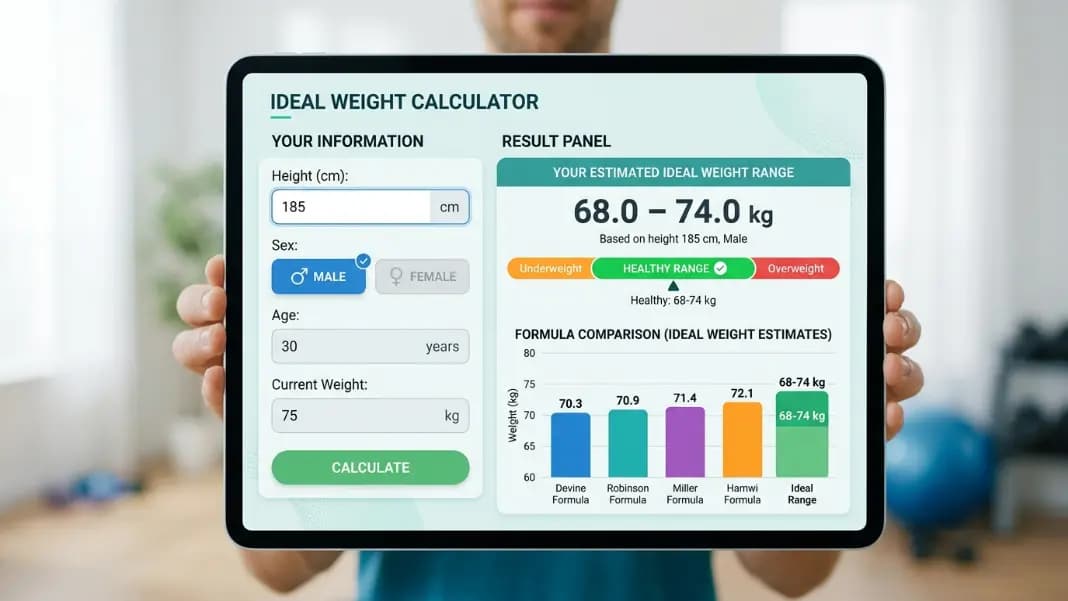
Ideal Weight Calculator: Find Your Healthy Weight Range
Learn how ideal weight calculators work, what formulas they use, how frame size affects your range, and how it differs from BMI and body fat percentage.
8 min read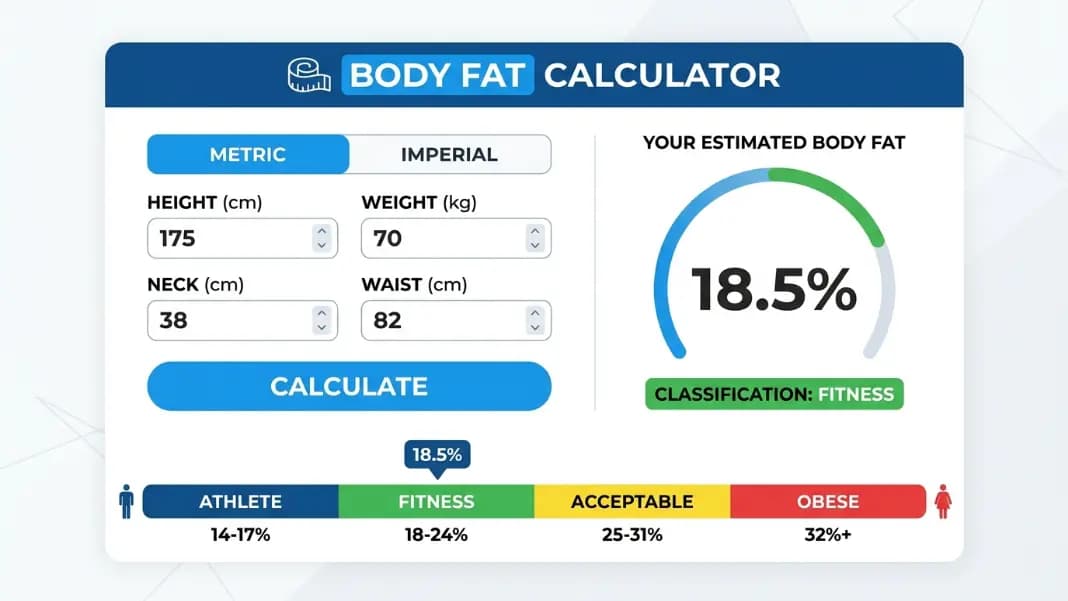
Body Fat Percentage Calculator: What Your Number Means
Learn what your body fat percentage means, healthy ranges for men and women, how it differs from BMI, and how to use a free calculator to measure yours.
9 min read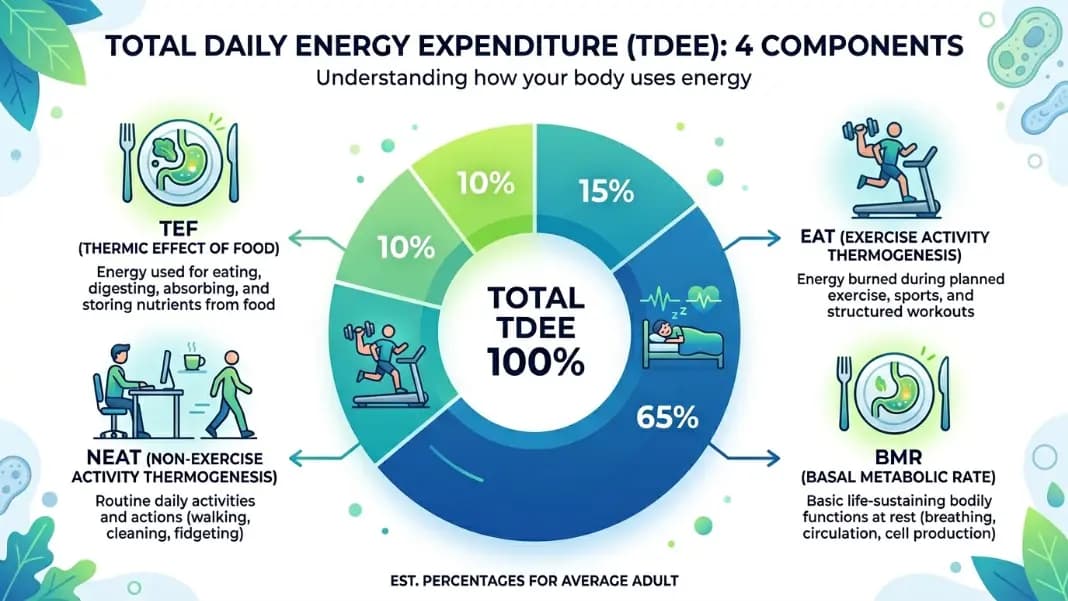
TDEE Calculator: What TDEE Is and How to Use It for Weight Loss
Learn what TDEE means, how to calculate your total daily energy expenditure using the Mifflin-St Jeor formula, and how to use it to lose weight, maintain, or build muscle. Free TDEE calculator included.
10 min read