Free Macro Calculator Online
Free online macro calculator. Enter your daily calorie target and goal, and this macros calculator instantly returns your daily protein, carbohydrate, and fat targets in grams. Supports weight loss, muscle gain, maintenance, keto, and custom ratios. Macro calculator for women and men, no account required.
How to calculate your macros
Calculating macros starts with your daily calorie target. If you do not know this number, use the calorie calculator first to establish your daily calorie needs based on your age, sex, height, weight, and activity level. Once you have your calorie target, decide what proportion of those calories should come from each macronutrient. Protein provides 4 calories per gram, carbohydrates provide 4 calories per gram, and fat provides 9 calories per gram. The macro nutrient calculator converts your percentages into gram targets automatically using these energy densities.
For example, on a 1,800-calorie daily target with a 35% protein allocation: 1,800 × 0.35 = 630 calories from protein, divided by 4 = 157 grams of protein per day. The online macro calculator on this page performs all of these conversions instantly for every preset and custom ratio, so you see the gram targets for all three macros at once.
How to use the macro calculator online
- Enter your daily calorie target. Use the calorie calculator if you are unsure of this number.
- Select a diet preset: balanced, high protein, low carb, keto, or custom.
- Read your instant daily gram targets for protein, carbohydrates, and fat.
- For custom ratios, adjust each slider until the combined percentages reach 100%.
- Log these targets in a nutrition tracking app or food diary alongside your daily meals.
Macro calculator for weight loss: protecting muscle during a deficit
The most effective macro split for weight loss prioritises protein. When you eat fewer calories than you burn, your body can break down muscle tissue for energy as well as fat. High protein intake (40% of calories or approximately 1.8 to 2.2 g per kg of body weight) activates the protein-sparing effect, which directs the deficit toward fat stores and away from lean muscle. The macros calculator for weight loss applies this logic automatically when you select the cutting preset.
A common macro ratio for fat loss is 40% protein, 35% carbohydrate, 25% fat. On a 1,500-calorie deficit target, this gives approximately 150 g protein, 131 g carbs, and 42 g fat per day. To determine the right calorie deficit before calculating macros, use the TDEE calculator to find your maintenance calories first, then subtract 300 to 500 calories to set your daily calorie budget for fat loss.
Macro calculator for muscle gain and bodybuilding
Building muscle requires both a calorie surplus and enough protein to support muscle protein synthesis. The bodybuilding macro calculator applies a ratio that prioritises carbohydrates as the primary fuel for training performance and recovery, typically 25 to 30% protein, 45 to 50% carbohydrate, and 20 to 25% fat. Carbohydrates replenish muscle glycogen depleted during resistance training and support anabolic hormone output. A common target for the muscle gain macro ratio is 2g of protein per kg of body weight, with carbohydrates filling most of the remaining calories.
For a lean bulk (minimal fat gain), aim for a calorie surplus of 100 to 250 calories above maintenance. For a more aggressive bulk, use 300 to 500 calories above TDEE. The macro calorie calculator shows gram targets for protein, carbs, and fat based on whichever calorie level you enter. Pair your macro targets with consistent progressive overload in the gym and adequate sleep to maximise the muscle-building results from your calorie surplus.
Keto macro calculator: carbohydrate, protein, and fat on a ketogenic diet
The ketogenic diet uses a strict macro ratio to shift the body into nutritional ketosis: typically 5% of calories from carbohydrates, 25% from protein, and 70% from fat. On a 2,000-calorie diet, this translates to roughly 25 g carbohydrates, 125 g protein, and 155 g fat per day. Keeping net carbs below 20 to 50 g daily is what triggers ketone production and switches the body from glucose to fat as its primary fuel source. The keto macros calculator preset in this tool applies this 5/25/70 ratio automatically when selected.
Protein intake on keto should remain moderate, around 1.2 to 1.7 g per kg of body weight. Excessive protein can be converted to glucose through a process called gluconeogenesis, which may reduce ketone production. Fat makes up the majority of calories on keto, so choosing high-quality fat sources such as avocado, olive oil, nuts, and fatty fish gives the best nutritional outcomes. Use the calculate macros keto option here then log your daily food against those gram targets to stay in ketosis consistently.
Macro calculator for women: key differences to know
The macro ratios applied by the daily macro calculator are the same for men and women, but the absolute gram targets differ because women typically have lower calorie budgets driven by lower TDEE. A female macro calculator therefore produces smaller gram totals at the same ratios. More importantly, protein targets anchored to body weight (1.6 to 2.0 g per kg) scale better with lean mass than percentage-based targets, making them a more accurate guide for women who want to protect or build muscle.
Women may also benefit from adjusting carbohydrate intake around the menstrual cycle. During the luteal phase (the two weeks before menstruation), progesterone increases protein catabolism and raises resting energy expenditure by 100 to 300 calories, meaning slightly higher protein and calorie targets may support better body composition outcomes. This level of detail goes beyond a single macro calculator but is worth factoring in if you train seriously. Start by pairing your macro targets with a current BMI and body fat percentage measurement to ground your nutrition plan in your actual body composition.
Frequently asked questions about macros
To calculate your macros, start with your daily calorie target (from a TDEE or calorie calculator). Decide what percentage of those calories should come from each macronutrient. Protein and carbohydrates provide 4 calories per gram; fat provides 9 calories per gram. Multiply your total calories by each macro's percentage, then divide by the calorie density to get grams. For example, on 2,000 calories with 30% protein: 2,000 × 0.30 = 600 calories from protein, 600 / 4 = 150 grams of protein per day.
To calculate macros for weight loss, first set a calorie deficit (typically 300 to 500 calories below your TDEE). Then allocate those calories with a high-protein ratio to protect muscle: 40% protein, 35% carbohydrate, 25% fat is a widely used starting point. On a 1,600-calorie weight loss target, that gives approximately 160 g protein, 140 g carbohydrates, and 44 g fat per day. Prioritising protein above the other macros is the single most effective macro strategy for preserving lean muscle during fat loss.
For muscle gain, a common macro split is 25 to 30% protein, 45 to 50% carbohydrate, and 20 to 25% fat, combined with a calorie surplus of 100 to 300 calories above TDEE. Carbohydrates are prioritised because they fuel resistance training and replenish muscle glycogen after workouts. Protein target should reach at least 1.6 g per kg of body weight per day. For a 75 kg person eating 2,600 calories (a modest bulk), that is roughly 130 to 165 g protein, 290 to 325 g carbs, and 55 to 70 g fat.
A standard ketogenic diet uses a macro ratio of approximately 5% carbohydrate, 25% protein, and 70% fat. For a person eating 2,000 calories per day, this means roughly 25 g carbohydrates, 125 g protein, and 155 g fat. Keeping carbohydrates below 20 to 50 g per day induces nutritional ketosis, the metabolic state where the body produces ketones from fat as its primary fuel. The keto preset in this macro calculator applies this ratio automatically when selected.
The macro ratios (percentages) are generally the same for men and women, but the absolute gram targets differ because women typically have lower TDEE values and therefore lower total calorie budgets. A woman eating 1,500 calories with 40% protein needs about 150 g of protein per day; a man eating 2,200 calories at the same ratio needs about 220 g. Protein targets anchored to body weight (1.6 to 2.2 g per kg) are often more useful than percentage-based targets for women, since they scale directly with lean mass rather than total calories.
Macros (macronutrients) are the three main classes of nutrients that provide energy: protein, carbohydrate, and fat. Total calorie intake determines whether you gain, lose, or maintain weight. The ratio of macros within those calories determines what kind of weight you gain or lose (muscle or fat) and how well your body performs and recovers. Tracking macros rather than just calories gives you more precise control over body composition, particularly the ratio of fat lost to muscle preserved during a calorie deficit.
For most beginners, tracking total calories produces good results and is simpler to sustain. Adding protein tracking as a second step, the most impactful single macro, provides significant extra benefit for body composition. Full macro tracking (all three macros) is most valuable for athletes, people following structured diets like keto, or those with specific body composition goals. A practical approach: start with calories and protein, then add carb and fat tracking once those habits are established.
Recalculate your macros every four to six weeks or whenever your body weight changes by more than 2 to 3 kg. As you lose weight, your TDEE drops and your daily calorie target should decrease to maintain the same deficit. As you build muscle, your protein needs may increase because lean body mass is the main driver of protein requirements. Update your calorie target in the calorie calculator first, then re-run the macro calculator to get new gram targets that match your current body weight and goal.
Related articles
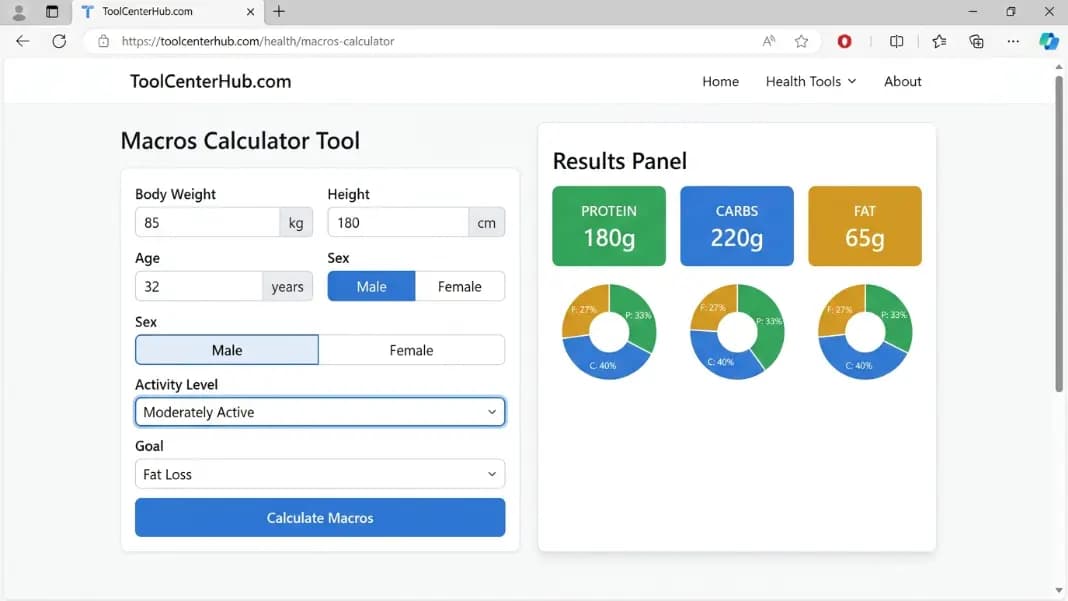
Macros Calculator: How to Calculate Your Macros
Learn what macros are, how to calculate your daily protein, carb, and fat targets for fat loss or muscle gain, and how to adjust your numbers over time.
9 min read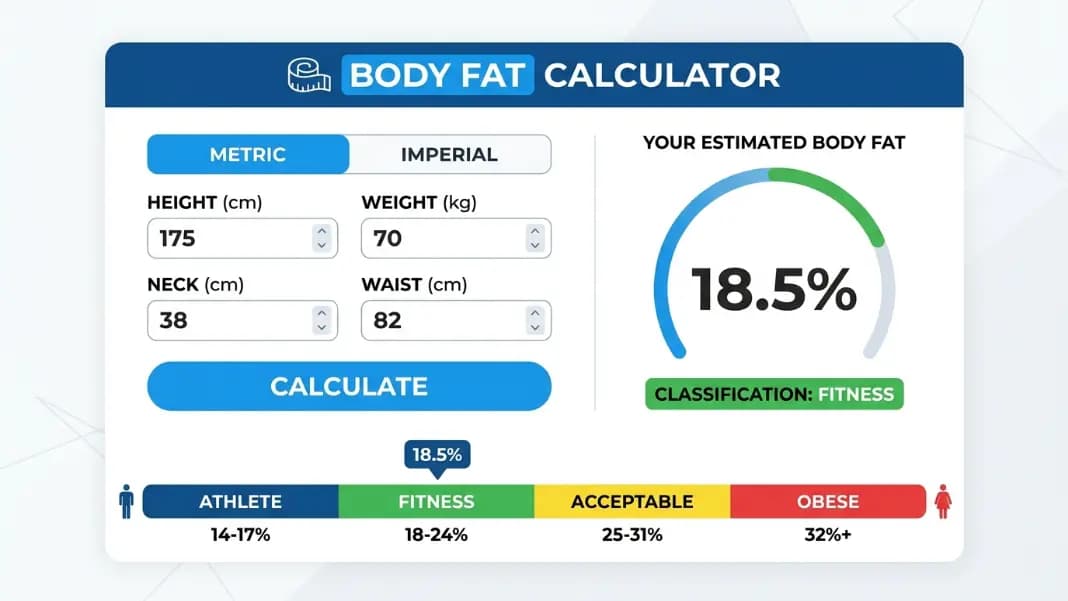
Body Fat Percentage Calculator: What Your Number Means
Learn what your body fat percentage means, healthy ranges for men and women, how it differs from BMI, and how to use a free calculator to measure yours.
9 min read
Body Fat Percentage for Women: Healthy Ranges by Age Explained
Understand healthy body fat percentage ranges for women by age, why women carry more essential fat than men, and how to measure yours with a free calculator.
11 min read