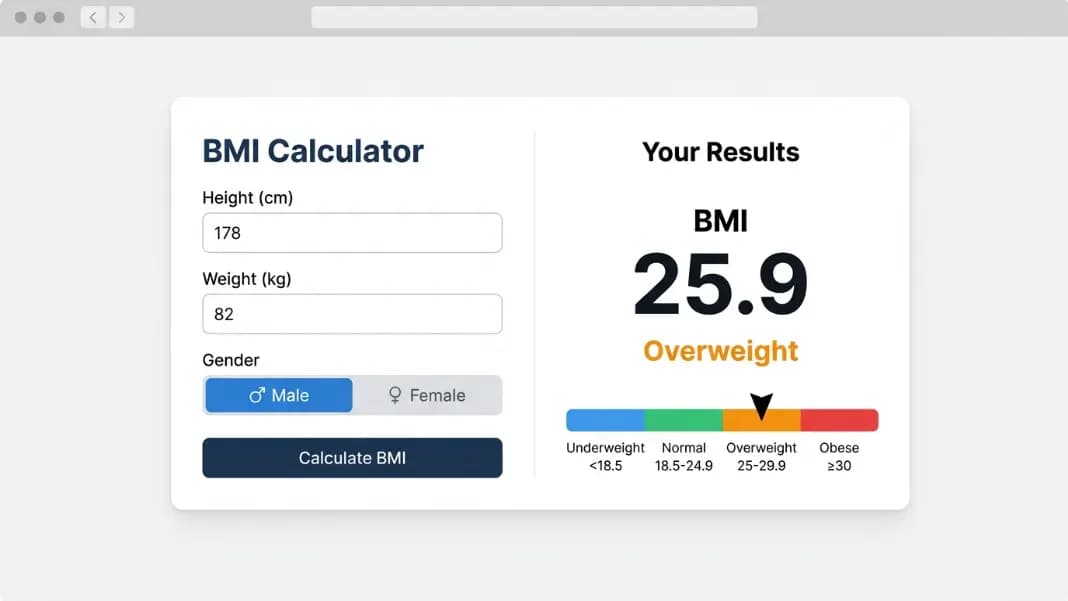
Your BMI comes back normal. That result is not wrong, but it tells you less than you might think. BMI measures weight relative to height. It cannot tell the difference between a kilogram of muscle and a kilogram of fat.
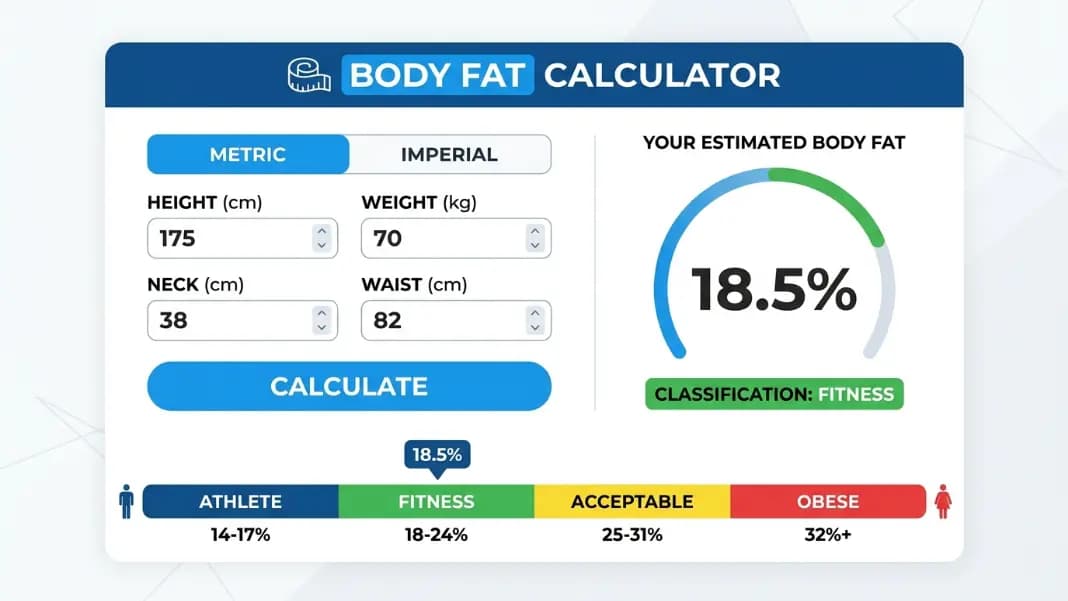
Body fat percentage is the measurement that actually describes what your body is made of. The body fat calculator at ToolCenterHub estimates your percentage using the US Navy method, which requires only a tape measure and takes about two minutes to complete.
This guide explains what body fat percentage means, what healthy ranges look like for men and women, how the different measurement methods compare, and how to use your result to set a realistic fitness goal.
What body fat percentage actually measures
Body fat percentage expresses how much of your total body mass comes from fat tissue. If you weigh 75 kg and 15 kg of that is fat, your body fat percentage is 20 percent. The remaining 80 percent is lean mass: muscle, bone, organs, connective tissue, and water.
Fat itself is not the problem. Some amount of fat is essential. It protects organs, supports hormone production, regulates body temperature, and stores energy. The issue is excess fat, particularly visceral fat stored around internal organs, which is linked to cardiovascular disease, insulin resistance, and metabolic syndrome.
Body fat percentage captures something BMI cannot: the composition of your weight. Two people can weigh the same and have the same BMI but carry dramatically different amounts of fat versus muscle. The person with more muscle is in a fundamentally different metabolic state, even if the scale reads identically.
Healthy body fat ranges for men
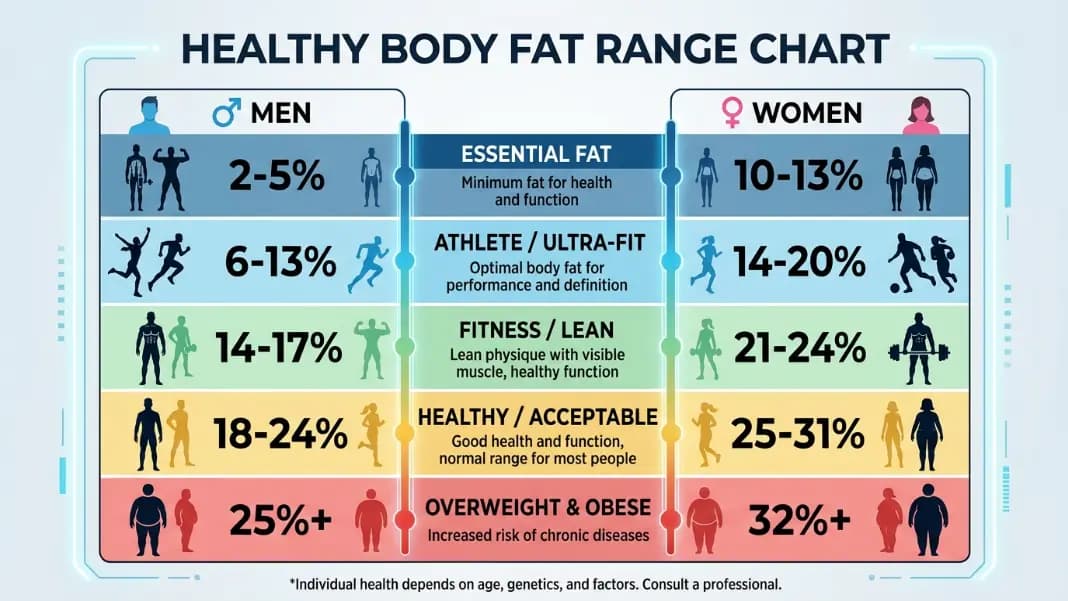
Body fat categories for men, using the American Council on Exercise classification:
- Essential fat: 2 to 5 percent. The minimum required for basic physiological function. This is not a sustainable long-term level for most people.
- Athlete: 6 to 13 percent. Typical of competitive athletes during training season. At these levels, muscle definition is clearly visible.
- Fitness: 14 to 17 percent. Active individuals who exercise regularly but are not competing. Fit appearance with visible muscle tone.
- Acceptable: 18 to 24 percent. Average range for most adult men. Health risks are generally low in this range.
- Obese: 25 percent and above. Associated with elevated risk of metabolic disease, cardiovascular issues, and joint stress.
The fitness and acceptable ranges are where most healthy non-athlete men should aim to fall.
Healthy body fat ranges for women
Women require more essential fat than men. This is not a design flaw. Reproductive hormones, bone density, and various metabolic processes depend on adequate fat stores in women.
- Essential fat: 10 to 13 percent. Minimum for hormonal and physiological function. Below this level, menstrual irregularities and bone density loss can occur.
- Athlete: 14 to 20 percent. Competitive athletes. Lean and visibly defined musculature.
- Fitness: 21 to 24 percent. Regularly active women with good body composition.
- Acceptable: 25 to 31 percent. Average for most adult women. Generally healthy range.
- Obese: 32 percent and above. Elevated metabolic health risk.
A woman at 25 percent body fat is in a healthy acceptable range. The same number for a man would place him in the obese category. Comparing across sexes using the same cutoffs leads to incorrect conclusions.
How body fat is measured
No consumer method measures body fat directly. All methods estimate it using formulas calibrated against more precise reference techniques. The method you use affects the number you get.
Skinfold calipers pinch the skin at standardized sites, such as the tricep, abdomen, and thigh, and measure the thickness of the fat layer. Technician skill and consistent site selection determine accuracy. Well-executed caliper measurements are reasonably accurate, typically within 3 to 4 percent of DEXA scan results.
Bioelectrical impedance analysis (BIA) sends a low electrical current through the body. Fat resists electricity more than muscle and water. The device estimates body fat based on this resistance. Handheld devices and smart scales use BIA. Hydration status significantly affects results: measuring after exercise or after eating can shift the reading by several percentage points.
The Navy method uses circumference measurements. For men: neck and waist. For women: neck, waist, and hips. The formula uses these measurements to estimate body fat percentage without calipers or electrical devices. It is less precise than DEXA or well-executed calipers but requires only a soft tape measure and takes two minutes.
DEXA scan (dual-energy X-ray absorptiometry) is the gold standard for body composition measurement. It uses low-dose X-rays to differentiate fat, lean mass, and bone. It shows regional fat distribution, including visceral fat. DEXA scans are accurate to within 1 to 2 percent, but require a medical facility and cost money.
The body fat calculator uses the Navy method. It is the most practical approach for self-measurement at home and gives results accurate enough to track progress over time.
BMI versus body fat percentage
BMI is a weight-to-height ratio. A person who is 180 cm tall and weighs 80 kg has a BMI of 24.7. The calculation does not know whether those 80 kg consist primarily of muscle or fat.
A competitive bodybuilder at 180 cm and 90 kg may have a BMI of 27.8, which falls in the overweight category. Their actual body fat percentage might be 10 percent. Meanwhile, a sedentary person at 180 cm and 75 kg with a BMI of 23.1 could be carrying 28 percent body fat due to low muscle mass.
BMI is a population-level screening tool. It works reasonably well across large populations but produces misleading results for muscular individuals and for people with normal weight obesity. Body fat percentage is a better individual-level measurement when you want to understand your actual body composition.
Use the BMI calculator for a quick reference point, but treat body fat percentage as the more meaningful indicator of your metabolic health and fitness level.
Normal weight obesity: the hidden risk
Normal weight obesity describes people whose BMI falls within the healthy range but whose body fat percentage is in the obese category. It is more common than most people assume and harder to identify because the person does not look overweight by typical standards.
The pattern usually results from muscle loss through inactivity combined with gradual fat gain. Someone who was active in their twenties, stopped exercising, but maintained the same weight as they aged has likely traded muscle for fat even though their weight number has not changed much.
The metabolic health consequences of normal weight obesity are similar to those of conventional obesity: elevated triglycerides, insulin resistance, higher cardiovascular risk, and elevated inflammatory markers. None of these show up by looking at someone or checking their BMI.
Measuring body fat percentage directly is the only practical way to identify this pattern.
Using your result to set a goal
Once you have your body fat percentage from the calculator, the next step is using it to set a specific target rather than a vague intention to lose weight.
If you are a man at 26 percent body fat and want to reach the fitness category at 16 percent, you need to lose 10 percentage points of fat while maintaining your lean mass. At 80 kg, that is approximately 8 kg of fat to lose. A sustainable rate of fat loss is 0.5 to 1 percent of body weight per week, which puts a realistic timeline on the goal.
Setting a caloric deficit is the mechanism. The TDEE calculator calculates your total daily energy expenditure based on your activity level, which sets the starting point for your daily calorie target. The calorie calculator helps you define how large a deficit to run based on your goal pace.
Resistance training during the deficit period protects lean mass. People who only reduce calories without training often lose significant muscle alongside fat, which reduces their metabolic rate and makes maintaining the result harder. Training while in a deficit produces better body composition outcomes than dieting alone.
Tracking progress over time
Body fat percentage from any consumer method will vary day to day based on hydration, when you last ate, and measurement consistency. Single readings are not as meaningful as trends over several weeks.
Measure at the same time of day, in the same conditions, using the same method each time. Morning measurements before eating or drinking and after using the bathroom tend to be the most consistent. Use the result as a data point in a trend rather than a definitive number.
Progress shows up in body fat percentage before it necessarily shows up on the scale. Someone gaining muscle while losing fat may see their weight stay relatively stable while their body fat percentage drops steadily and their visual appearance changes noticeably.
Related health calculators
The ideal weight calculator gives you a weight range considered healthy for your height, based on BMI and frame size. Used alongside body fat percentage, it gives a clearer picture of a realistic body weight goal.
The macros calculator breaks your daily calorie target into protein, carbohydrate, and fat targets. Protein intake is particularly important during fat loss phases to preserve muscle. A higher protein intake, typically 1.6 to 2.2 grams per kilogram of body weight, supports lean mass retention during a caloric deficit.
All of these tools are available at the health tools hub and run directly in the browser.