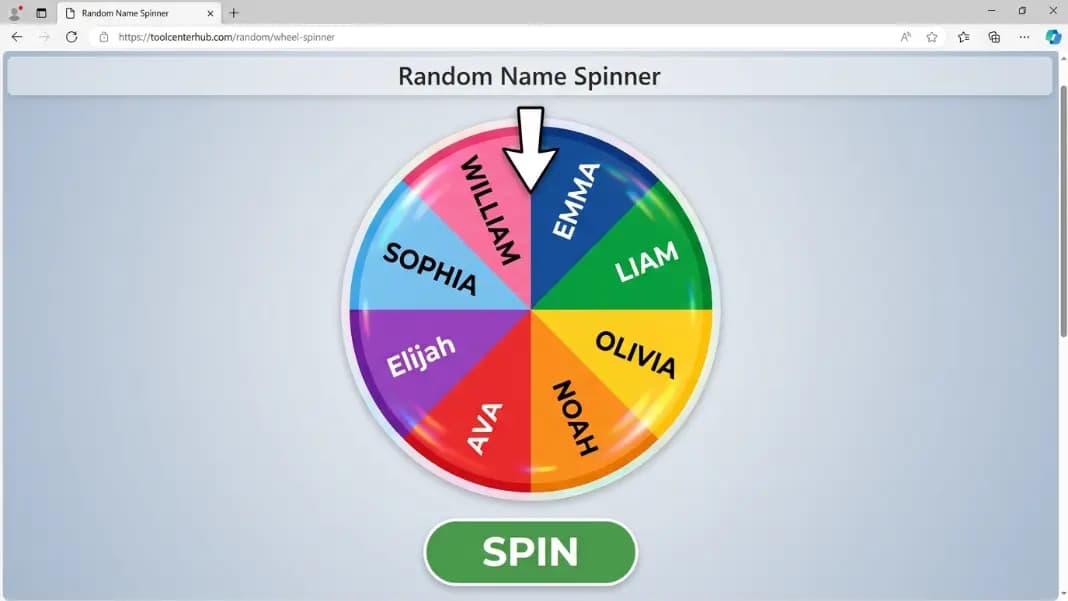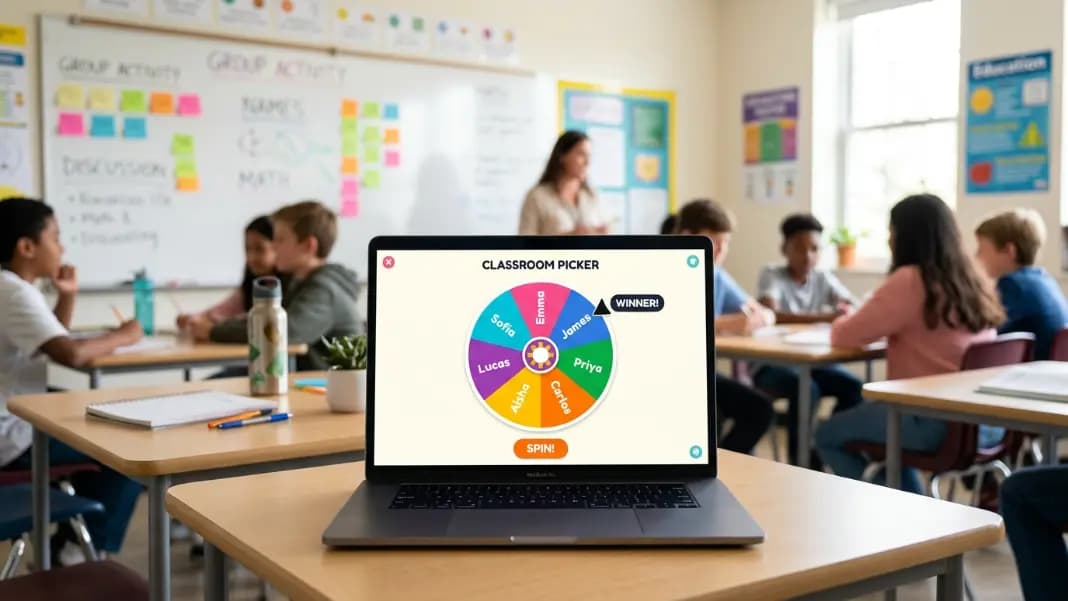
Your fantasy league draft is in two days and the commissioner needs a way to set draft order that nobody can challenge. Your PE class needs teams for a volleyball tournament but the traditional captain-picks system left half the class disengaged before the first game started. Your playoff pool needs seeds for six teams in an eight-team bracket.
A wheel spinner handles all three cleanly because the result is witnessed, uncontrolled by any person, and not influenced by who the organizer likes or who the most vocal participant lobbies for. The wheel spinner at ToolCenterHub accepts any custom list as segments. Load team names or participant names, spin in front of the group, and the result belongs to nobody's judgment.
Why Sports Team Assignment Needs a Neutral Method
When a commissioner or teacher assigns teams manually, every choice invites a challenge. Someone feels they were given the weakest team. Someone suspects the organizer weighted the draft order in their favor. A PE teacher picking teams triggers the same social dynamics it always has, where the same students land last every time.
The wheel replaces this with a visible, real-time random draw. Two formats apply:
Team assignment: Each participant spins for a specific pre-existing team (Lakers, Bruins, Yankees). They receive that team for a season-long challenge and earn points based on that team's real wins. No roster decisions, no drafts.
Draft order: Each participant spins for a pick position (1st, 2nd, 3rd). Used when participants will build their own roster by selecting players from a shared pool. Draft position matters significantly in competitive leagues, which makes witnessed randomization more important than in casual formats.
Understanding which format fits your situation matters before setting up the wheel. Once teams are assigned or draft order is set, neither can be re-spun without invalidating the draw.
Setting Up a Sports Team Wheel
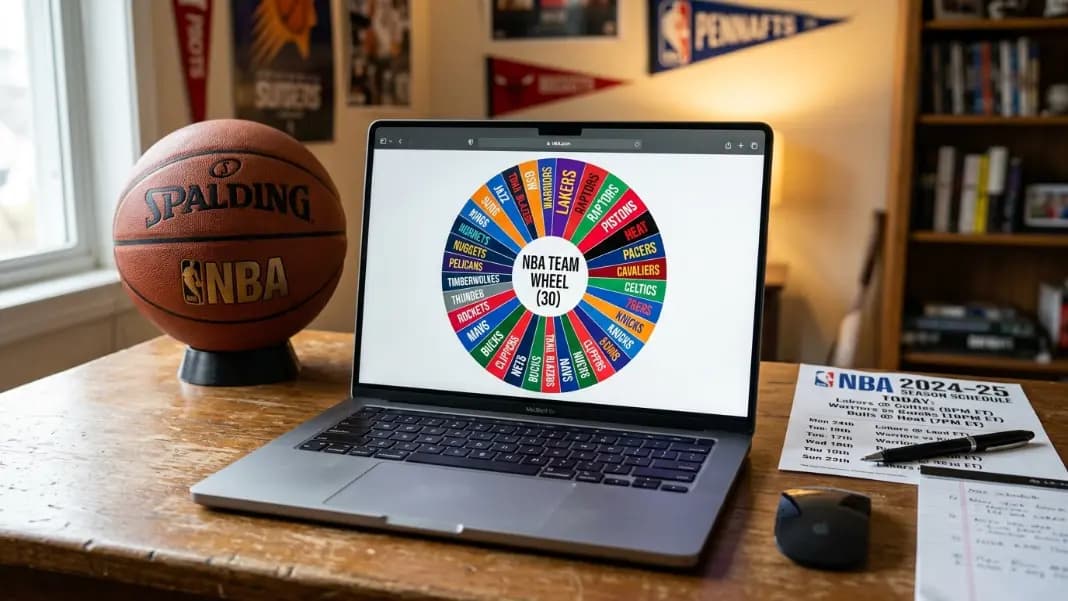
Open the wheel spinner, clear the default entries, and add one team name per segment. Short nicknames keep text readable at 30+ segments.
NBA (30 teams): Eastern Conference: Celtics, Nets, Knicks, Sixers, Raptors, Bulls, Cavaliers, Pistons, Pacers, Bucks, Hawks, Hornets, Heat, Magic, Wizards Western Conference: Nuggets, Timberwolves, Thunder, Trail Blazers, Jazz, Warriors, Clippers, Lakers, Suns, Kings, Mavericks, Rockets, Grizzlies, Pelicans, Spurs
NHL (32 teams): Eastern: Bruins, Sabres, Canadiens, Senators, Lightning, Maple Leafs, Panthers, Red Wings, Hurricanes, Blue Jackets, Devils, Islanders, Rangers, Flyers, Penguins, Capitals. Western: Utah HC, Blackhawks, Avalanche, Stars, Wild, Predators, Blues, Jets, Ducks, Flames, Oilers, Kings, Sharks, Kraken, Canucks, Golden Knights.
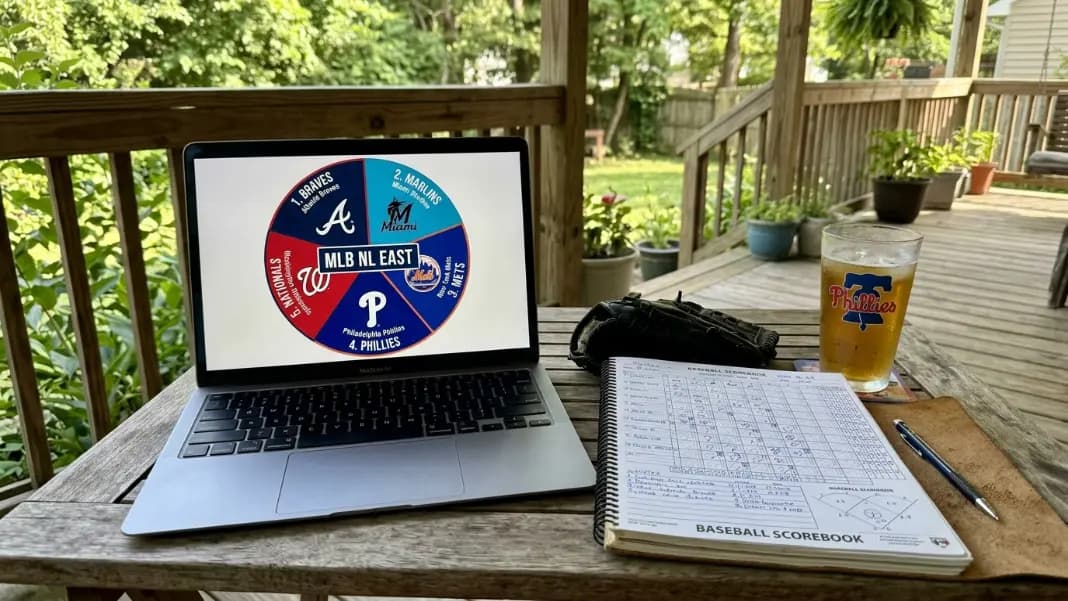
MLB (30 teams): AL East: Orioles, Red Sox, Yankees, Rays, Blue Jays. AL Central: White Sox, Guardians, Tigers, Royals, Twins. AL West: Astros, Angels, Athletics, Mariners, Rangers. NL East: Braves, Marlins, Mets, Phillies, Nationals. NL Central: Cubs, Reds, Brewers, Pirates, Cardinals. NL West: Diamondbacks, Rockies, Dodgers, Padres, Giants.
After loading: spin once per participant, remove each team immediately after it lands, and record the result before the next spin. Removing prevents duplicates and creates the same effect as pulling names from a hat, with everyone watching.
How to Seed a Playoff Bracket with a Spinner
Bracket seeding with a spinner is most useful in recreational leagues and PE class tournaments where teams have roughly equal ability and there is no performance basis for ranking seeds. It is also useful in any format where the organizer wants to avoid any accusation of favoritism in bracket construction.
Standard seeding process: Load all participating team names. Spin once and record the first team as the first seed. Remove that team and spin again for the second seed. Continue until all teams have seed numbers. Then pair seeds into bracket matchups: first vs. last, second vs. second-to-last.
Handling byes: When the number of teams does not fill a bracket cleanly, some seeds get a first-round bye. For an eight-team bracket with only six teams: the first two teams drawn from the wheel receive byes directly into the semi-finals. The next four draws fill the quarterfinal matchups, two games of two teams each. The wheel determines both who gets the advantageous bye position and who plays in the first round, entirely in one session.
A common mistake: assigning the bye to the "strongest" teams by reputation rather than using the wheel. In a casual league where skill levels are close and participants know each other, this creates conflict that the wheel avoids entirely.
Balancing Wheels When Team Counts or Group Sizes Are Unequal
Three situations require adjustment:
More teams than participants. A 12-person fantasy challenge with 30 NBA teams. Load all 30 teams, spin 12 times with removal, and stop at 12. The 18 unassigned teams are simply not in the challenge. There is no need to pre-curate a list of 12 teams and no need to load only the "competitive" teams. Full league loading preserves every team's equal probability of appearing in the challenge.
Unequal team sizes in a PE class. A class of 23 students forming 4 basketball teams creates sizes of 6, 6, 6, and 5. The wheel assigns students sequentially using a snake pattern: first drawn joins Team 1, second joins Team 2, third to Team 3, fourth to Team 4, fifth back to Team 1, sixth to Team 2, and so on. The snake pattern distributes variance across all teams. The last student drawn fills the short team. If all teams must be equal, designate one floating substitute who rotates in at set intervals rather than forcing the numbers to balance artificially.
Multi-sport challenge with unequal league sizes. The NFL has 32 teams, NBA has 30, MLB has 30. Loading all leagues into one combined wheel produces more NFL assignments than NBA ones over time, because there are more NFL entries. Use separate wheels per sport with one spin per sport per participant to give each league equal representation regardless of team count.
Sports Wheel for PE Class Team Formation
The traditional PE team formation process produces predictable results. Captains are selected, captains pick players, and the students with the weakest social standing or least athletic confidence are selected last, in front of everyone. The wheel replaces this entirely.
The classroom setup:
- Load all student first names onto the wheel
- Announce team sizes before spinning
- Spin and assign names in snake order across teams (1-2-3-4-4-3-2-1 and repeat)
- Stop when all students are assigned
The snake pattern is the same system used in fantasy sports drafts for the same reason: it prevents any one team from accumulating a run of early-drawn students. In a 4-team formation, a straight sequential assignment (first four go to Team 1, next four to Team 2) means the wheel can cluster all high-spin results into one team if the first four names drawn are randomly similar. The snake pattern breaks this up.
Timing matters: Spin after all students are in the gym, not before. A team assignment announced before class can influence who shows up. Spinning in front of the group ensures that assignment is simultaneous with attendance, preventing any student from gaming their team placement.
For classes with a student who cannot participate due to injury or absence, draw their name from the wheel anyway and assign it, then note the absence. This way, when the student returns, their team position is already established and no re-spin is needed.
Multi-Sport Season Challenges Across Leagues
A four-sport season challenge assigns each participant one team from the NFL, NBA, MLB, and NHL. Points accumulate from each team's real performance across all four seasons. The final standings combine all four sport totals.
Use the NFL wheel spinner guide for the 32-team football draw, then run this wheel for NBA, MLB, and NHL assignments in separate sessions. One wheel per sport, one session per sport.
Scoring balance across seasons: NFL teams play 17 regular season games. NBA and NHL teams each play 82. MLB teams play 162. Awarding one point per win without adjustment makes baseball 9.5 times more valuable than football in the final standings. A multiplier system (NFL wins worth 9x, NBA and NHL 2x, MLB 1x) normalizes point values across league season lengths.
For an assignment session that needs to cover multiple sports quickly, the double wheel spinner approach runs two spins simultaneously: the first wheel picks the sport, the second picks a specific team. This reduces setup time when participants want rapid draws rather than separate sessions per sport.
For all random selection tools in one place, the random tools section includes wheel spinner, dice roller, coin flip, and team generator.