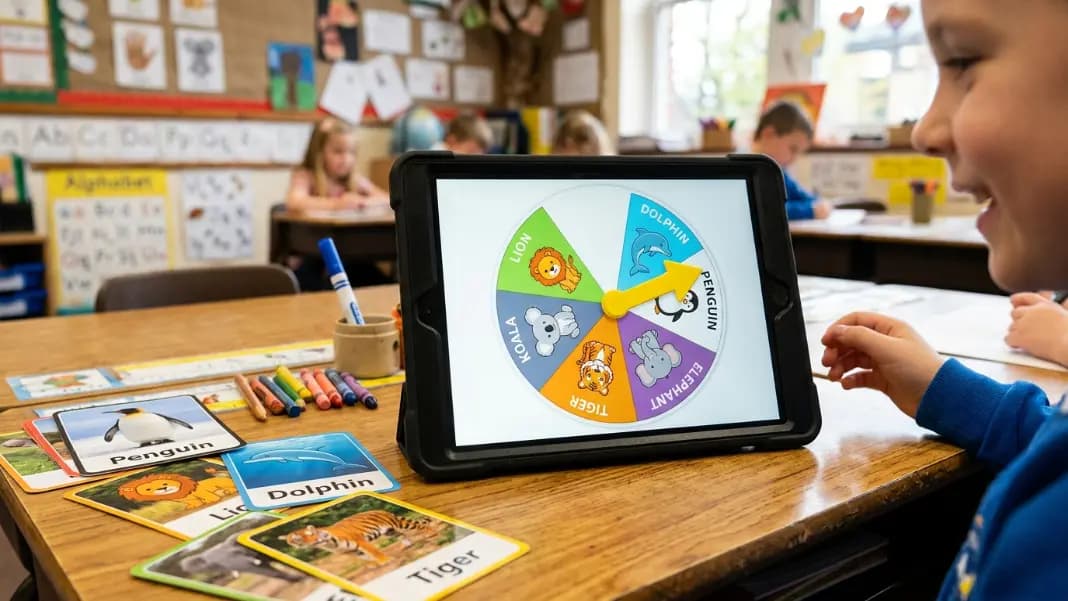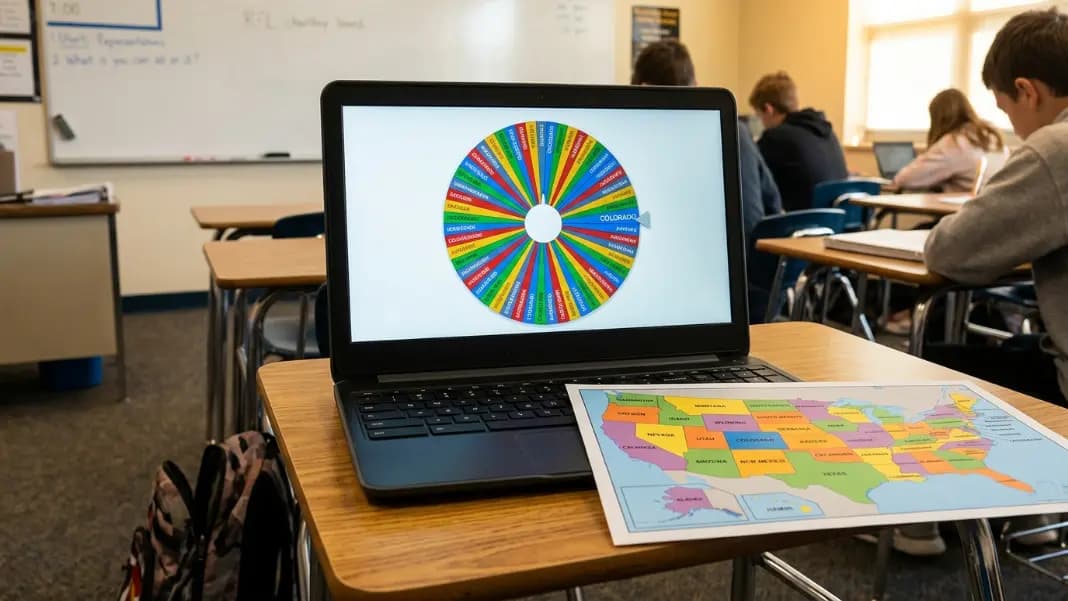
Most random decisions have one layer: pick a restaurant, pick a game, pick a movie. One wheel handles all of these. A double wheel spinner is for decisions and game mechanics that require two genuinely independent variables at the same moment: creature type and behavior, personality trait and motivation, damage type and magnitude.
The wheel spinner runs in any browser tab. Open two tabs, configure each with a different list, and you have a dual wheel setup. Spin both wheels simultaneously by having two people each spin one, or spin both in rapid succession without letting the first result change any expectation about the second. This guide covers the formats that make two-wheel spinning specifically useful for game masters and educators, and explains the key distinction between simultaneous and sequential use that most double wheel content skips.
Sequential vs. Simultaneous: Why the Difference Matters
Most content about double wheel spinners focuses on sequential use: spin wheel one to pick a category, then spin wheel two to pick a specific item from that category. The first result informs the second. A genre wheel picks Action, then a title wheel picks from a list of Action films.
Sequential spinning is genuinely useful for layered decisions with too many options for one wheel. But it is not what game masters and educators need most.
Simultaneous spinning treats both wheels as completely independent variables. The first result has no bearing on what the second wheel contains or what it should produce. Both wheels spin at the same moment, or as close as possible without the first result changing expectations about the second. The two results are combined as-is to produce a compound outcome.
This is identical to rolling two dice simultaneously. When a tabletop player rolls a d6 for damage type and a d8 for intensity together, neither die influences the other. The combined result is a specific compound outcome that neither die alone could generate. A dual wheel setup digitally replicates this mechanic for any situation where physical dice do not exist for the category list you need, or where a visible screen display works better than dice rolled at a single end of the table.
For game masters, the simultaneous distinction matters because it changes what you can build. A sequential wheel produces subcategories. A simultaneous wheel produces compound characters, encounters, and events.
Random Encounter Generator
The encounter table is one of tabletop gaming's oldest random tools: a list where a dice roll produces a specific encounter for the dungeon master to resolve. A dual wheel encounter generator extends this by creating two-variable encounter seeds from categories the DM defines rather than from a fixed printed table.
Wheel one (encounter type): Goblin group, Bandit pair, Wandering beast, Undead patrol, Lost traveler, Merchant caravan, Guard squad, Cultist cell, Fey creature, Elemental spirit
Wheel two (situation): Ambush in progress, Wounded and retreating, Making camp, Fleeing something larger, Guarding a specific item, Searching for something lost, Celebrating a recent victory, Hunting prey, Negotiating with a third party, Waiting for orders
Spin both wheels simultaneously. Combine the results:
- Goblin group + Guarding a specific item: what are they guarding, who sent them, and how long have they been there?
- Undead patrol + Celebrating a recent victory: what do undead celebrate, and what does that reveal about whoever controls them?
- Lost traveler + Negotiating with a third party: who is the third party and why does a lost traveler have something to negotiate with?
Each combination is a complete encounter premise with specific questions embedded in it. A table with ten entries per wheel produces 100 distinct encounter seeds. For a campaign that needs regional variety, configure multiple encounter-type wheels (forest, dungeon, city, sea) and keep one shared situation wheel. Switch the encounter wheel per region. The situation wheel stays constant because behavioral states work across any creature type.
NPC Generator
An NPC generator using two simultaneous wheels produces a character concept in under ten seconds without requiring the game master to invent one from scratch mid-session.
Wheel one (personality trait): Greedy, Fearful, Proud, Curious, Bitter, Generous, Suspicious, Naive, Ruthless, Compassionate
Wheel two (core motivation): Wealth, Revenge, Freedom, Safety, Power, Social acceptance, Knowledge, Love, Redemption, Survival
Spin both simultaneously. The combined trait and motivation is the character's core tension:
- Fearful + Knowledge: a scholar who discovered something genuinely dangerous and is now terrified of the implications
- Ruthless + Social acceptance: someone who climbs socially without moral limits, and does not understand why others find this unsettling
- Generous + Revenge: someone building loyalty and goodwill as tools for retribution
- Naive + Power: someone who genuinely does not understand why others perceive them as threatening
- Curious + Safety: someone who wants to know everything but is too cautious to investigate directly
None of these require additional invention before the scene starts. The combination is the character. The game master adds name, appearance, and local context. The wheel provides the person.
For NPCs who need more specificity, add a third wheel for occupation, faction affiliation, or current emotional state. Run all three in quick sequence. The result is a character with a trait, a motivation, and a context: enough to run a full conversation scene without preparation.
Weather and Environment Generation
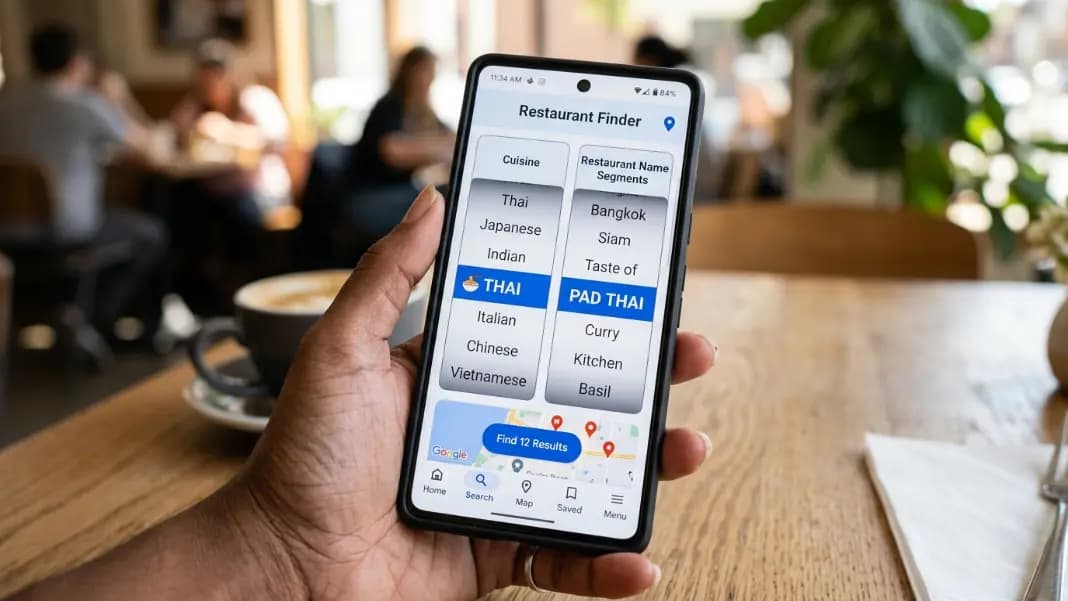
Weather generation is a classic two-variable tabletop system that maps directly onto a double wheel. Most campaign settings describe weather with two independent dimensions: type and intensity.
Wheel one (weather type): Clear, Overcast, Rain, Heavy rain, Fog, Wind, Snow, Sleet, Storm, Magical anomaly
Wheel two (intensity or additional condition): Mild, Moderate, Severe, Unusual for the season, Getting worse, Clearing up, Localized, Region-wide, Accompanied by thunder, With a specific direction
Spin both at the start of each travel day or before an outdoor scene. The combined result sets the environmental conditions: Heavy rain + Getting worse is a different day than Heavy rain + Clearing up. The former means the party races to find shelter. The latter means they might push on.
Weather systems using two independent variables demonstrate to players that environmental conditions are genuinely random rather than narratively convenient, which changes how players plan and respond. A game master who always makes weather dramatically appropriate produces weather players expect and account for. A double wheel produces weather that is sometimes dramatically inappropriate, which is more realistic and occasionally more interesting.
Two-Variable Decision Games
Several group game formats require two genuinely independent random variables to produce the compound results that make the game work.
Compound consequence game: Two wheels, one for action type (confess, challenge, ignore, help, accuse, investigate) and one for target (the person to your left, the person across from you, yourself, the oldest player, the person who last spoke). Spin both. The current player performs the spun action toward the spun target. The game runs on social context: what does it mean to "challenge" the person to your left at this specific moment?
Two-axis story prompt: Wheel one picks the genre (horror, comedy, romance, thriller, adventure, literary). Wheel two picks the setting (space station, medieval castle, modern office, tropical island, post-apocalyptic city, suburban home). Each combination is a story premise for improv, collaborative fiction, or a writing challenge session. Horror plus space station is a different brief than horror plus suburban home. Comedy plus medieval castle generates different constraint pressure than comedy plus modern office.
Simultaneous role assignment: For games where players have asymmetric roles, spin one wheel per player simultaneously. Each player sees only their own result before revealing to the group. Some configurations produce compatible roles. Some produce conflicting ones. The simultaneous spin prevents any player from knowing what roles others received before the reveal, which creates the information asymmetry the game needs.
Probability Teaching with Two Wheels
A dual wheel spinner is one of the clearest demonstrations of two-variable probability available to a classroom without requiring dice notation or statistical vocabulary first.
The sample space demonstration: Load both wheels with the same eight options (numbers 1 through 8 work cleanly). Ask students: how many different combined results are possible? Responses will vary. The answer is 64 (8 times 8). Spin both together twenty times and record every combination. Show the full results table. Most of the 64 possible combinations will not appear in 20 spins, which demonstrates the gap between the theoretical sample space and experimental outcomes in a format students can see directly.
Independence demonstration: After recording 20 spins, ask: if wheel one just landed on 5, does that change the probability of wheel two landing on 5? No. Each wheel has a 1-in-8 probability on every spin regardless of what the other wheel produced. The simultaneous spin makes this visible: neither result exists before the other, so students cannot construct a mental story about one result influencing the other. Sequential spinning creates the impression of connection. Simultaneous spinning shows independence.
Probability of a specific combination: With 8 segments per wheel, the probability of any specific pair is 1/64, or approximately 1.6 percent. Ask students to predict how many spins it would take to see one specific combination appear at least once. Run the experiment and compare predictions to results. The gap between what students expect and what actually happens is the intuition-builder that distinguishes this activity from showing them the formula.
The random number generator for classroom guide covers additional formats for teaching probability with digital random tools. The double wheel format complements that approach specifically for two-variable demonstrations where a single number generator cannot replicate the simultaneous independent result mechanic.
Building a Game Master's Wheel Kit
A game master who runs campaigns regularly benefits from a prepared set of wheels for common in-session randomness needs.
Core encounter wheel: 10 creature or faction types relevant to the current campaign arc. Update at the start of each new arc when the relevant enemies shift.
Core situation wheel: 10 behavioral states that work across any encounter type. This wheel rarely needs updating because behavioral states are genre-neutral: ambush, fleeing, guarding, celebrating, searching, waiting, negotiating, hunting, wounded, and resting apply to any creature in any system.
NPC trait wheel: 10 personality traits, kept constant across the campaign. Spin whenever an unplanned NPC needs a consistent character hook in a scene.
NPC motivation wheel: 10 motivations, kept constant. Spin paired with the trait wheel for any NPC who needs depth beyond their name and function.
Environment wheel: 10 weather or environmental conditions relevant to the current region. Update when the campaign moves to a significantly different climate or setting.
Keep each wheel in a separate browser bookmark with the list already loaded, or keep entry lists in a notes file for quick reload. A five-wheel kit produces an encounter, a two-variable NPC, and an environmental condition in under two minutes of total spin time. That is fast enough to use live at the table during a brief pause rather than requiring advance preparation.
For any random selection beyond what the double wheel covers, the random tools section has the coin flip for binary decisions and the number generator for numerical results. The wheel spinner is the base tool for any of the formats in this guide. For combining character assignment with role assignment in a team context, the wheel spinner for teams guide covers the single-wheel equivalent for group role distribution.