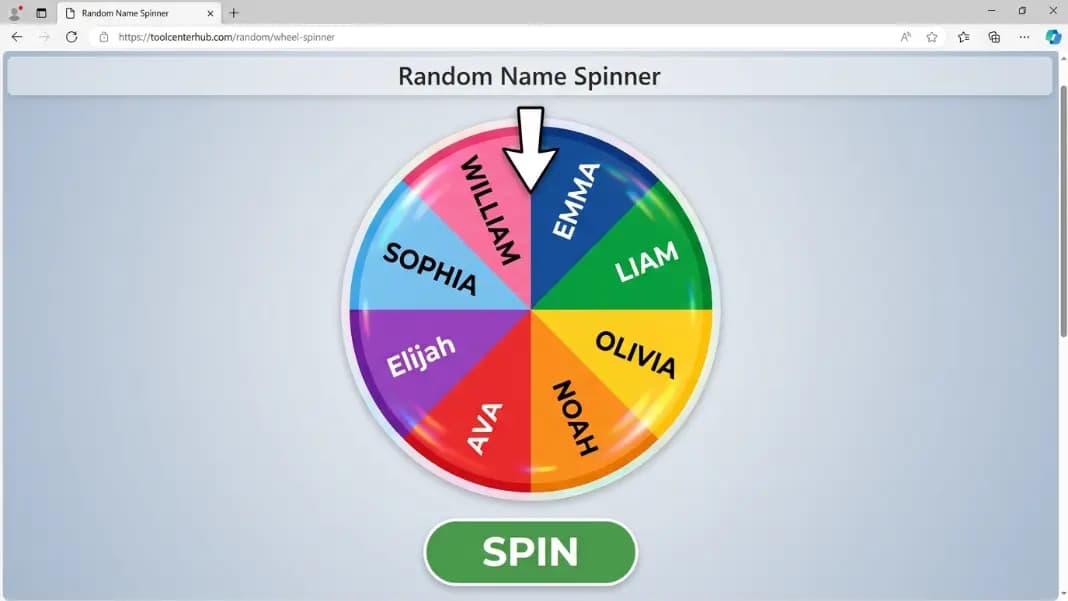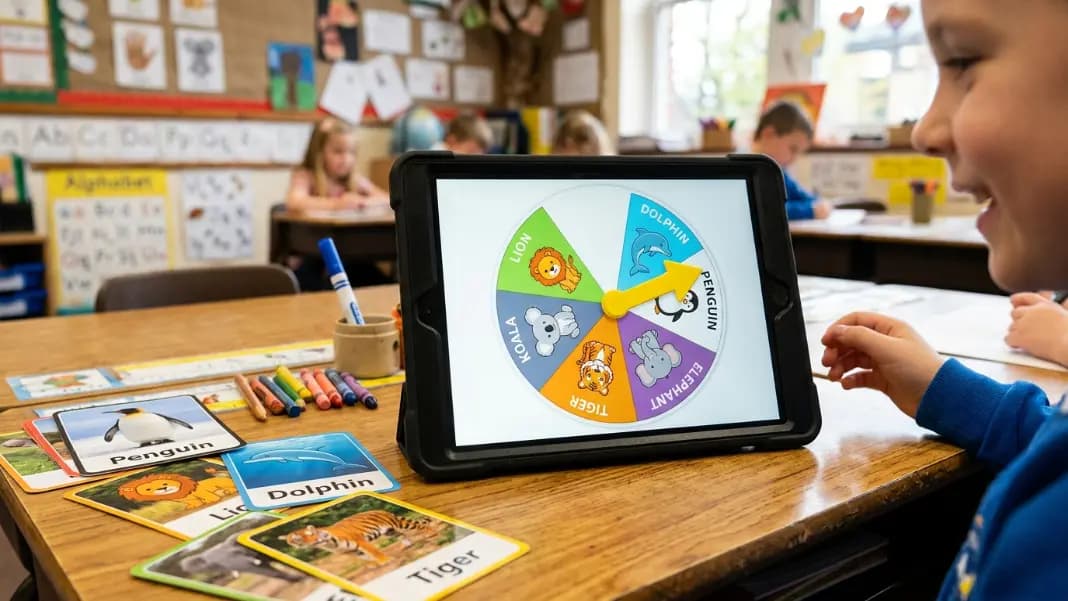
The year 5 science class is reviewing ocean animals and the teacher needs a way to pick subjects fairly without calling on the same students every time. Writing animals on slips of paper takes ten minutes the lesson does not have. Asking for volunteers produces the same three raised hands. The animal wheel spinner picks any animal from the list in under a second, puts the result on the projected screen where the whole class can see it, and moves the lesson forward.
The wheel spinner accepts any animal list you enter as segments. This guide is specifically for classroom and educational use: how to build lists matched to the age group you are teaching, which game formats pair well with an animal wheel, and how an animal spinner works differently from other classroom wheel types.
Why Animal Wheels Work Differently From Other Classroom Spinners
Letter wheels, number wheels, and vocabulary wheels produce results that are self-contained answers. When the wheel lands on B, the students know exactly what B is. When it lands on 14, the number is complete. The wheel result ends the cognitive work.
An animal wheel inverts this. Landing on "axolotl" is not information by itself. It is a prompt. What can you tell me about an axolotl? Where does it live? What does it eat? Is it endangered? Is it a vertebrate? The wheel selects the subject and the students provide the knowledge. This distinction changes how the classroom responds to the spin.
Vocabulary wheels and letter wheels work fastest when students already know the material and just need an activation cue. Animal wheels work best when students have partial knowledge and the wheel gives them an opportunity to surface it, compare it, and fill in gaps together. The spin starts the conversation rather than delivering a piece of information.
This also changes how animal wheels handle uncertainty. When the wheel lands on a familiar animal, students who know facts immediately engage. When it lands on something less familiar, the class's collective knowledge is genuinely tested, which produces more interesting discussion than confirming what everyone already memorized. Unusual animals generate "wait, what is that?" reactions that motivate curiosity rather than just triggering recall.
For units where specific coverage is the goal, the wheel ensures every animal in the set gets picked across multiple lessons without the teacher manually tracking which ones have already come up. The randomness distributes attention across the full list over time.
Age-Group Animal Lists: Ready to Copy Into the Wheel
The most common setup mistake is using a single animal list across all age groups. Animals that generate immediate recognition in a six-year-old (lion, elephant, duck) generate almost no classroom engagement in a thirteen-year-old who has encountered those animals in every educational context for seven years. The list must match the class's existing knowledge base to produce the right level of challenge.
Ages 4–6: Familiar and Recognizable
At this age, the goal is confidence and participation. Every spin should land on something the child already knows something about. Unfamiliar animals produce hesitation rather than engagement, which stalls the activity before it starts.
Recommended list — 10 animals: Dog, Cat, Elephant, Giraffe, Lion, Penguin, Duck, Horse, Rabbit, Frog
Keep the list to ten animals for early learners. Below ten, results repeat quickly within one session. Above ten, the wheel becomes too varied for the limited prior knowledge this age group brings. If the class is doing a themed unit (farm animals, zoo animals), use only the animals from that unit rather than a mixed general list.
Ages 7–10: Biome and Category Focused
This age group has enough background knowledge to engage with animals they have not specifically studied yet, provided the context is established. Organizing the list by the current curriculum unit keeps every result relevant to what the class is learning rather than producing off-topic results mid-lesson.
Farm and domestic animals: Cow, Pig, Sheep, Goat, Turkey, Donkey, Alpaca, Llama, Chicken, Horse
Ocean and marine: Shark, Dolphin, Octopus, Sea Turtle, Jellyfish, Seahorse, Manta Ray, Clownfish, Orca, Crab
African savanna: Lion, Elephant, Giraffe, Zebra, Cheetah, Wildebeest, Hyena, Meerkat, Warthog, Vulture
Rainforest: Toucan, Jaguar, Poison Dart Frog, Sloth, Capuchin Monkey, Anaconda, Macaw, Tapir, Capybara, Howler Monkey
Switch to the biome list that matches the current unit. These lists are sized at ten animals each, which keeps the wheel readable on a projected screen and prevents the same animal from repeating more than once every ten spins within a lesson.
Ages 11–14: Unusual and Curriculum-Matched
At this level, the wheel can introduce animals the class may not have studied yet. Landing on something unfamiliar is productive at this age because it generates genuine curiosity rather than a false sense of already knowing the answer. "What do we actually know about a mantis shrimp?" is a better classroom moment than confirming facts everyone memorized from the textbook.
High-engagement unusual animals: Axolotl, Mantis Shrimp, Tardigrade, Platypus, Aye-aye, Fossa, Binturong, Naked Mole Rat, Pangolin, Irrawaddy Dolphin
Endangered species for conservation units: Amur Leopard, Sumatran Tiger, Black Rhino, Hawksbill Sea Turtle, Vaquita, Mountain Gorilla, Snow Leopard, Kakapo, Saiga Antelope, Chinese Pangolin
Classification practice (vertebrate and invertebrate diversity): Basilisk Lizard, Axolotl, Hammerhead Shark, Platypus, Kiwi, Komodo Dragon, Alligator Snapping Turtle, Mudskipper, Mantis Shrimp, Flying Squirrel
The classification list deliberately includes animals that sit at category boundaries. The mudskipper breathes air and moves on land. The platypus lays eggs despite being a mammal. The flying squirrel glides but does not truly fly. These edge cases generate more discussion about what classification categories actually mean than textbook examples do.
Mixed Adult and Teen: High-Discussion and Debate-Generating
For adult learners, college introductory biology, or mixed-age groups where adults need genuine engagement rather than simplified content, use animals known for counterintuitive or surprising biology.
High-discussion adult list: Mantis Shrimp (sixteen types of color receptor, compared to three in humans), Tardigrade (survives vacuum of space and extreme radiation), Octopus (three hearts, blue blood, distributed nervous system), Platypus (detects electric fields, lays eggs, produces milk through skin), Lyrebird (mimics chainsaws, camera shutters, and other birds), Archerfish (shoots water jets to knock insects off branches above the surface), Mimic Octopus (impersonates lionfish, flatfish, and sea snakes), Bombardier Beetle (sprays chemically heated liquid from its abdomen), Pistol Shrimp (creates cavitation bubbles that momentarily reach temperatures near the surface of the sun), Cuttlefish (hypnotic skin patterns that pulse at frequencies visible to predators)
Each animal on this list has at least one verifiable fact that produces a "wait, what?" reaction when stated correctly. That reaction is the engagement hook that turns a wheel result into a sustained discussion.
Classroom Game Formats That Work With an Animal Wheel
The most effective formats use the wheel to pick the subject and the students to provide all the content. Formats where the teacher provides the facts after the spin are less engaging than formats where the spin creates a task for the class.
Animal facts challenge: Spin for an animal. The first student to name one verified fact about it wins the round. Set the category before the first spin: habitat, diet, lifespan, predator or prey status, or taxonomy classification. A category agreed on before spinning prevents disputes about whether an answer qualifies.
Habitat identification with levels: Spin for an animal. Students name its primary habitat with increasing specificity. Round one: continent. Round two: biome type. Round three: specific habitat (intertidal zone, tropical cloud forest, sub-Saharan savanna). Answers become harder at each level, which allows the same game to work from year 3 through year 9 by adjusting how far the rounds go.
Food chain relay: Spin for an animal. Students build a food chain from that animal outward in both directions: what does it eat, and what eats it. The relay continues around the class until someone cannot extend the chain in either direction. Some animals create long chains with clear answers. Others, like apex predators, create asymmetric chains that end immediately in one direction and extend far in the other, which produces useful discussion about the concept of apex predation.
True or false rounds: Spin for an animal and read a prepared true or false statement. Students vote simultaneously using thumbs, cards, or clickers. Counterintuitive true statements are the most useful: "Elephants are the only mammals that cannot jump" (true). "Dolphins are fish" (false). "Octopuses have three hearts" (true). "Flamingos are born pink" (false, they are born grey and turn pink from carotenoids in their diet). Simultaneous voting prevents copying and makes the reveal more engaging.
Classification sprint: For taxonomy units, spin for an animal and students classify it across multiple levels as quickly as possible: kingdom, phylum, class, order, family. The speed element works for review sessions. For the classification practice list with boundary-case animals, the classification sprint reveals where the disagreements are, which is more useful than confirming unanimous correct answers.
Classroom Setup and Pacing
The wheel spinner runs in any browser with no account or download required. It works on school Chromebooks, shared tablets, and teacher laptops connected to a projector. The spin animation displays clearly at full screen, and the result text is readable at standard classroom projector distances.
Keep animal names short when entering them into the wheel. "Lion" fits on a segment at twenty animals. "African Lion (Panthera leo)" does not. For a scientific names unit, use only the binomials and drop common names entirely. Mixed naming formats create confusion when students are not sure which form of the name counts as a correct answer.
For a lesson with a projector setup, run the wheel on the teacher's machine rather than a student device. The teacher controls pacing, which prevents students from spinning before the class has settled from the previous round.
After the wheel result displays, pause three to five seconds before accepting answers. Research on classroom wait time developed by Mary Budd Rowe at the University of Florida in 1972 found that teachers typically allow only 0.7 to 1.5 seconds between presenting a question and calling on a student. When that pause extends to three seconds or more, student responses become longer and more detailed, more students volunteer answers they had not planned to give, and students who are typically quiet begin to participate. An animal wheel spin creates the same opportunity. A deliberate pause after the result appears gives every student in the room time to search their memory before anyone calls out, which surfaces more of the class's collective knowledge per round than immediate answers do.
Build wheels by curriculum unit. A farm unit wheel, an ocean unit wheel, and a rainforest unit wheel saved separately reload in a few seconds at the start of a lesson. Rebuilding from scratch mid-class wastes time the lesson needs for content. The wheel spinner online guide covers saving and reloading wheel configurations.
For a term that runs multiple units, rotate between a focused ten-animal unit wheel and a larger twenty-five-animal cumulative review wheel in the weeks before an assessment. The review wheel pulls animals from all the units covered so far and gives the class exposure to the full set before a test.
Animal Wheel for Drawing Challenges
A classroom drawing challenge using the animal wheel removes the blank-canvas problem and prevents the default clustering around five popular animals. Without random assignment, most students draw dogs, cats, lions, horses, or wolves. These are fine subjects but they do not push observation skills.
Load the wheel with fifteen to twenty animals from the current unit and spin once per student or once per round. For a timed group challenge, the whole class draws the same result simultaneously for five minutes and reveals at the same count. Nobody knows what the others drew until the reveal. The comparison is more interesting when everyone worked from the same reference.
For individual sketch assignments across a term, each student spins once per session and adds that animal to a running sketchbook. Drawing ten unfamiliar animals over a term, including axolotls, pangolins, and binturongs the student would never have chosen, produces a more varied portfolio and more careful observational work than ten self-selected subjects.
The state wheel spinner guide covers the same setup logic applied to geography. The decisions about list size, focused versus diverse lists, and managing repeat prevention over multiple sessions are identical regardless of what is on the segments.
Connecting the Wheel to Curriculum Goals
The wheel is a selection mechanism. The learning goal is whatever the lesson targets: species identification, ecosystem understanding, conservation awareness, taxonomy practice, or observational drawing. The wheel handles selection so lesson time goes entirely to the content.
For a conservation unit, the endangered species list and a follow-up question sequence produces consistent discussion: what is the primary threat to this animal? What is the current wild population estimate? What conservation organizations are working on it? Students answer from memory for review, or look up answers in a structured research format.
For any activity that needs a numeric component alongside animal selection, the random number generator handles the numeric part. Assigning point values to trivia answers, ranking species by population, or running probability exercises alongside a biology lesson all work cleanly when the animal wheel picks the subject and the number generator handles the numerical element. The full random tools section covers both tools and the other formats that pair with them.