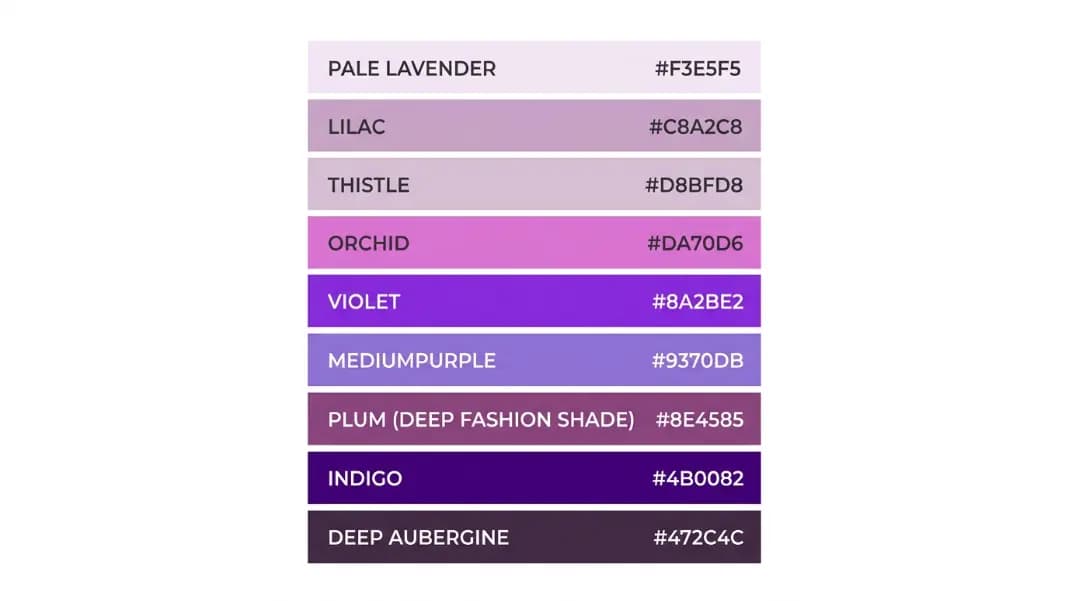
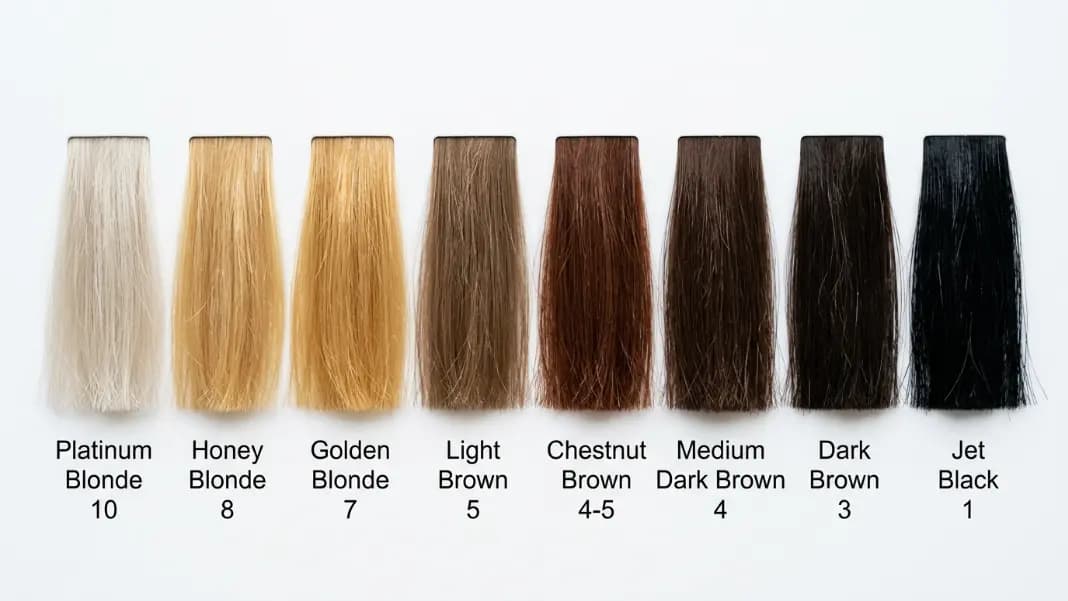
You are browsing a paint catalog and the colors are called "Dead Salmon," "Elephant's Breath," and "Mole's Breath." You open a CSS file and notice "rebeccapurple" sitting between "purple" and "red" in the named color list, with a story attached that has nothing to do with design. You find a historical pigment reference listing "Mummy Brown" as a medium used by European painters for centuries. Unique color names are genuinely surprising, and the stories behind them are usually more interesting than the colors themselves.
The vocabulary of unusual, rare, and poetic color names runs well beyond the standard color wheel. Some come from historical pigments and ancient dyes. Some come from paint brands competing for memorability in a crowded market. Some come from CSS specification decisions made in committee. The color name finder covers all 140 CSS named colors, including the stranger ones like "rebeccapurple," "peachpuff," "peru," and "papayawhip." Each has a hex code; several have a history.
This guide covers the most interesting, unusual, poetic, and genuinely weird color names across systems, with hex codes and context for each.
Why Some Color Names Are More Memorable Than Others
The most memorable color names follow recognizable patterns. They name an unexpected source material ("Dead Salmon," "Mummy Brown"), use a specific cultural or geographic reference ("Prussian Blue," "Hague Blue," "Gainsboro"), or create a sensory association that extends beyond the color itself ("Elephant's Breath," "Midnight," "Setting Plaster").
Generic color names describe. Memorable color names evoke. "Warm gray" tells you temperature and depth. "Elephant's Breath" tells you about weight, muted warmth, and a specific yellowish-gray quality that you now associate with something concrete. The specificity creates both brand recognition and genuine usefulness. The name becomes a shorthand for the full sensory quality of the color.
This is why paint brands invest heavily in color naming. For a consumer evaluating a 2-inch chip against hundreds of competitors, the name is often the most memorable element. A color called "Agreeable Gray" sells on the promise embedded in the name. A color called "Dead Salmon" sells because you cannot forget it.
CSS Color Names That Are Actually Surprising
The 140 CSS named colors were not designed for aesthetics. They were inherited from early X Window System color lists and extended through browser competition in the 1990s. The result is a set that includes some genuinely unexpected names.
Rebeccapurple (#663399): The only CSS color named after a real person. Added in 2014 in memory of Rebecca Meyer, the six-year-old daughter of CSS developer Eric Meyer. The W3C accepted the community's request to include it in the official specification.
Peru (#CD853F): A warm medium brown named after the country. No documented explanation exists for the choice of Peru specifically over other warm brown references.
Peachpuff (#FFDAB9): A light warm peach. The word "puff" suggests a soft, airy quality, which the hex delivers: it is a very pale, soft peach.
Papayawhip (#FFEFD5): An extremely pale warm cream named after the color of papaya flesh. Hex: #FFEFD5.
Blanchedalmond (#FFEBCD): A pale warm off-white. The name is French for "whitened almond." One of the longer single-word names in the CSS set. Hex: #FFEBCD.
Oldlace (#FDF5E6): A near-white warm cream named after the color of aged lace fabric. The "old" adds the key suggestion of yellowing. Hex: #FDF5E6.
Cornsilk (#FFF8DC): A very pale warm yellow, named after dried corn silk. Hex: #FFF8DC.
Gainsboro (#DCDCDC): A medium-light gray named after Thomas Gainsborough, the 18th-century portrait painter. The connection is thin: Gainsborough used silvery light, and the gray approximates that quality. Hex: #DCDCDC.
Chartreuse (#7FFF00): What CSS calls chartreuse is a vivid yellow-green, far more saturated than most uses of the word in English. In French, chartreuse refers to the liqueur, which is a yellow-green. CSS chartreuse is neon by comparison. Hex: #7FFF00.
Lavenderblush (#FFF0F5): A near-white with the faintest pink tint. The connection to lavender requires some imagination. Hex: #FFF0F5.
Rare Color Names from History and Science
Some of the most unusual color names come from historical pigments, chemistry, and the art supply trade. These were specific materials with specific colors, and the names reflect their origins.
Tyrian Purple: The color of ancient royalty, produced from the mucus of Murex sea snails. Processing sufficient snails to dye a single garment took thousands of animals, making Tyrian purple more expensive than gold by weight. It was reserved for Roman emperors, later Catholic bishops and cardinals. The practice died out when Constantinople fell in 1453. Approximate hex: #66023C.
Prussian Blue: The first synthetic blue pigment, created accidentally by a Berlin paint maker around 1704. It was used in Japanese ukiyo-e woodblock prints and extensively in European painting. Approximate hex: #003153.
Vermilion: A vivid red-orange derived from mercuric sulfide (cinnabar). Used as a pigment since antiquity in China, India, and Europe. The name derives from the Latin "vermiculus" referring to a worm, a reference to the kermes insect that also produced red dyes. Approximate hex: #E34234.
Egyptian Blue: One of the earliest synthetic pigments, created in ancient Egypt around 3100 BCE by heating quartz, copper compounds, and calcium. It has the unusual property of fluorescence under near-infrared light, which archaeologists now use to detect it on ancient artifacts. Approximate hex: #1034A6.
Mummy Brown: A paint pigment produced from ground Egyptian mummies, used by European painters from the Renaissance through the 19th century. Once artists understood what was in it, most are reported to have buried their remaining supply. Approximate hex: #6B3A2A.
Payne's Gray: Named after 18th-century watercolorist William Payne who invented it. A dark, slightly blue-gray with muted quality that makes it useful as a shadow color. Approximate hex: #536878.
The Most Memorably Named Paint Colors
Farrow and Ball builds its brand partly around unusual naming. Their color names are evocative and sometimes deliberately opaque, which makes them recognizable even without seeing the color.
Elephant's Breath (No. 229): A warm medium gray with a yellowish undertone. The name describes the dusty, heavy quality of the shade more precisely than "warm gray" would. Approximate hex: #B5ACA5.
Dead Salmon (No. 28): A dusty, desaturated pink-orange. The "dead" modifier is the key: it suggests the warmth has been muted, which is exactly what distinguishes this from standard peach or salmon. Approximate hex: #C8967C.
Mole's Breath (No. 276): A medium cool gray. The "mole" reference suggests an underground, slightly subterranean quality. Approximate hex: #9B9183.
Setting Plaster: A dusty warm pink, named after the color of freshly applied plaster in the hours before it dries white. The name gives you the specific moment and the material. Approximate hex: #D4A090.
Pigeon (No. 25): A soft blue-gray named after the actual color of a common pigeon's feathers. Approximate hex: #9BB0B3.
Brassica: A deep blue-purple-gray named after the plant family that includes cabbage and kale. The connection is the gray-blue quality of kale leaves. Approximate hex: #6A5C7A.
A guide to how paint companies name their colors and connect to hex code systems is at the paint color chart with names guide, which covers the most popular named paints and their approximate hex equivalents.
Aesthetic and Poetic Color Names in Design
Beyond paint brands, design and fashion vocabulary includes a set of color names that work as emotional shorthand rather than precise descriptors.
Sage: A muted, slightly gray green, approximately #B2AC88. The name suggests the herb and, by extension, a calm, natural quality. Sage as a design color dominated interior palettes in the late 2010s and early 2020s.
Dusty Rose: A muted pink with gray undertones, approximately #C4A2A4. The word "dusty" is doing important work. It differentiates this from blush (cleaner pink) and mauve (grayer, more purple).
Marigold: A warm golden-orange, approximately #EAA220. Used in brand palettes and interior design where the warmth of orange is wanted without the intensity of a fully saturated orange.
Terracotta: A warm orange-red-brown, the color of unglazed fired clay. Approximate hex: #CC5500. Terracotta dominated interior design as a trend color in the early 2020s alongside sage and warm neutrals.
Midnight: A very dark navy or blue-black, approximately #2C3E50. Midnight is one of the most useful aesthetic color names in design because it implies deep darkness without being pure black, which reads as flat in most contexts.
Dusk: A blue-gray that suggests the quality of early evening light. No single standard hex, but typically in the #9AA0B8 to #A0A8C0 range depending on context.
Long and Unusual Color Names Worth Knowing

Some color names are notable for their length, specificity, or both. These function as extremely precise descriptors where a shorter name would fail.
Lightgoldenrodyellow (#FAFAD2): The longest CSS named color at 20 characters. A very pale warm cream-yellow named after the goldenrod flower, significantly lightened. It reads as near-white with a warm undertone.
Blanchedalmond (#FFEBCD): 13 characters. Despite the length, the name is specific: the pale warm cream of blanched almonds.
Mediumspringgreen (#00FA9A): A vivid cyan-green at medium lightness. The medium qualifier is doing real work here since "springgreen" in CSS (#00FF7F) is brighter.
Screamin' Green (Crayola): A vivid electric green that exceeds standard green vocabulary. The name acknowledges its own extremity.
Atomic Tangerine (Crayola): A vivid bright orange-pink. In 1990s Crayola naming, "atomic" signals a futuristic, non-natural intensity.
Jazzberry Jam (Crayola): A dark vivid pink. The name packs cultural (jazz) and culinary (jam) associations into a color that would otherwise be called "dark vivid pink."
Funny and Weird Color Names That Are Real
Puce: A brownish-purple, historically named after the French word for flea, with the implication being the color of a flea or flea dirt on white linen. Approximate hex: #CC8899. It is one of the stranger etymological origins for a color name.
Coquelicot: A vivid orange-red named after the French word for poppy flower. Approximate hex: #FF3800. Primarily encountered in art history and French poetry contexts.
Smaragdine: An archaic word for emerald green, derived from the Latin and Greek for smaragd (emerald). Not used in modern design but appears in pre-20th-century color writing.
Wenge: A dark brown wood color named after the wenge tree from Central Africa. Approximate hex: #645452. Used in furniture and interior design vocabulary for a specific very dark, slightly cool brown.
Phlox: A vivid magenta-purple named after the phlox flower. Approximate hex: #DF00FF. One of the most vivid named purples outside the CSS standard set.
Vantablack: A material, not a paint. A carbon nanotube array that absorbs 99.965% of visible light. Closer to the absence of color than any hex code can represent. It cannot be reproduced as a standard surface finish and has no meaningful hex equivalent.
Finding Hex Codes for Unusual Color Names
For any color name not in the CSS specification, no single authoritative hex value exists. The hex for "Dead Salmon" from Farrow and Ball and the "Dead Salmon" someone paints in watercolor are different. When searching for a hex for an unusual color name, cross-reference multiple sources and treat the result as an approximation.
Once you have a candidate hex, paste it into the color name finder to identify the nearest CSS named color. This shows which standardized name the unusual color most closely resembles and how much the two visually diverge. For colors that sit between two CSS named colors, it indicates which direction the gap runs.
For converting any hex to RGB, HSL, or CMYK, the color format converter handles all directions. The guide to the most commonly searched hex codes and their CSS names is at the hex code color names reference, which covers design system hex values with their closest CSS named color matches.
The full set of color tools including palette generation and image color extraction is in the color tools section.