Running a giveaway is straightforward. Running one that your audience actually trusts is harder. The moment someone does not win and suspects the selection was not random, the goodwill you built with the giveaway disappears. That outcome is avoidable with a process your audience can verify.
A random number generator combined with a numbered entry list and a public record of the draw gives anyone who wants to check the tools to do so. Most people will not check. The ones who might are satisfied by the fact that they could.
This guide covers how to collect entries, filter them properly, run the draw, document it, and announce the winner in a way that builds rather than damages trust.
Why Manual Selection Undermines Giveaways
Picking a winner by scrolling through comments and stopping at random, or closing your eyes and pointing at a list, feels informal and harmless. To the people who did not win, it looks like personal preference with an alibi.
Giveaway accusations are common on social media. Comments like "she always picks people she knows" appear under giveaway posts regularly. Most of the time they are wrong. But they cannot be disproved when the selection method was not documented.
A random number generator with a recorded draw does not just make the process fair. It makes fairness demonstrable. The difference matters for anyone running giveaways as part of a brand or business.
Types of Giveaways and How to Structure Each
Different formats require slightly different approaches to entry collection, but the draw process is identical for all of them.
Comment-based giveaways. The most common format on Instagram, Facebook, and TikTok. Entry requires commenting on a post, sometimes with a tag or specific phrase. Collect all eligible comments, filter for duplicates and rule violations, number them, draw.
Follow-to-enter giveaways. Entry requires following the account. These are difficult to manage because exporting a follower list reliably is not straightforward on most platforms. Convert them into a comment-based giveaway by requiring followers to comment to confirm their entry. This creates an auditable list.
Email list giveaways. Entries come from a sign-up form or are drawn from an existing subscriber list. Export the list, assign numbers, draw. The cleanest format for documentation because the data is already structured and timestamped.
Purchase-based giveaways. Entry comes with a purchase or order. Assign one entry number per order at the time of purchase. Export the order list, assign sequential numbers, draw. This format has legal implications that vary by jurisdiction (covered later in this guide).
Referral giveaways. Participants earn entries by referring others. The entry list must be regenerated at draw time to reflect earned entries accurately, since the pool changes as referrals come in.
Collecting and Filtering Entries
The entry list is the foundation of a fair draw. A poorly filtered list produces winners from ineligible entries, which creates exactly the disputes you were trying to avoid.
For comment-based giveaways, filter these categories before numbering:
Duplicate accounts. One person commenting multiple times or from multiple accounts gets one entry unless your rules explicitly allow multiple entries.
Rule violations. Comments missing a required tag, using the wrong hashtag, or submitted after the deadline are ineligible.
Obvious bots. Accounts with zero posts, zero followers, or created in the days before your giveaway are strong candidates for removal.
Your own account. Remove your posts, your team's comments, and any test entries.
After filtering, number the remaining entries from 1 to the total count. This filtered, numbered list is your draw pool. Record the total before the draw and include it in your announcement.
Running the Draw
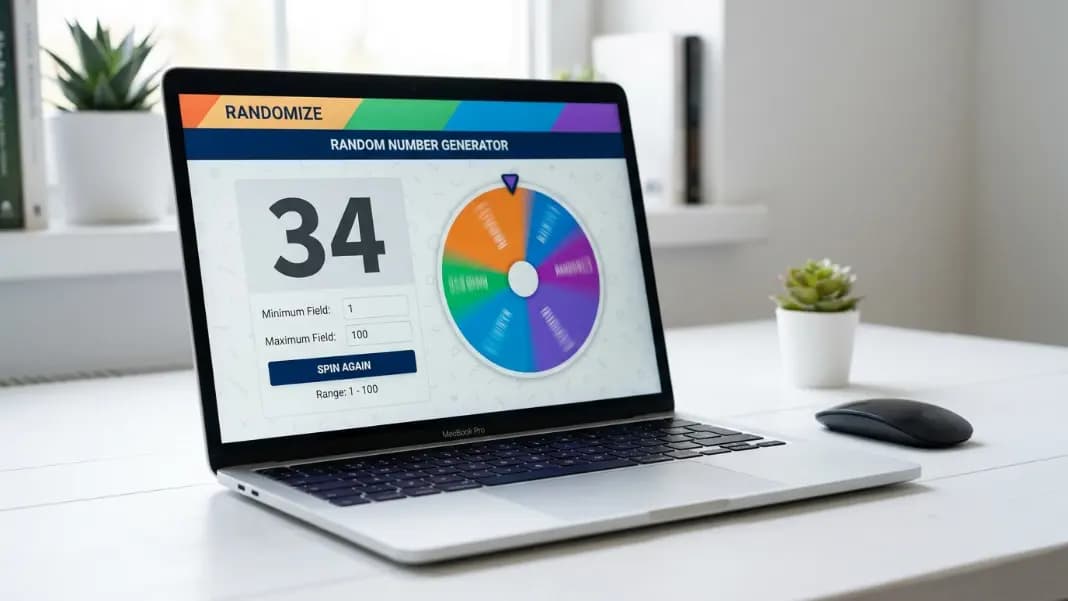
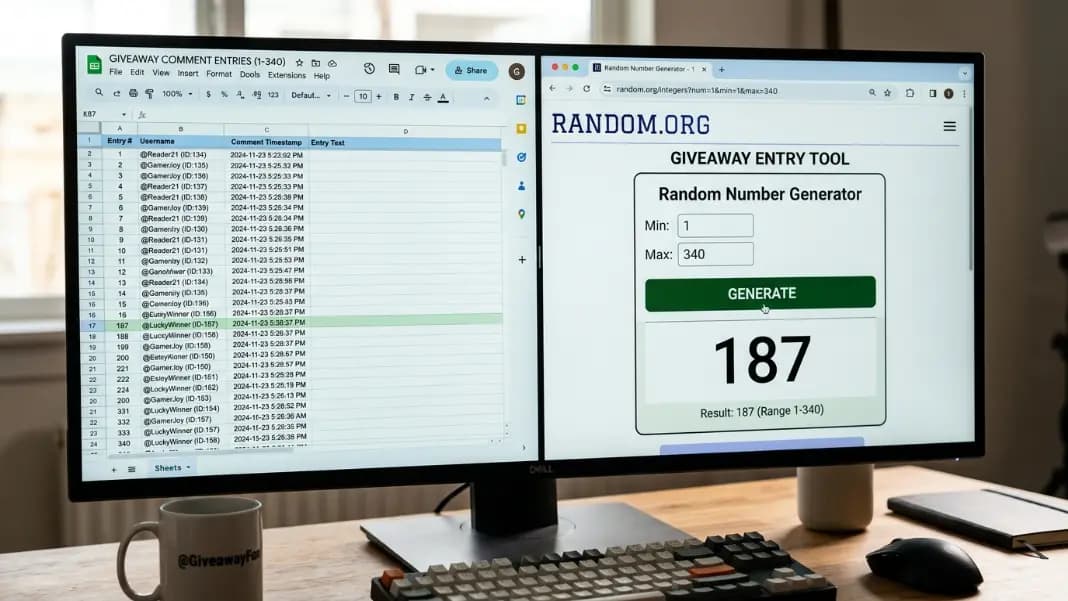
Set the Random Number Generator minimum to 1 and maximum to your total eligible entry count. Generate a number. That number corresponds to a row in your numbered entry list, and that row is your winner.
For draws with multiple prizes, run the generator once per prize. Decide in advance whether the same person can win more than one prize and state this in your rules.
The generator range mirrors your entry count exactly. If you have 83 eligible entries after filtering, the range is 1 to 83. If you have 4,500 email subscribers, the range is 1 to 4,500. The logic does not change at any scale.
One firm rule: do not re-run the generator because you do not like the result. If you draw a winner and re-run for a reason not covered in your written rules, the entire process is compromised. Every condition that triggers a re-draw (non-responding winner, ineligible entry missed during filtering) should be in your rules before the giveaway starts.

Documenting the Draw
Documentation separates a fair process from a provably fair process. Record a continuous screen recording or phone video that shows all of the following:
- Your entry list with all entries numbered
- The generator interface with the range set
- The moment the number is generated
- The result matched to the entry list
One uninterrupted clip with all four elements is sufficient. If you use a screen recording, have both windows visible without cutting between them.
Take a static screenshot of the generator result and the corresponding entry row. This screenshot is what you post when announcing the winner.
Save all documentation for at least 60 days. Most giveaway disputes happen within days of the announcement. A 60-day window covers essentially all of them.
Announcing the Winner
The sequence of your announcement affects how the result is perceived:
- State the total number of eligible entries
- State the winning number
- Show the numbered entry list with that number visible
- Reveal the name or handle of the winner
Announcing the name first and then finding their number looks staged even when it is not. Number first, name second is the sequence that makes the selection feel genuinely random.
Tag the winner in the announcement post and send a direct message at the same time. Most platforms limit DM delivery to non-followers, so a public tag ensures the winner sees the notification.
Legal Considerations
Giveaways have legal requirements in most countries beyond selecting a winner fairly.
In the United States, sweepstakes (free to enter) have different legal requirements than contests (entry requires skill) and lotteries (entry requires purchase). Running a giveaway that requires purchase to enter without a free alternative is a lottery, which is regulated or prohibited in most states.
Standard giveaway legal language covers:
- No purchase necessary to enter
- Void where prohibited by law
- Release from platform liability (required by most social media platforms' promotion policies)
- Prize description and value
- Entry period dates with times and time zone
- How and when the winner will be notified
- How long the winner has to respond before a re-draw
Post this information in the giveaway caption or on a linked page. Prizes over $600 in the US have tax reporting implications for the recipient.
Re-draw Conditions and Winner Follow-up
State every re-draw condition in your rules before the giveaway opens. The most common ones:
Non-responding winner. Give the selected winner a specific window to respond, typically 24 to 72 hours. If they do not respond within that window, run the generator again. Note this as a re-draw in your documentation rather than presenting the second winner as the original selection.
Ineligible winner discovered after the draw. If the winning entry turns out to violate your rules (a duplicate account you missed during filtering, an entry submitted outside the entry period), the draw is void for that entry. Remove the entry, re-number the pool if necessary, and draw again. Document the reason for the re-draw publicly.
Prize return. If a winner accepts the prize but then returns it or the delivery fails repeatedly, your rules should state whether a replacement draw happens or the prize is retained.
Keep re-draws to a minimum. Multiple re-draws on the same giveaway look staged regardless of the documented reason. Thorough entry filtering before the draw is the best way to avoid needing to re-draw at all.
Entry Formats to Avoid
Some formats create more problems than they solve:
Share-to-enter. Sharing-based entries are nearly impossible to audit. You cannot reliably count or verify who shared a post across all platforms and formats, making the entry pool unverifiable.
Stacked requirements. Requiring follow, like, comment, tag two friends, share to story, and sign up for an email list for a single entry creates friction that filters out genuine audience members and attracts contest-only accounts. The entry list for a stacked-requirement giveaway tends to be full of people who will unfollow immediately after the draw.
"Best comment wins." If any selection criteria are subjective, document how you judged them before announcing a winner. Calling a subjective selection "random" is worse than owning the subjectivity.
For raffles where entries are tied to physical or numbered tickets rather than open submissions, the process differs slightly. The raffle guide covers ticket-based draws, documentation for in-person events, and how to handle unsold tickets.
For other types of random draws including name picking and group selection, the Random section on ToolCenterHub has tools for every format. The name wheel spinner guide covers draws where you want a visual spinning format rather than a number result, which works well for live-streamed announcements where the visual element adds to the moment.
The core rule for any giveaway is that the process must be explainable to the person who did not win. If you can describe exactly how the winner was selected and show evidence of it, your giveaway stands up to scrutiny. A number generator with a documented draw gives you both.