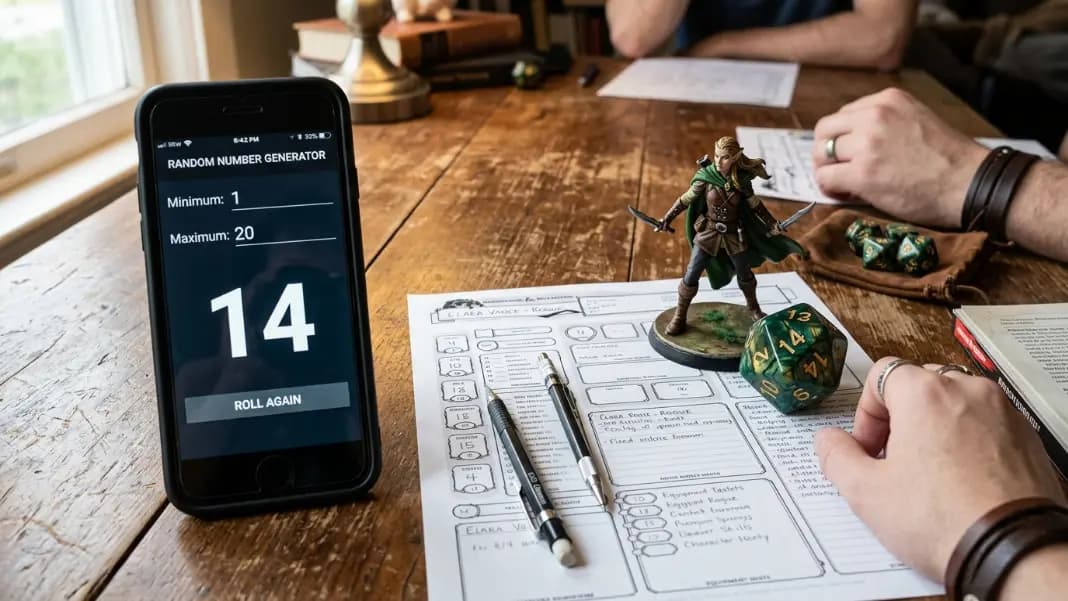
You buy a raffle ticket. The organizer reaches into a box, shuffles it around, and pulls out a folded slip. It might be fair. It also might not be. Tickets fold unevenly, float to the top, cluster together, and get drawn from the same corner of the box every time. The physical randomness that raffle draws rely on is rarely as random as it looks.
A random number generator removes the physical variables entirely. You assign a number to each entry, generate a random number within that range, and the result is your winner. No shuffling technique, no reach preference, no unconscious bias. The probability is the same for every entry.
This guide covers how to run a raffle using a number generator, how to assign entries, how to handle multiple prizes, and how to document the process so participants trust the result.
Why Physical Draws Are Less Random Than They Seem
The idea of reaching into a hat and pulling out a ticket feels intuitively fair. Everyone can see the tickets go in and the draw happen. The problem is that physical mixing produces uneven randomness in practice.
Tickets added last tend to sit near the top. Tickets folded tightly sink to the bottom. Whoever does the draw tends to reach to the same depth each time. Larger containers create dead zones where tickets never migrate. Smaller containers mean the last few added have a measurably better chance.
For a small office raffle with 30 entries, the bias is negligible. For a charity raffle with 500 entries and a meaningful prize, the bias matters and so does the perception of fairness.
A digital random number generator has none of these problems. The number is generated from a seed that produces statistically uniform distributions across the specified range. Entry 1 and entry 500 have exactly the same probability. The result is not influenced by how recently an entry was added, how it was folded, or where it sits in a container.
Setting Up Your Entry List
Before you run the generator, you need a numbered entry list. This is a simple spreadsheet that maps each raffle number to the participant it belongs to.
The structure is straightforward:
- Entry 1: Jane Smith (Ticket 001)
- Entry 2: James Patel (Ticket 002)
- Entry 3: Sarah Johnson (Ticket 003)
Continue until every sold ticket has a number. If you sell tickets in batches, assign numbers sequentially as tickets are sold rather than as participants register. This prevents any correlation between registration time and ticket number.
For digital raffles where entries come through a form or email, number them in the order received. Export the list to a spreadsheet, assign row numbers starting from 1, and that becomes your draw pool.
Keep this list private until the draw. The cleanest approach: share the entry count before the draw and the full numbered list immediately after. Participants can verify their entry is included without anyone being able to claim numbers were added or removed after results were known.
How to Use the Random Number Generator
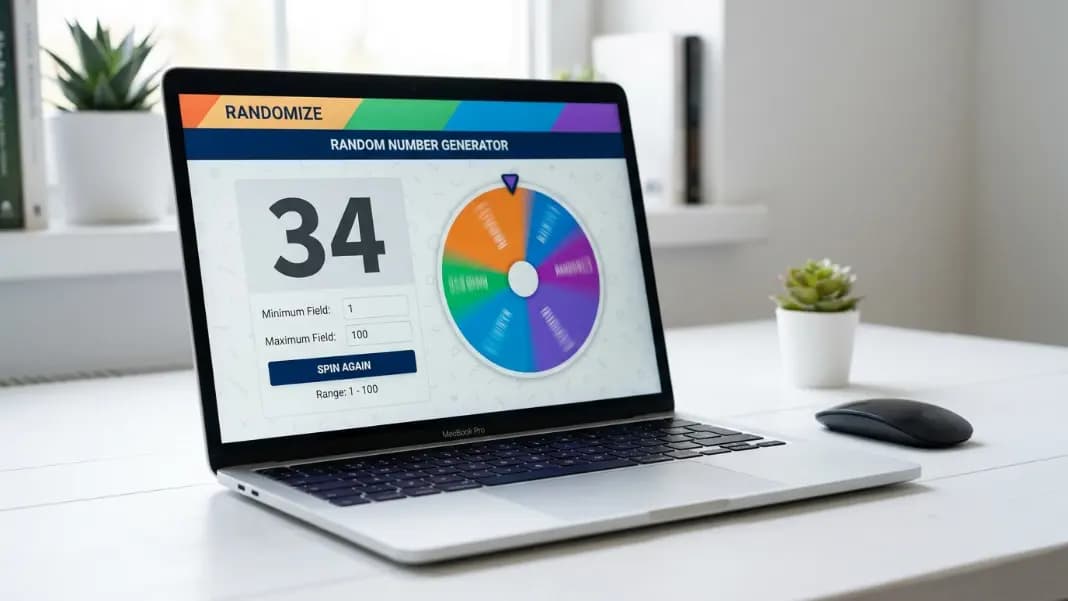
The Random Number Generator on ToolCenterHub runs in the browser with no setup required. Set the minimum to 1, set the maximum to your total number of sold tickets, and generate.
The result is your winner's ticket number. Find that number on your entry list and you have your winner.
A few practical notes before you draw:
Unsold tickets. If you numbered tickets sequentially but not all were sold, you have two options. Either remove unsold ticket numbers from your entry list entirely and re-number the remaining entries from 1 to the sold count, or keep the full range and re-draw if an unsold number comes up. State which approach you are using in your raffle rules before the draw.
Range confirmation. Note the range you used (minimum and maximum) before generating. This becomes part of your documentation. If participants later ask how many entries were in the draw, the maximum number gives them a direct answer.
No adjustments after the draw starts. If the generator produces a result and you re-run because you were not satisfied with it, the process is compromised. Decide your rules before you start and apply them consistently.
Drawing Multiple Winners
Most raffles with multiple prizes draw one winner at a time, awarding prizes in order from highest to lowest value. This maintains the structure of the draw and gives each prize its own clear moment.
For a three-prize raffle:
- Draw for the first prize. Record the winning number.
- Note that number as drawn.
- Draw for the second prize. If the same number appears and your rules exclude repeat winners, re-draw.
- Repeat for the third prize.
Whether repeat entries are eligible for multiple prizes is a rule decision, not a mathematical one. Charity raffles typically exclude repeat winners so more participants receive something. Corporate raffles sometimes allow it to keep draws fully independent.
State the policy in your rules before tickets go on sale. A dispute about repeat eligibility after the draw has no clean resolution.
Making the Draw Transparent
A fair draw that nobody witnessed might as well not have happened. Transparency converts a technically fair process into one that participants actually trust.
Record the draw. Use your phone to record a continuous video of the draw: the entry list on screen, the generator interface showing the range inputs, and the moment of generation. A single uninterrupted clip with all three elements visible leaves no room for claims of editing or manipulation.
Publish the entry list first. Before drawing, share the complete numbered entry list. Each participant can verify their entry is included and correctly numbered. This eliminates claims that entries were removed or misrecorded.
Announce the number before the name. When revealing the winner, state the winning number first, then look it up on the publicly visible entry list. This sequence prevents any appearance that you chose a person first and found their number afterward.
Keep records. Store the entry list, the screenshot or video of the draw, and the winner's contact details for at least 90 days. If a dispute arises, you have documentation.

Online Raffles
Online raffles follow the same process. The only difference is that entries arrive through a digital channel.
For a comment-based social media raffle, number each eligible comment sequentially in the order posted. Remove comments that do not meet entry requirements before numbering. Export the filtered list, assign numbers, then run the generator.
For an email or form-based raffle, use the submission timestamp to determine entry order. Number them 1 through the total count. Run the generator to select the winner.
Screenshot your entry list and the generator result together and post them when announcing the winner. This shows the pool of entries and the selected number in the same image, making the selection immediately verifiable to anyone who wants to check.
Raffle Formats That Work Well With a Number Generator
Beyond standard single-draw raffles, a number generator fits several other formats cleanly:
Reverse raffles. The last number drawn wins rather than the first. All other participants are eliminated as their numbers are drawn. The generator runs repeatedly until one entry remains. This format works well for events where building suspense over time is part of the experience.
Tiered prize draws. Different prize tiers are drawn from different entry pools. Participants who bought premium tickets are in pool A, standard ticket holders in pool B. Run separate generator ranges for each pool.
Bracket-style events. Randomly seed participants into brackets using sequential draws. The generator determines match-ups rather than final winners, useful for competitions that combine random seeding with earned results in later rounds. For tournament-style events, the bracket generator builds the draw structure automatically, pairing participants into a full competition bracket without manual seeding. The wheel spinner on ToolCenterHub works well for visualizing individual bracket draws.
Raffle Rules to Have in Writing
A few items that prevent the most common disputes:
Unsold ticket policy. Whether unsold numbers are excluded from the draw or result in a re-draw.
Repeat winner policy. Whether the same person can win more than one prize.
Winner notification and claim period. How long a winner has to respond and claim their prize before a re-draw happens. 48 to 72 hours is standard.
Eligibility requirements. Age, location, or other restrictions on who can enter.
Prize description. Exact value and description of what is being awarded.
These rules belong in writing before the raffle opens, not assembled after a dispute arises. For ticket-based charity raffles, local gaming or charity lottery laws may apply. Check the regulations in your jurisdiction before running a raffle where tickets are sold for money.
For drawing team assignments or presentation orders rather than individual winners, the Teams Generator handles group-based random selection directly. The 1-to-100 random number guide covers number generation for smaller-scale draws in detail, and the full guide to how random number generators work is at random number generator guide.