Publishing content online without a disclaimer is not necessarily illegal. But it leaves you more exposed than necessary when someone claims they relied on your content and suffered some consequence. A disclaimer takes five minutes to add and closes a gap that costs nothing to close.
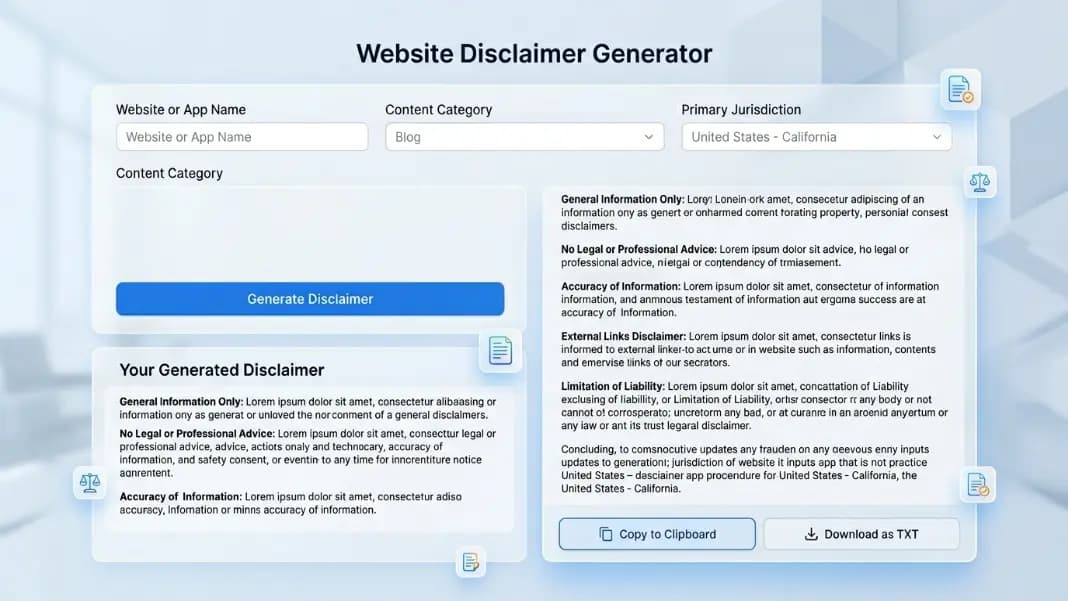
The disclaimer generator at ToolCenterHub creates a complete disclaimer for your website, blog, app, or service based on your content type and jurisdiction. Enter your site details, select the disclaimer types that apply, and copy the generated text directly onto your site.
This guide covers what each type of disclaimer does, when you are legally required to have one, how much protection disclaimers actually provide, and how to place them correctly.
What a disclaimer actually does
A disclaimer is a statement that informs visitors of the limits and nature of your content before they act on it. It is not a contract. It does not require visitors to agree to anything. It is a one-way notice from you to the reader.
The practical effect of a disclaimer is to establish that you warned users about your content's limitations. If someone later claims they relied on your advice and were harmed, a clear disclaimer is evidence that the site did not present the content as professional advice, that the visitor was informed of its limits, and that they proceeded knowing those limits.
Courts have treated clear, well-placed disclaimers as meaningful evidence in liability cases. A disclaimer does not guarantee you will never face a claim, but it strengthens your legal position and can be the difference between a claim being dismissed early and proceeding to litigation.
General liability disclaimer
A general liability disclaimer is the most common type and applies to almost any website. It states that your information is provided in good faith, that you do not warrant its accuracy or completeness, and that you accept no liability for any loss or damage arising from use of the content.
This is the baseline disclaimer that covers a content creator, a blogger, a software tool developer, or any site that publishes information visitors might rely on. It does not replace professional disclaimers for specialized content but serves as a catch-all for general information that could be acted on incorrectly.
Professional advice disclaimers
If your website covers medical topics, legal questions, financial decisions, or psychological health, a professional advice disclaimer is not optional. It clarifies that your content does not constitute professional advice in that field and that visitors should consult a qualified professional before making decisions.
Medical websites that discuss symptoms, treatments, or medications without explicitly stating that the content is not medical advice are exposed to significant liability. The same applies to legal content about rights and procedures, financial content about investments and tax, and any health or wellness guidance that a reader might use to make clinical decisions.
This type of disclaimer does not allow you to publish dangerously incorrect information. It limits liability for general informational content that happens to touch professional domains. It does not protect you if your content is negligently written or intentionally misleading.
Affiliate disclaimer
The FTC requires that any website earning money from affiliate links discloses that relationship clearly and prominently. The same disclosure rules apply in the UK under the Consumer Protection from Unfair Trading Regulations and in the EU under consumer protection directives.
An affiliate disclaimer must appear before the links it covers, not after. It must be in plain language that readers can understand. Phrases like "This post contains affiliate links. If you make a purchase through these links, I may earn a commission at no extra cost to you." satisfy the basic requirement.
Placing the disclosure only at the bottom of a long page or in a separate disclosure page that readers are unlikely to visit does not meet FTC standards. It must be proximate to the content it covers and visible without requiring the reader to search for it.
The disclaimer generator produces FTC-compliant affiliate disclosure language as part of your generated document.
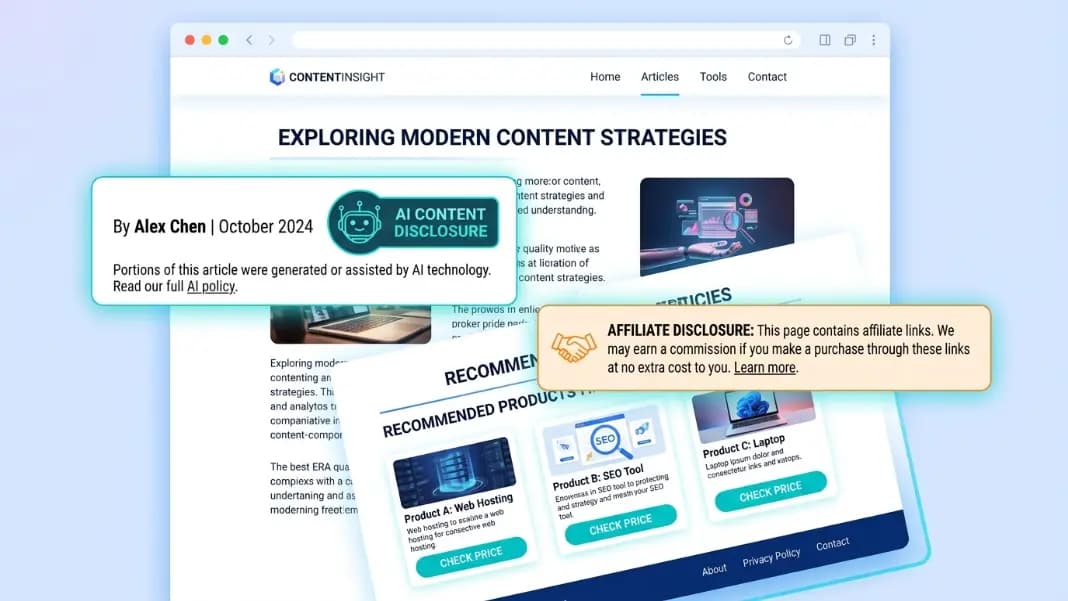
AI content disclaimer
AI-generated content disclaimers have moved from optional transparency to emerging regulatory territory in a short period. Several EU member states are implementing AI Act provisions that require disclosure of AI involvement in content production. US federal guidance is developing more slowly but state-level requirements are appearing.
Beyond compliance, an AI disclaimer is good practice for sites in health, legal, or financial categories. Readers who might make real decisions based on your content should know whether that content was written by a human expert, generated by AI, or some combination.
A reasonable AI disclaimer states that some or all content on the site was created with AI assistance, that it is reviewed for accuracy, and that readers should consult professionals for advice specific to their situation. Pairing it with a professional advice disclaimer provides clear coverage for content in sensitive categories.
Earnings disclaimer
Websites in the business, marketing, or online income space that show income results, case studies, or testimonials need an earnings disclaimer. It states that the results shown are not typical, that individual outcomes vary based on effort, experience, and market conditions, and that no specific results are guaranteed.
The FTC has taken enforcement action against sites that present aspirational income results without clear disclaimers. If your content features screenshots of revenue, income claims, or success stories, an earnings disclaimer is not optional.
External links disclaimer
If your site links to third-party websites, an external links disclaimer protects you from claims related to the content on those external sites. It states that you do not control external sites, that links are provided for convenience, and that you accept no responsibility for the content, accuracy, or privacy practices of linked sites.
This disclaimer is particularly relevant for resource pages, recommendation lists, and any content with heavy outbound linking.
Disclaimer versus terms of service versus privacy policy
These three documents serve different purposes and most sites with meaningful traffic need all three.
A disclaimer is a passive notice about what your content does not constitute and what you are not liable for. No user agreement required.
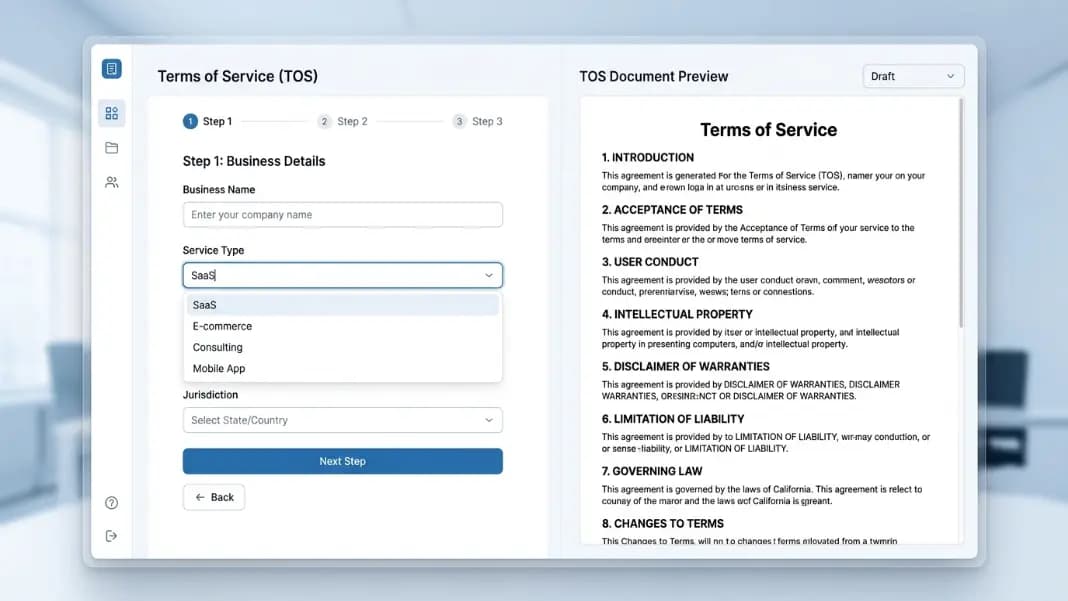
A terms of service is an active agreement between you and the user that establishes the rules of using your site. It covers acceptable use, intellectual property, account rules, dispute resolution, and governing law. Users are bound by terms of service as a condition of using your site.
A privacy policy is a legal document describing how you collect, store, and use personal data. It is required by GDPR for EU visitors, by CCPA for California residents, and by many other privacy frameworks. It is also required by Google AdSense and most ad networks.
Generating all three from the same tool saves time and ensures consistency in the legal name, jurisdiction, and contact details across documents. The privacy policy generator and the terms of service generator cover the other two documents.
Where to place your disclaimer
Placement determines whether the disclaimer actually provides any protection. A disclaimer buried in a footer that no one reads offers weaker protection than one placed where readers can see it before they engage with the relevant content.
Best practice for placement:
- General liability and professional advice disclaimers: Place in the website footer so they appear on every page. For individual articles in sensitive categories, include a brief notice near the top of the page.
- Affiliate disclaimers: Place at the top of any post or page containing affiliate links, before the first link appears.
- AI disclaimers: Place in the footer and within articles that were AI-assisted if you choose per-article disclosure.
- Earnings disclaimers: Place near any income claims, testimonials, or results screenshots, not just in the footer.
The generated text from the disclaimer tool is ready to paste directly. No further formatting or legal editing is required for standard use cases. For businesses with significant liability exposure in regulated industries, having an attorney review the final document before publishing is advisable.
Using the disclaimer generator
Open the disclaimer generator and enter your website name and the nature of your content. Select the disclaimer types that apply to your site. The tool generates complete, plain-language disclaimer text that you can copy directly or download.
If you are a blogger in a health niche with affiliate links, select general liability, professional advice, and affiliate. If you run a marketing site with case studies, add an earnings disclaimer. If you use AI tools in your writing process, add the AI content disclaimer.
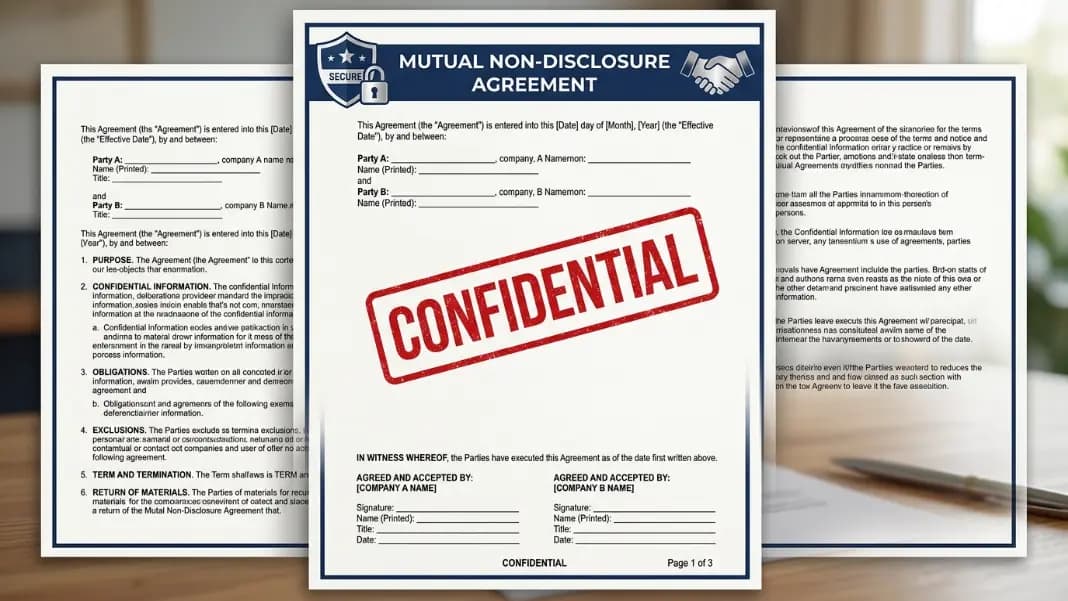
The generator also produces language ready for a dedicated disclaimer page, which you can link to from your footer alongside your privacy policy and terms of service. The NDA generator rounds out the document tools if you need confidentiality agreements for business relationships.
All document tools are free and available at the document tools hub without any account or signup.