Every time a user signs up for your app, places an order on your site, or posts content to your platform, they are entering into a relationship with you. Without terms of service, that relationship has no documented rules. You have no clear basis for removing a problem user, no limitation on what you are liable for, and no agreement governing who owns what.
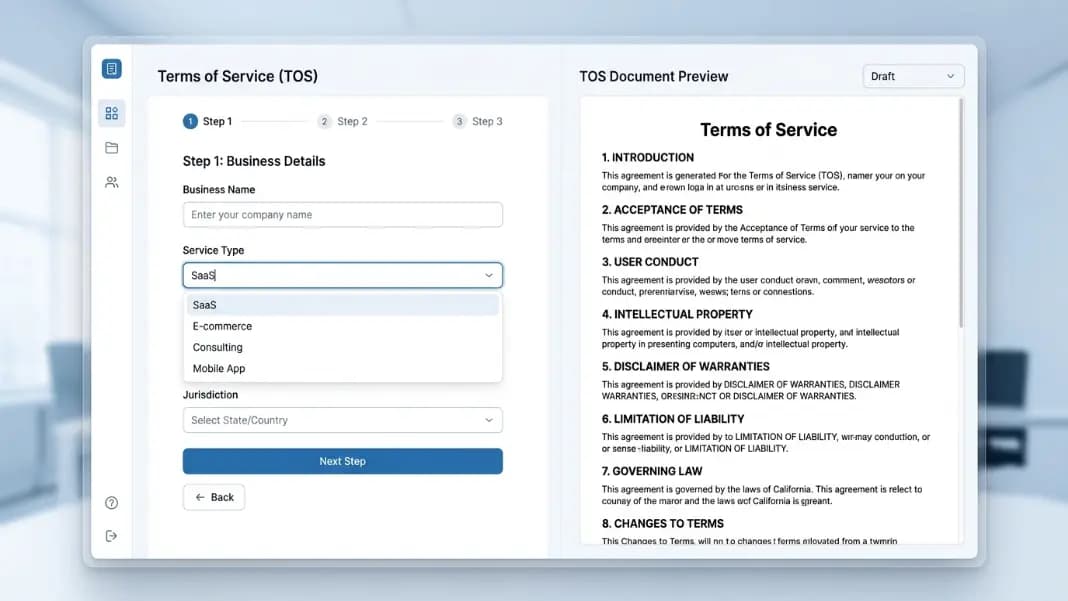
The terms of service generator at ToolCenterHub creates a complete TOS agreement for your website or app based on your service type, jurisdiction, and business model. Enter your details, select the applicable sections, and download a document you can publish immediately.
This guide explains what a terms of service actually does, who needs one, which clauses matter most, how it differs from a privacy policy and disclaimer, and what ecommerce sites need beyond the basics.
What terms of service does for your business
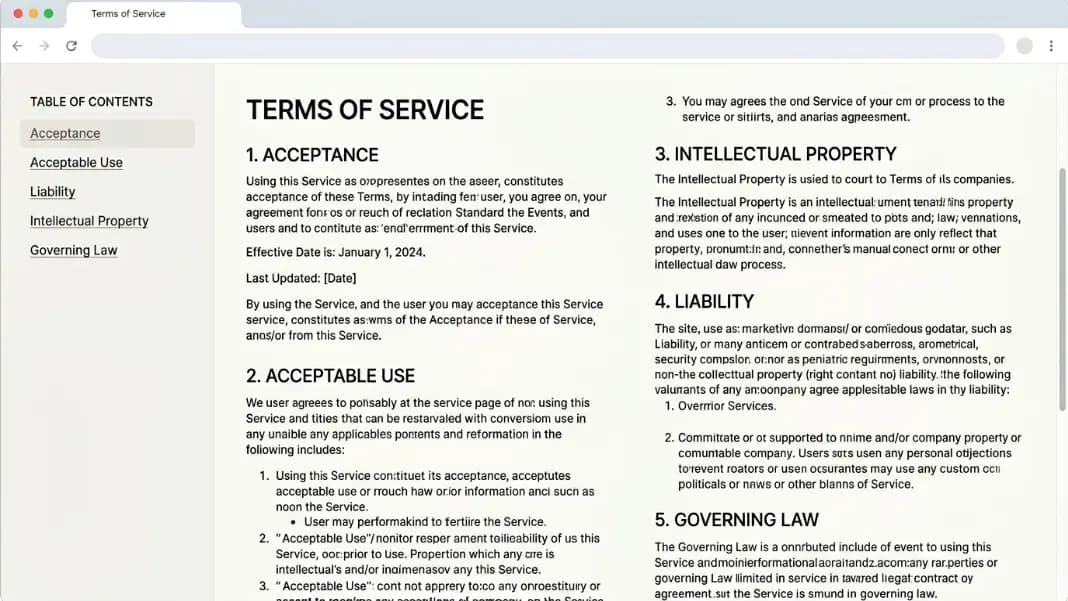
A terms of service agreement defines the legal framework for using your site or app. It establishes that users are entering into an agreement with you, not just browsing anonymously, and that the rules you set have been communicated and accepted.
The practical protections it provides:
Account termination basis. Without a TOS, terminating a user account can invite claims of arbitrary treatment or breach of contract. A TOS with a clear acceptable use policy gives you documented grounds for removing users who violate your rules.
Intellectual property protection. A TOS specifies who owns content created on your platform. If users upload photos, write reviews, or create content through your service, the TOS determines whether you can display, modify, or distribute that content.
Liability limitation. The limitation of liability clause caps how much you can be held responsible for if your service causes a user loss. Without this clause, your exposure to claims is uncapped.
Dispute resolution. A TOS can specify that disputes are resolved through arbitration rather than court litigation, and in which jurisdiction they are handled. This gives you significant control over the cost and process of any dispute that arises.
Who needs a terms of service
Any website or app that fits one or more of these descriptions should have a TOS:
- Users can create accounts or profiles
- Users can post, upload, or share content
- The site accepts payments for goods or services
- The service provides something users rely on, such as tools, data, or communications
- Users interact with each other through the platform
- The site operates in a regulated industry such as healthcare, finance, or legal services
Pure informational sites with no user accounts and no transactions operate at lower risk without a TOS, though a general disclaimer is still advisable. The moment user data, payments, or content are involved, a TOS becomes important.
The clauses that matter most
Acceptance of terms
This clause establishes that using the site constitutes acceptance of the terms. Stronger versions require users to actively check a box or click an accept button, which courts call clickwrap acceptance. Clickwrap is more enforceable than implied acceptance through browsing, particularly for high-stakes provisions like arbitration clauses.
Acceptable use policy
The AUP defines prohibited behaviors. Standard prohibitions include spamming, uploading malicious code, infringing intellectual property, impersonating others, attempting to access restricted systems, and engaging in illegal activity through the platform.
The AUP is the basis on which you terminate accounts or deny service. Without it, a user you suspend can reasonably argue they were not informed about the rule they allegedly violated.
Intellectual property
This clause establishes that you own the platform, software, design, and content you created. It also covers user-generated content: by submitting content to your platform, users typically grant you a license to display, distribute, and use that content as part of operating the service. The exact scope of this license, whether it is exclusive or non-exclusive, whether it survives account termination, and whether you can sublicense it, all depend on how your service works.
Limitation of liability
This clause sets a ceiling on your financial exposure. A common formulation limits your liability to the amount the user paid for the service in the preceding 12 months, or a fixed nominal amount for free services. It also disclaims liability for indirect, consequential, or incidental damages.
This clause does not protect you from liability for intentional misconduct or gross negligence in most jurisdictions. It limits exposure for ordinary service failures and unforeseeable downstream effects.
Governing law and dispute resolution
This clause specifies which country or state's law governs the agreement and where disputes will be handled. For US-based businesses, choosing the state where you are incorporated is standard. Including an arbitration clause can route disputes away from court litigation toward faster and less expensive arbitration proceedings.
Some jurisdictions restrict the use of arbitration clauses in consumer contracts. If you serve consumers in the EU, for example, you cannot entirely waive their right to bring claims in their home courts under certain circumstances.
TOS versus privacy policy versus disclaimer
These three documents cover different ground, and most sites with significant traffic need all three.
Terms of service governs the user relationship. Rules, acceptable behavior, IP rights, liability limits, termination, and dispute resolution. It is a bilateral agreement between you and the user.
Privacy policy covers how you handle personal data. What you collect, why you collect it, how long you keep it, who you share it with, and what rights users have over their data. GDPR makes a privacy policy legally mandatory for sites that collect data from EU residents. Most ad networks, including Google, also require a published privacy policy as a condition of using their services.
Disclaimer is a one-way notice about what your content does not constitute, such as professional advice, and what you are not liable for. Unlike TOS, a disclaimer does not create a binding agreement. It sets expectations rather than establishing rules.
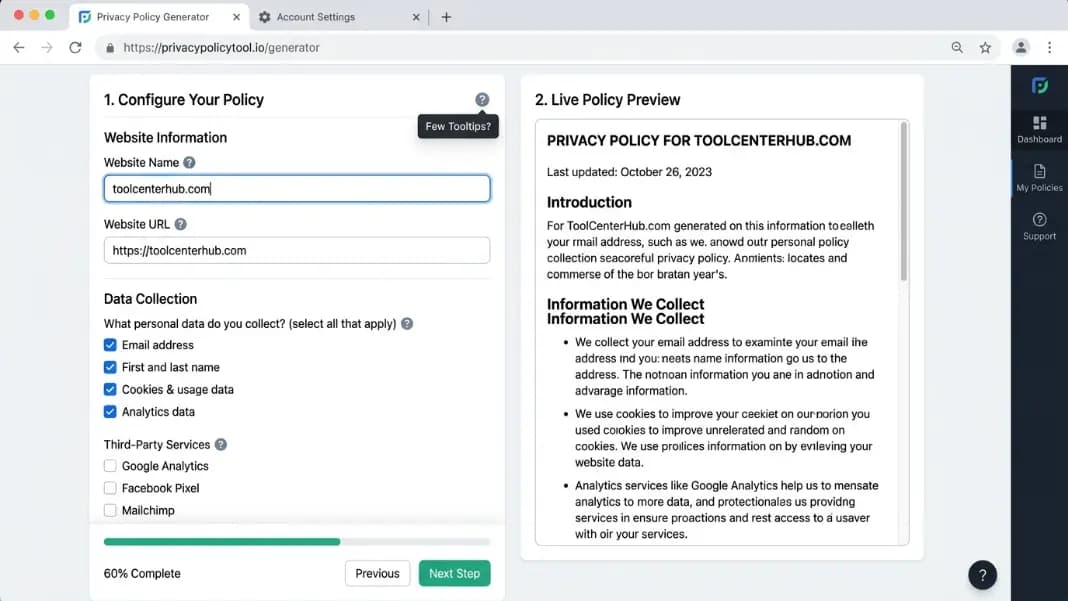
Generate your privacy policy with the privacy policy generator and your disclaimer with the disclaimer generator. Using the same tool for all three ensures that the legal name, jurisdiction, and contact information are consistent across your documents.
Ecommerce-specific terms
Ecommerce sites need sections beyond what a standard TOS covers. Consumer protection laws in most countries impose specific requirements on online retailers that do not apply to pure service sites.
Returns and refunds. Many jurisdictions require you to clearly state your return policy. EU consumer law gives online shoppers a 14-day right of withdrawal for most purchases. Your TOS or a linked refund policy must describe your process and comply with local requirements.
Shipping terms. Who is responsible for lost or damaged packages, when does ownership transfer, and what happens if goods are delayed. These terms limit disputes when orders do not arrive as expected.
Payment terms. Accepted payment methods, when charges are processed, what happens on payment failure, and how subscription billing works if applicable. For subscription services, clear cancellation terms are important both for legal compliance and customer trust.
Consumer rights. Several jurisdictions, including all EU member states and many US states, require that you acknowledge statutory consumer rights that cannot be waived by contract. Your TOS cannot legally override mandatory consumer protections even if it states otherwise.
The TOS generator creates ecommerce-specific sections when you identify your site as a shop or marketplace during setup.
How to implement your terms of service
Once you have generated and published your TOS, implementation determines how enforceable it is.
Link from the footer. Your TOS should appear in the site footer on every page, clearly labeled as Terms of Service or Terms and Conditions. This establishes that users had reasonable notice of the terms.
Require acceptance at signup. For any site with user accounts, display a checkbox at the registration step with wording like "I have read and agree to the Terms of Service" and a link to the document. Do not pre-check the box. This creates clickwrap acceptance, which courts treat as a genuine agreement.
Reference at checkout. For ecommerce sites, show a brief TOS reference on the checkout page, such as "By completing your purchase, you agree to our Terms of Service," with a link. This creates acceptance at the point of transaction.
Update when your service changes. A TOS is not a one-time document. When your service model changes substantially, such as adding subscriptions, changing your data practices, or expanding into new markets, update the TOS and notify existing users. Most TOS documents include a clause stating you reserve the right to update terms with notice.
Getting started with the generator
Open the terms of service generator and enter your site name, the type of service you operate, your jurisdiction, and your contact details. Select whether your site accepts payments, hosts user content, or operates subscription billing. The tool generates a complete TOS covering all standard sections with language appropriate for your service type.
For businesses with significant legal exposure, an attorney review before publishing is advisable, particularly for arbitration clauses, limitation of liability amounts, and any industry-specific regulatory requirements. For most small to medium businesses and creators, the generated document provides solid baseline protection without legal consultation.
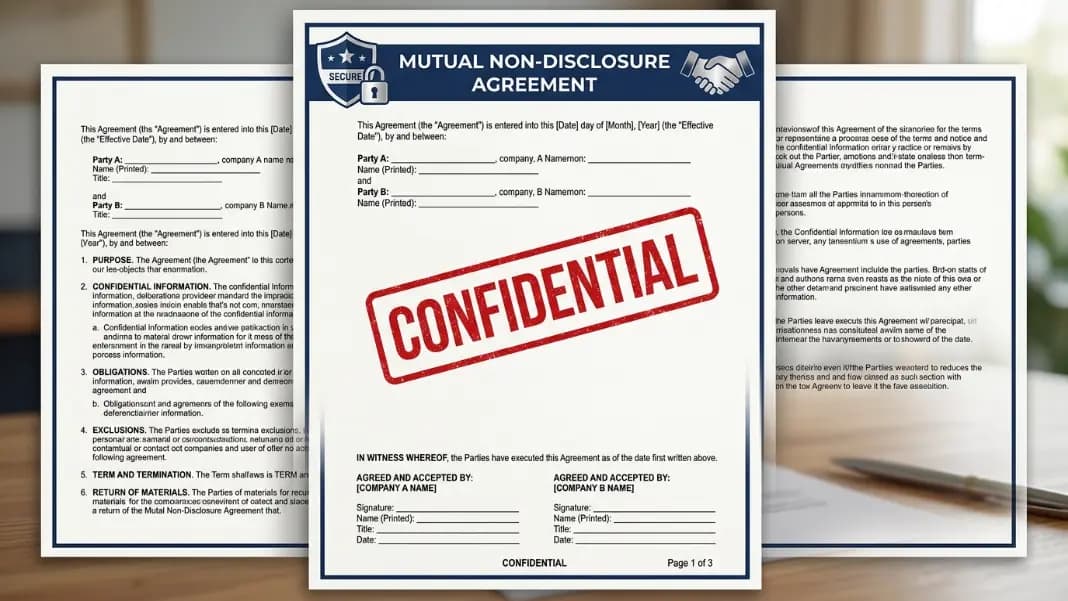
The NDA generator is useful if you work with contractors, collaborators, or partners who need confidentiality agreements separate from the user-facing TOS. All document tools are free and available at the document tools hub with no account required.