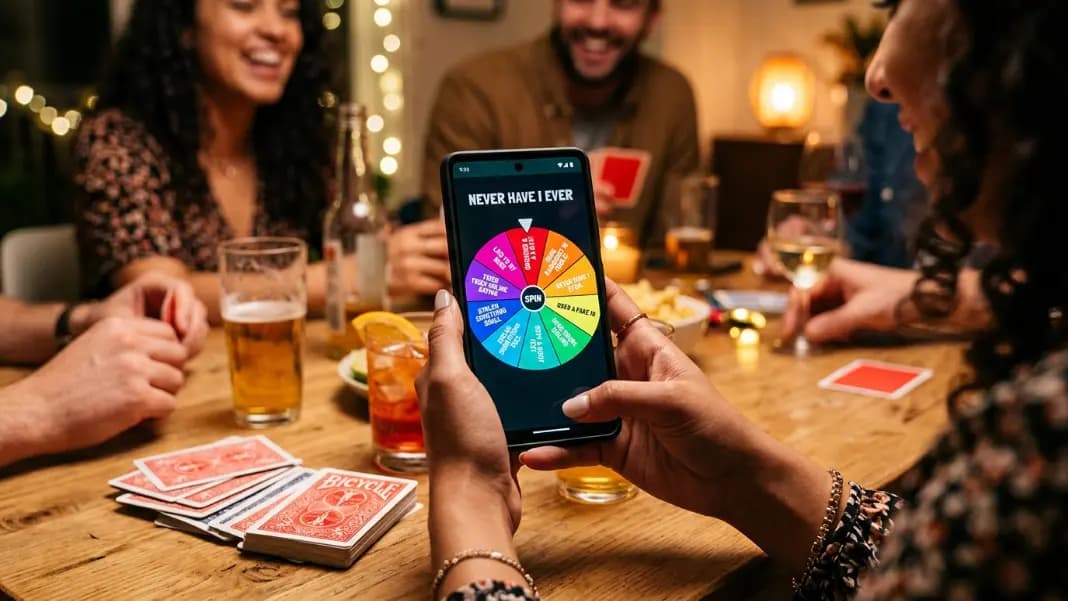
You set up a website popup to capture email addresses. Conversions sit below two percent. Visitors close it immediately because there is nothing in it for them, and the people who do notice it have no concrete reason to act right now. The spin to win wheel solves the exact problem a plain subscription form cannot: it gives visitors an immediate, specific reason to stop and engage. The wheel spinner turns a passive discount offer into an interactive moment, and that single change tends to move conversion rates by a factor of ten or more.
This is not just a Shopify popup gimmick. Spin to win wheels run at trade show booths, corporate events, email reactivation campaigns, and customer loyalty programs. The mechanic works anywhere the goal is to trade a small reward for a specific action, whether that action is an email address, a badge scan, or simply stopping to talk.
Understanding how the format actually works, where it tends to fail, and how to structure the prize set is what separates a spin to win campaign that generates real results from one that generates participation without value.
What a Spin to Win Wheel Is and What It Is Not
A spin to win wheel is a promotional mechanic where every spin lands on a guaranteed prize from a preset list of rewards. There are no blank segments and no losing outcomes. Every person who spins gets something. That guaranteed reward design is what defines the format and separates it from a standard giveaway or prize draw.
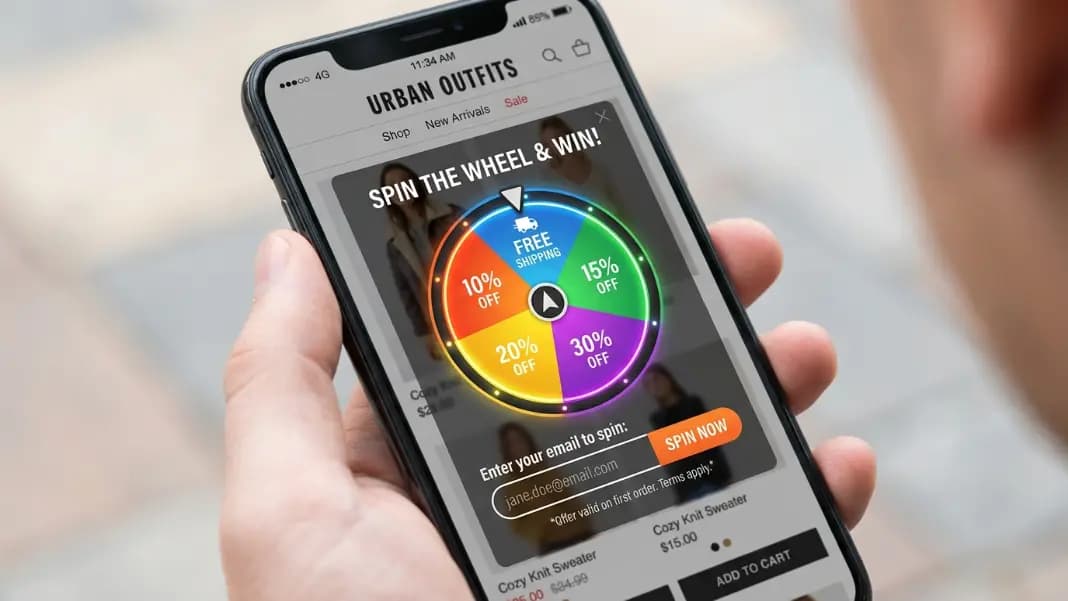
The prizes are not all equal. Spin to win wheels are typically structured with three or four tiers: a high-volume common tier, a medium tier, and one anchor prize at low frequency. A standard e-commerce setup might have 60 percent of segments showing a 5% discount, 25 percent showing free shipping, 10 percent showing 15% off, and 5 percent showing 30% off or a free product. The anchor prize drives excitement but is deliberately rare.
This is not gambling. Gambling requires a wager with the possibility of losing the stake. Spin to win wheels do not have a losing condition. Every participant receives a reward, which keeps spin to win compliant with advertising policies on major platforms including Google Ads and Meta. This is why the format appears in mainstream retail environments without legal complications.
What spin to win is not: a lottery, a sweepstakes, a raffle, or a giveaway. Those formats involve selecting one winner from a pool where most participants receive nothing. A giveaway draw using a wheel spinner works very differently from a spin to win promotion. The giveaway has one winner; the spin to win gives every participant a prize. They are distinct mechanics serving different campaign goals.
Where Spin to Win Works Best: Website, Events, or Social Media
Spin to win performs differently across channels, and matching the mechanic to the context is the decision most people get wrong before launching a campaign.
Website popups are the most common deployment. Exit-intent triggers and time-delay triggers both work, though exit-intent tends to convert better because the visitor has demonstrated intent to leave, making a concrete offer more relevant than it would be at arrival. The popup captures an email before revealing the prize. This email gate is the core of the format's lead capture value.
Trade show and event booths are where the format's physical energy shows up. A tablet with a spin to win wheel draws foot traffic in a way that a banner stand does not. The visual of a spinning wheel at a booth creates a crowd-draws-a-crowd effect. Attendees spin in exchange for providing contact details, and the prize creates a natural conversation opener for booth staff. For this use case, prize logistics matter: small branded items, vouchers, or digital offers work better than prizes requiring shipping or claiming after the event.
Email reactivation campaigns use spin to win to re-engage subscribers who have gone dormant. A "spin to claim your exclusive offer" email with a linked wheel draws substantially higher click rates than a standard promotional email, because the mechanic implies a personalized reward rather than a mass discount code. The offer does not need to be exceptional; the format provides the differentiation.
The wheel spinner online guide covers how the same tool handles giveaways, classroom draws, and team assignments when the goal shifts from promotion to pure randomness. Spin to win and prize draws share the same tool but serve completely different purposes.
Social media spin to win mechanics exist but perform inconsistently. The format works better as a direct, immediate interaction than as a share-to-enter mechanic where the wheel appears after sharing. The friction between seeing the promotion and actually spinning tends to drain conversion before the participant reaches the wheel.
How to Structure a Prize Wheel That Actually Converts
Most spin to win implementations underperform because of how the prize set is structured, not because of the mechanic itself. Three mistakes appear across almost every underperforming wheel.
No anchor prize. A wheel with only interchangeable small discounts produces low engagement because there is no prize worth getting excited about. One high-value prize, even at 5 percent frequency, gives every spin a possibility of a significant reward. That possibility is what drives participation. Remove the anchor and you remove the reason anyone stops to interact.
Too many prize tiers. More than four or five distinct prizes creates a wheel that feels confusing and cheapens each individual offer. Three tiers is the practical minimum for perceived variety. Five tiers is the practical maximum before the prize set becomes diluted and the common prizes feel meaningless in comparison.
Prizes that do not match the audience. A 5% discount on a high-priced product feels meaningful. The same 5% on a low-price product feels trivial. Free shipping converts better than percentage discounts for purchases where shipping cost is the primary objection. Know why your audience hesitates to buy and design prizes that remove that specific friction.
One recommendation that comes from watching many of these campaigns run: never set the anchor prize as the most common segment. When the high-value prize hits too often, it stops being an anchor. Set it to no more than 5 to 8 percent of the wheel to preserve the excitement when it lands.
The segment breakdown is also transparent math. If your wheel has 20 segments and you put the anchor on 1 of them, that anchor has a 5 percent probability per spin. Showing participants a "You almost got the grand prize!" message when they land on a neighboring segment is a dark pattern that damages trust. Show the wheel honestly and let the probabilities speak for themselves.
The Right Prizes for Different Campaign Types
Prize selection is not one-size-fits-all. The right prizes for an e-commerce store differ significantly from the right prizes for a trade show booth or a service business.
E-commerce and retail: Percentage discounts, dollar-value credits, free shipping, and free product with purchase all work. Dollar-value credits tend to convert to purchase better than percentage discounts because the reward feels concrete. A $10 credit feels real; 10% off requires the customer to calculate the value, which adds friction to the redemption decision.
Service businesses: Apply the same logic to your context. A consulting firm might offer a free 30-minute review, a training company might offer a discount on a course, and a software product might offer an extended trial or a feature upgrade. The prize still needs to be something the recipient immediately sees value in, without a purchase required to claim it.
Trade shows and events: Branded merchandise works well here because it has physical presence at the event. The prize should be something the recipient takes away immediately, not something requiring a future redemption step. Vouchers for a discount on services work if the redeemable window is generous enough that the attendee does not feel pressured to act immediately after the show.
Lead generation for non-purchase goals: If the goal is an email capture without an immediate purchase, the prize should have standalone value. A guide, a template, exclusive content access, or a discount worth redeeming at leisure all work. A prize that only has value if you buy something first undermines the logic of lead generation. The prize is the reason someone hands over their contact details; it needs to deliver value independently of any future transaction.
Spin to Win at Trade Shows and Live Events in Practice
A trade show booth with a spin to win wheel performs differently from a website popup, and the physical logistics are worth thinking through before the event.
Equipment is simple: a tablet or laptop with the wheel loaded in a browser, a stable internet connection or an offline-capable setup, and a way to collect contact details. A tablet with a stand works better than a laptop in a high-traffic booth because the touch interaction is more natural and the physical footprint is smaller. Attendees can spin directly on the device without booth staff needing to operate it.
The contact capture at a trade show differs from website use in one important way: you collect contact details before the spin, not after. Attendees scan their badge, hand over a business card, or enter their information in exchange for the chance to spin. This pre-spin commitment is the standard trade show exchange. Attendees at events understand and expect this format; it does not feel as intrusive as the same gate would on a website.
Prize logistics require planning. Digital prizes, gift cards sent by email, and voucher codes are simpler to manage than physical items. If you are giving away physical branded merchandise, have it at the booth for immediate handoff. Anything requiring the attendee to claim a prize through a later email has a high fallout rate: the excitement of winning fades, the redemption email gets buried in an inbox, and most prizes go unclaimed.
Event-specific prizes like a free subscription trial, a seat at a webinar, or access to a resource library transfer well because they have clear digital delivery and do not require logistics at the booth itself.
Mistakes That Undermine Spin to Win Campaigns
Spin to win fails consistently from a short list of predictable causes. Most appear in the setup phase, not during the campaign itself.
Blank segments. Some wheel templates include blank or "no prize" segments to make the prize distribution feel more realistic. This is a mistake. It converts spin to win into a loss-risk game, removes the guaranteed-reward value that makes the format work, and reduces participation substantially. Every segment on a spin to win wheel must have a prize.
Prize codes that expire too quickly. If a discount code expires in 24 hours, a portion of your highest-intent leads will not see the email in time. Seven to fourteen days is a more realistic window for most email capture to purchase conversion cycles. Some urgency has value, but it needs to match how quickly your audience actually acts.
No email confirmation. Capturing the email at spin time without sending a confirmation email means the prize code gets lost if the participant navigates away before copying it. Send an immediate confirmation email with the prize code, the expiry date, and a direct link to redeem. The email does the heavy lifting; the popup is just the front door.
Using spin to win as a pure discount tool. The mechanic generates contact data, which has compounding value beyond the immediate transaction. Building a short nurture sequence for wheel participants rather than just sending a single code and moving on converts the lead capture into a longer relationship. Three or four follow-up emails referencing the original spin interaction outperform a generic email sequence sent to the same people.
Treating all participants the same. Segment your spin to win leads separately from standard email subscribers. They entered your list through a specific mechanic with a specific expectation. An immediate discount offer and a follow-up tied to the spin context are relevant to them; a general newsletter is not. Treating wheel participants differently in the first few emails significantly improves engagement and purchase rates from that segment.
How to Set Up a Spin to Win Campaign Without a Paid Platform
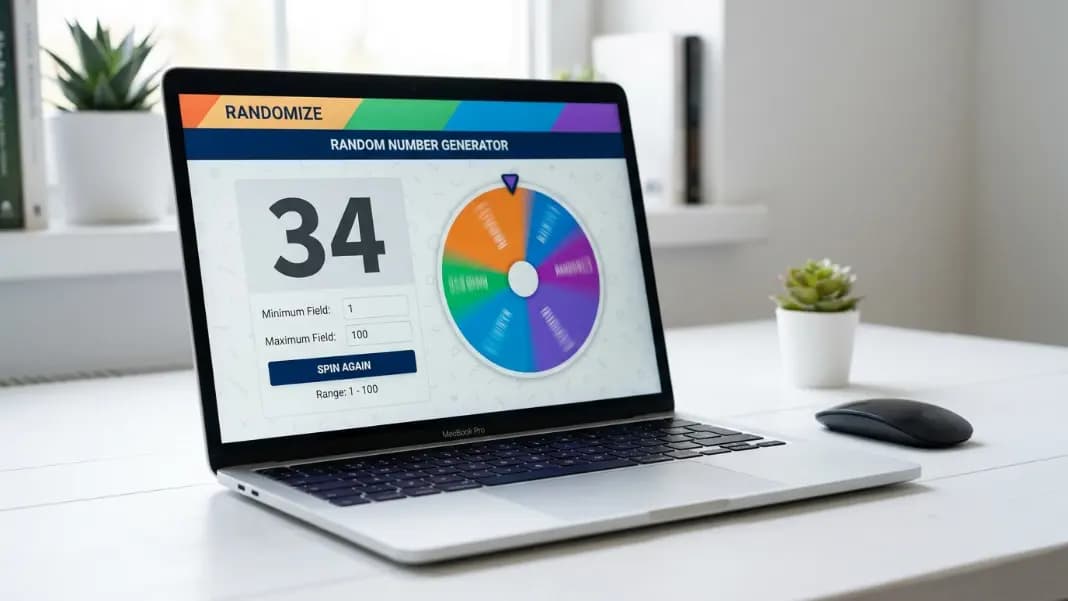
Setting up a spin to win wheel does not require a paid popup platform. For the wheel mechanics themselves, the wheel spinner handles randomization in any browser on any device. Open it, enter your prize list, adjust the segment weights to match your prize tiers, and it is ready to use.
This approach works best for in-person events, live draws, and situations where a participant spins in front of you directly. For a trade show booth or an event table, this is the practical free setup: a browser tab with the prize wheel loaded, and a separate form or badge scanner for contact capture.
For website popup integration, most free email platform tiers do not include a built-in spin to win popup. The free-tier approach is to link your audience to a wheel page rather than embedding the wheel in a native popup. This requires more setup but avoids a paid subscription. You gate the link behind an email capture form, and participants click through to spin.
For all the ways the wheel spinner supports other types of draws and decisions, the random tools category has everything from team assignment to numbered draws. The spin to win promotion and the fair public prize draw use the same underlying tool but operate with completely different prize structures and participant expectations.
One practical note: the most common reason spin to win campaigns generate email addresses but not revenue is not the mechanic, the prize, or the tool. It is the follow-up. The spin earns the participant's attention for about 48 hours. What you send them in that window decides whether the interaction converts to anything. Set up your follow-up email sequence before you launch the wheel, not after.