You need a random card for a game, a trick, a classroom demonstration, or a probability exercise. Pulling a physical deck out every time is slower than it sounds, and a real deck requires someone to actually shuffle it thoroughly enough to be fair.
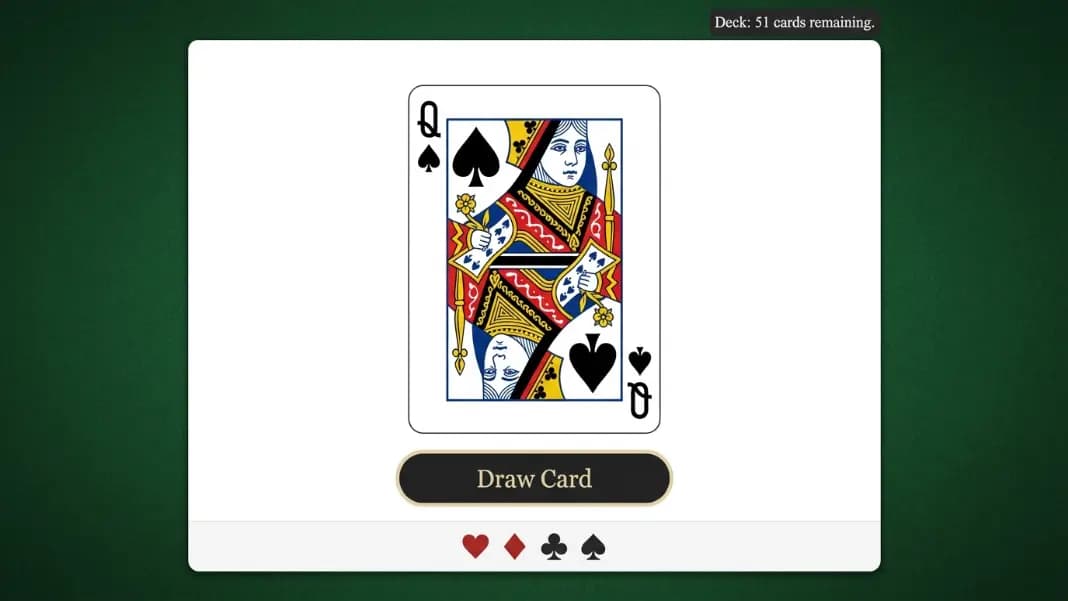
The random card generator draws from a full 52-card deck instantly, using the same cryptographic randomness source that password tools and lottery generators rely on. No physical deck, no question about whether the shuffle was complete, no possibility of someone tracking the cards.
This guide covers how the card generator works technically, what it is actually used for, when to draw one card versus a full hand, and when the card picker is the right tool compared to a dice roller or wheel.
How a random card generator actually works
A digital random card generator builds a virtual representation of a standard 52-card deck, then applies a shuffle algorithm to randomize the order before selecting from it.
The randomization uses the Fisher-Yates shuffle algorithm applied to the full deck array. Fisher-Yates is a method developed by Ronald Fisher and Frank Yates in 1938 and refined for computer implementation by Donald Knuth in 1969. It produces a uniformly random permutation, meaning every possible ordering of all 52 cards is equally likely. No card has a higher or lower probability of appearing than any other.
The random seed for the shuffle comes from the browser's crypto.getRandomValues() Web Cryptography API. This API draws from a hardware-seeded entropy source using timing jitter, hardware sensor noise, and operating system entropy, making the result cryptographically secure. This is a meaningfully stronger source than JavaScript's Math.random(), which generates numbers from an algorithmic pseudo-random sequence that can produce statistically detectable patterns over many draws.
For a full explanation of why these two randomness sources differ and when the difference matters, the guide to how online random generators work covers the technical distinction in detail.
Using the card picker for card games and hand simulation
The most common use is drawing a random card or starting hand for a card game when a physical deck is not available or when you want a guaranteed fair draw.
Card game applications:
Blackjack practice: Draw a random two-card starting hand and work through the basic strategy decision. Hit, stand, double, or split? Generating genuinely random hands removes any unconscious bias in how you deal from a physical deck and forces you to practice decisions across the full range of possible starting combinations.
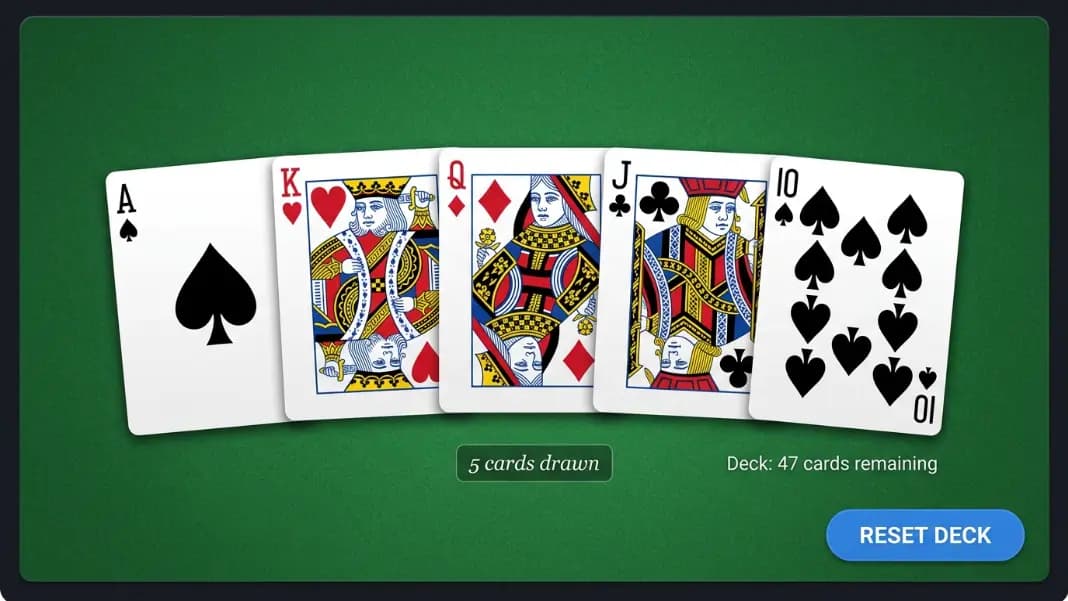
Poker hand analysis: Draw five random cards to analyze a Texas Hold'em starting hand, evaluate Five Card Draw situations, or practice reading hand strength. You can draw additional cards as community cards to work through full street decisions.
General card games: Any game where players draw cards from a central deck, from War to Rummy to Go Fish, can use the generator to simulate draws fairly without needing the physical deck present. This works particularly well for remote games over video calls.
The key mechanic for game use is that cards drawn in one session are not repeated until the deck is reset. Drawing four cards in sequence gives four different cards, exactly as drawing from a physical deck without replacement. The deck count updates with each draw so you can track how many cards remain.
Single card draws versus multiple card draws
Choosing between drawing one card at a time or several at once depends on what the activity requires.
Single card draws are better for:
- Magic trick practice where you need one card to work with per attempt
- Games that draw one card per turn rather than an opening hand
- Daily card practices where one card serves as a prompt or focus for reflection
- Probability demonstrations that show individual draw probabilities one at a time
Multiple card draws are better for:
- Generating a complete starting hand (five cards for poker, seven for rummy, thirteen for bridge)
- Setting up a full game scenario without dealing manually card by card
- Demonstrating dependent probability by showing how a hand affects the remaining deck composition
- Creating random card sets for writing prompts or creative exercises
The important distinction between these modes: multiple draws from the same session come from the same shuffled deck without replacement. If your first four draws were all hearts, the remaining cards in the deck have fewer hearts, making another heart less likely on the fifth draw. This mirrors real deck behavior and is the correct mechanic for most games and probability exercises.
If you need statistically independent draws, reset the deck between each selection. This is equivalent to shuffling the full deck before every draw, which most games do not call for but some probability demonstrations do.
How digital card picking compares to a physical shuffle
A common question is whether the digital generator is actually more random than a manual shuffle. The honest answer is yes, for most people shuffling most of the time.
A riffle shuffle typically requires 7 complete passes to fully randomize a 52-card deck. This was established mathematically by statisticians Persi Diaconis and Dave Bayer in a 1992 paper in the Annals of Applied Probability. Most casual players do 1 to 3 riffles before dealing, which leaves meaningful residual order in the deck from the previous hand. An experienced player who handles cards regularly can sometimes track the relative positions of key cards through a partial shuffle.
A digital generator applies a complete Fisher-Yates shuffle every time using a cryptographic entropy source. There is no residual order from the previous session, no physical tell, and no possibility of tracking card position through the shuffling motion.
For friendly games between people who trust each other, a physical shuffle is fine. For any situation where the fairness of the draw is being observed, contested, or needs to be documented, the digital generator produces a verifiable, unbiased result with no argument possible about whether it was shuffled thoroughly.
Using the card generator for magic tricks and performance practice
Card tricks that involve a spectator picking a card, remembering it, and having it revealed require the magician to practice with genuinely unpredictable cards. Physical deck practice without proper shuffling tends to produce a non-random distribution if the magician controls the cut or the shuffle. A random card generator guarantees a completely unpredictable result each time.
Practice applications for magic:
Force technique drilling: Draw a random target card using the generator, then practice executing a card force to that specific card. Because the generator gives you a genuinely random target before you set up the force, you cannot unconsciously bias your setup toward easier cards.
Reveal sequence practice: Generate a card without knowing what it will be and practice the full reveal sequence. This forces you to execute the reveal correctly regardless of which card appears, rather than mentally rehearsing only with familiar or comfortable cards.
Prediction and memorization tricks: Use the generator to create a random sequence of cards to memorize in advance. The sequence is genuinely random, which tests real memorization rather than a self-selected comfortable pattern.
The practical advantage over a physical deck is speed. You can generate a new random card one-handed on a phone between attempts, without disrupting your physical setup or spending time reshuffling. Practice sessions become faster and cover a wider range of cards than most physical deck practice naturally produces.
Card probability practice with the generator
A standard 52-card deck provides some of the most-cited examples in introductory probability. Seeing the calculations demonstrated with an actual random generator makes the numbers concrete rather than abstract.
Core probabilities from a 52-card deck:
- Probability of drawing any specific card (for example, the queen of hearts): 1 in 52, approximately 1.92 percent
- Probability of drawing any ace on the first draw: 4 in 52, approximately 7.69 percent
- Probability of drawing a heart on the first draw: 13 in 52, exactly 25 percent
- Probability of two consecutive hearts without replacing the first: 13/52 multiplied by 12/51, which equals approximately 5.88 percent
The generator is particularly useful for demonstrating dependent probability, where each draw changes the probabilities of subsequent draws. Drawing ten cards from the same deck without resetting shows how the composition of the remaining deck shifts with each card removed. This is the real-world version of conditional probability, typically written as P(A given B), and seeing it play out with an actual generator is more instructive than working through the formula on paper alone.
For a broader classroom probability setup, combining the card generator with the random number generator and the dice roller lets you build exercises covering both independent events (dice rolls, number picks) and dependent events (sequential card draws from the same deck) without any physical equipment.
When to use the card picker instead of other random tools
The card picker occupies a specific use case: selections that need to come from a structured 52-card deck where cards carry suit and rank information, and where draws from the same session should not repeat.
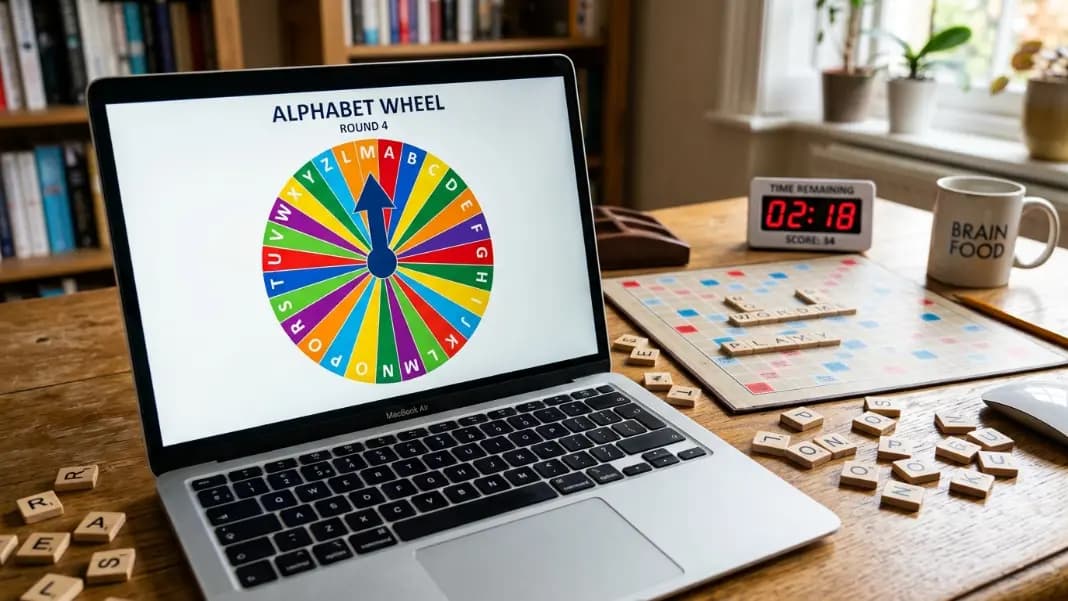
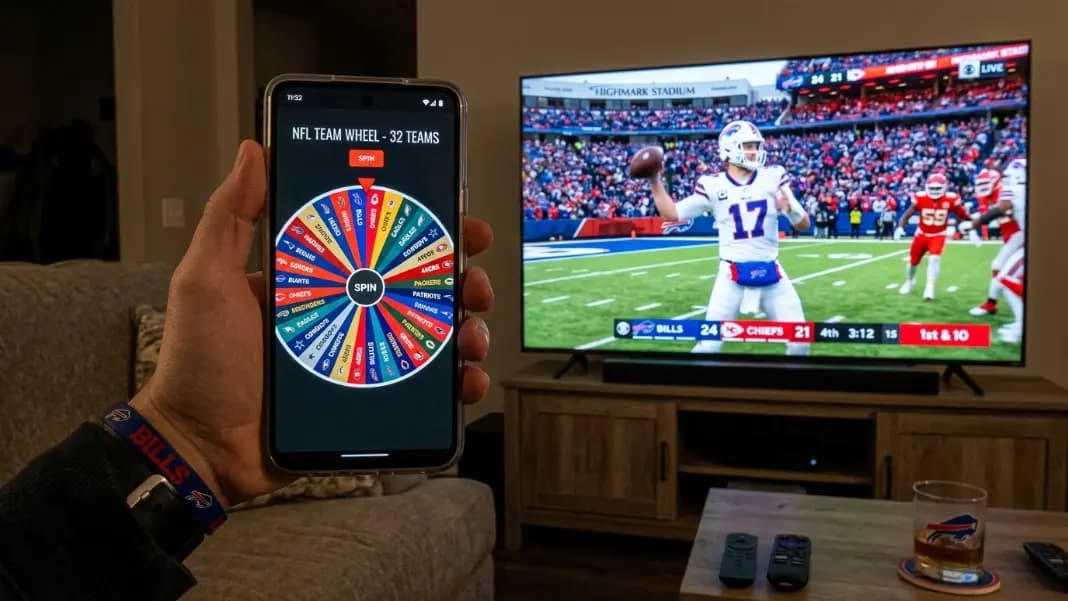
Use the wheel spinner instead when you have a custom list of named options that do not map to a card deck. Team names, tasks, activities, or custom categories work better on a wheel where you control the labels and relative weighting of each option.
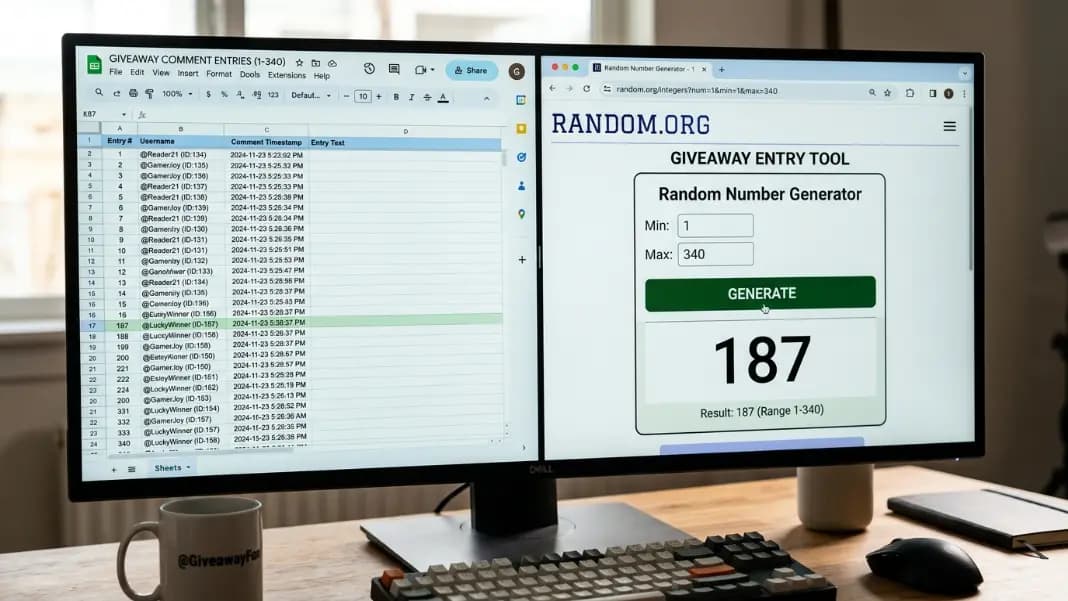
Use the random number generator instead when you need a number from a specific range, a set of lottery-style unique numbers, or high-volume number generation for a raffle or draw. Card draws do not scale well for high-volume numeric outputs.
Use the dice roller instead when your game or activity uses standard polyhedral dice: D4, D6, D8, D10, D12, D20, or D100. Tabletop RPGs and board games that run on dice rolls benefit from the dedicated dice interface rather than trying to map card outcomes to game mechanics.
The card generator fits the space between these tools. It handles the structured visual output of suit and rank, the dependent probability of sequential draws from a finite deck, and the fairness requirements of game and performance contexts, all of which the other tools do not replicate.
The full random tools section has all of these options alongside the card picker, so you can move between them depending on whether your activity calls for a card, a number, a die, or a custom wheel.