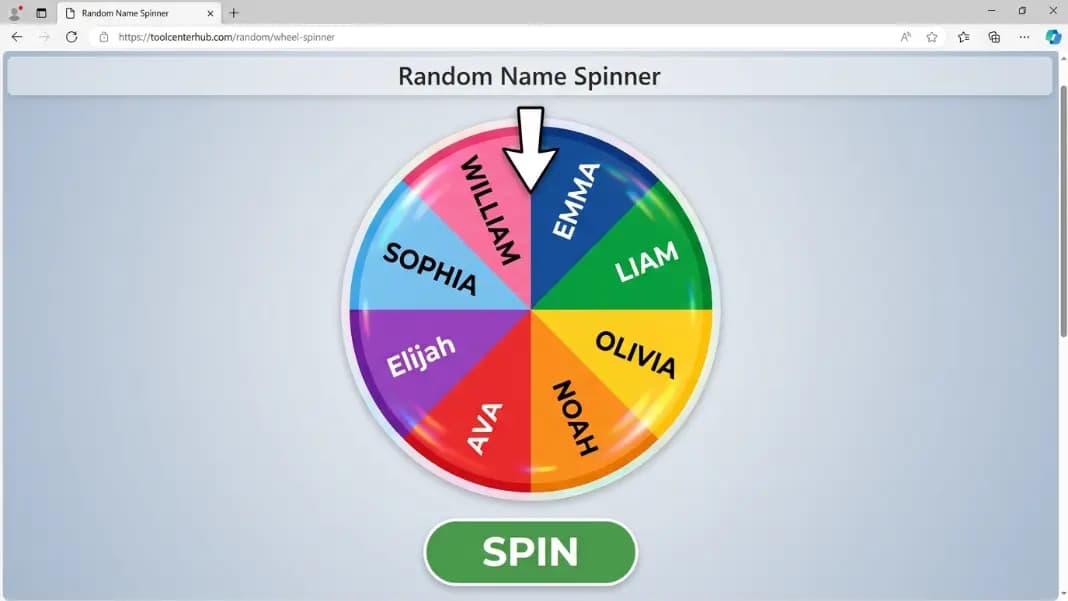
The group has been staring at the streaming homepage for twenty-five minutes. Three suggestions have been vetoed. Two people went to get snacks to avoid participating. One person is now scrolling through a different service. This is not a content problem. Every streaming platform has thousands of titles. This is a decision problem, and a movie wheel spinner resolves it in under a minute.
The wheel spinner accepts any list as segments. Load movie titles, genres, or filmmaker names, spin once, and whatever lands on the screen goes on the screen. Nobody chose it. Nobody can be blamed for picking something mediocre. And the movie starts twenty-five minutes sooner than it otherwise would have.
This guide covers the genre wheel format for most households, the Disney movie wheel for family nights, the date night two-person setup, watchlist rotation, and two formats most movie wheel guides skip entirely: the director wheel for systematic filmography exploration and the decade wheel for structured film history discovery.
Why Veto Cycles Never End Without a Mechanism to Stop Them
The what-to-watch debate has a consistent structure. Nobody wants to be the person who picked something the group ends up not enjoying. So everyone defers. Suggestions get soft vetoes. The scroll continues until someone gives up and says "whatever you want" without meaning it.
A movie wheel spinner short-circuits this by removing the social cost of picking. The wheel chose it. If the film turns out to be a disappointment, the wheel is at fault, not the person who suggested it. This is a small but real psychological shift that makes groups more willing to commit than when a person makes the same recommendation directly.
The wheel only works if the result is treated as final. A wheel that gets re-spun when the result is inconvenient is not a decision tool. It is a theatrical version of the same debate. The section on handling unacceptable results below covers the only legitimate exceptions.
Genre Wheel Spinner: Category First, Then Title
A genre wheel works better than a title wheel for most households because it does not require the group to agree on specific titles before spinning. Agreeing on specific titles creates a smaller version of the same negotiation the wheel was meant to replace.
With a genre wheel, the spin narrows the decision from "any film ever made" to "films in this one category." That constraint alone cuts decision time substantially. Choosing a comedy from a filtered list is a faster decision than choosing any film from a library of thousands.
Genre wheel entries to consider: Action, Comedy, Horror, Sci-Fi, Thriller, Drama, Romance, Documentary, Animation, Crime, Mystery, Fantasy, Foreign Language, Classic (pre-2000), Award Winner. Build the wheel only with genres every member of the group is willing to watch that evening.
The genre wheel adapts before spinning. If it is late and nobody wants something intense, remove Horror and Thriller first. If there are children present, remove Horror, Thriller, and Crime. Adjusting the genre list before the spin is legitimate pre-spin curation. Re-spinning after seeing a result because the landed genre does not appeal is not.
Disney Movie Wheel Spinner: Family Nights Without Negotiation
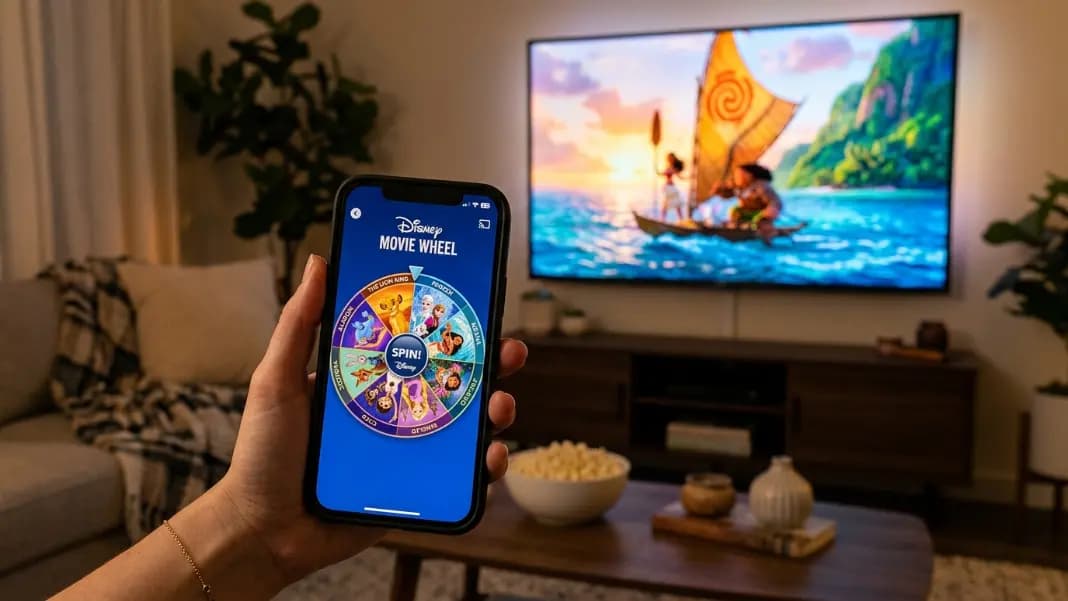
The Disney movie wheel is the title wheel format that makes practical sense for families. The Disney and Pixar catalogue is large enough that choosing from it takes real time, but bounded enough that every title on the wheel is appropriate for the whole group.
Families with children who prefer rewatches will steer toward familiar titles whenever they get input. A wheel loaded with a curated mix of rewatches and unseen films gives each title equal probability, introducing new films without requiring anyone to advocate for them against an established favorite.
Disney and Pixar titles that work on a family movie wheel: The Lion King, Frozen, Moana, Encanto, Tangled, Coco, Zootopia, Finding Nemo, Up, Ratatouille, WALL-E, The Incredibles, Luca, Soul, Turning Red, Brave, Onward, Inside Out, Big Hero 6.
One approach that works consistently: build the family movie wheel together with children. A child who contributed to building the wheel is more likely to accept a result they did not personally hope for, because the wheel contains choices they had input in rather than a list an adult built without them.
Director Wheel: Systematic Filmography Exploration
A director wheel is a format standard movie wheel guides do not cover. It serves a different purpose than the household decision wheel and addresses a different problem: not which film to watch tonight, but how to systematically explore a director's complete body of work without defaulting to the most-referenced titles every time.
Load a single director's complete filmography as wheel segments. Spin to pick which film to watch next. Remove the result after watching and add nothing to replace it. The wheel shrinks by one segment each session until the filmography is finished.
The reason to use a wheel for this rather than a list: selection bias. When exploring a director's work without a mechanism, most people gravitate to the three or four most-discussed films repeatedly. The wheel gives every film in the catalogue equal probability, which surfaces the earlier work, the transitional films, and the lesser-known entries that systematic exploration is supposed to reach but rarely does.
Working director wheels:
Christopher Nolan (12 films): Following, Memento, Insomnia, Batman Begins, The Prestige, The Dark Knight, Inception, The Dark Knight Rises, Interstellar, Dunkirk, Tenet, Oppenheimer. Most people have seen the Batman trilogy and Inception but have not seen Following or Insomnia. The wheel reaches those first films as often as the blockbusters.
Hayao Miyazaki (11 directed films): Nausicaa of the Valley of the Wind, Castle in the Sky, My Neighbor Totoro, Kiki's Delivery Service, Porco Rosso, Princess Mononoke, Spirited Away, Howl's Moving Castle, Ponyo, The Wind Rises, The Boy and the Heron. The wheel surfaces Porco Rosso and The Wind Rises as often as Spirited Away. These are the two Miyazaki films most viewers skip without a mechanism to surface them.
Wes Anderson (11 films): Bottle Rocket, Rushmore, The Royal Tenenbaums, The Life Aquatic, The Darjeeling Limited, Fantastic Mr. Fox, Moonrise Kingdom, The Grand Budapest Hotel, Isle of Dogs, The French Dispatch, Asteroid City. Each film shares the same visual language but differs enough in tone that the order of encounter changes how you read the later ones. Watching Bottle Rocket and Rushmore before The Royal Tenenbaums produces a different reading than starting with The Grand Budapest Hotel.
Bong Joon-ho (7 films): Barking Dogs Never Bite, Memories of Murder, The Host, Mother, Snowpiercer, Okja, Parasite. Watching Memories of Murder and Mother before Parasite produces a different reading of Parasite than arriving cold after the Oscar win. The wheel makes this encounter order random rather than chronological or popularity-ranked.
The director wheel works as a solo format or as a shared multi-session project. A household that spins one entry per movie night and commits to the result works through a complete filmography in eleven or twelve sessions, which is a different kind of shared film experience than random selections from a genre wheel.
Decade Wheel: Structured Film History Without a Fixed Curriculum
A decade wheel approaches discovery differently than a director wheel. Instead of picking specific titles, it assigns a constraint that lets the group find the film themselves.
Setup: Load decade labels as segments: 1950s, 1960s, 1970s, 1980s, 1990s, 2000s, 2010s, 2020s.
How to use it: Spin to assign a decade. Find the highest-rated film from that decade you have not yet seen. Use Letterboxd, Rotten Tomatoes, or the AFI 100 list as a starting point. Watch the film you find within those parameters.
The spin constrains the search without dictating the specific title. This means the group picks the best available option within the assigned decade rather than watching a random low-quality result. Over multiple sessions, the decade wheel becomes a film history curriculum driven entirely by the order of the spins, with no pre-set required reading list.
Why this works better than a fixed film curriculum: a fixed list front-loads the decision of which films belong on it, which is itself a source of disagreement. The decade wheel outsources that decision to external quality rankings after the constraint is already set. The group ends up watching films that a broader critical or audience consensus considers significant, without negotiating the list before every session.
Adjusting the decade wheel: Remove decades already well-covered by spinning them off the wheel. If the 1990s is already well-known to everyone in the group, remove that segment and rotate from the remaining seven. If nobody has seen much pre-1970s cinema, load the 1950s and 1960s twice to give them higher probability until those decades are better represented in the group's viewing history.
Pairing the two wheels: The decade wheel and director wheel work well together. Spin the decade wheel first to assign a decade. Then check whether any director on your director wheel made a significant film in that decade. If yes, spin the director wheel to pick which of that director's films to watch. Two constraints produce a more specific result than either wheel alone.
Movie Wheel for Date Night: Two People, One Result
A two-person movie decision has a different structure than a group decision. With two people there is a deferral cycle rather than a multi-party veto: each person says the other can choose, until one eventually suggests something specific and the other agrees without conviction.
A date night movie wheel with pre-agreed titles ends the deferral cycle. Both people add an equal number of titles to the wheel before sitting down. Neither person vetoes any title the other adds before spinning. If it is going on the wheel, both people agreed to watch it when they added it.
The food decision and the movie decision often run together on date nights. The food wheel spinner guide covers how to set up a dinner decision wheel alongside the movie wheel so both decisions are resolved before the evening properly starts.
Using a Movie Wheel to Work Through a Stalled Watchlist
A watchlist of 80 or 100 titles stops being useful. Choosing from it becomes another version of the what-to-watch problem.
Load 10 to 15 titles from the watchlist onto the wheel at a time rather than all of them. Spin to pick the next film. After watching it, replace that segment with a new title from the full list. This rotation keeps the active wheel fresh without requiring you to manage segments for films you added two years ago and barely remember.
Keep high-priority films off the wheel and scheduled separately. Films you are saving for a specific occasion or mood go on the calendar, not the wheel. The wheel handles the flexible backlog: the films you genuinely want to see but have no strong view on when.
The wheel spinner online guide covers how to save and share wheel configurations if you want a permanent watchlist wheel that reloads without re-entering entries each session.
What to Do When the Wheel Lands on Something Nobody Wants
Three situations justify a re-spin: the film was seen recently by someone who did not disclose this before spinning, the topic is off-limits for a reason shared before spinning, or the film is not available on any service the group has access to that evening.
Preference shift after seeing the result is not a legitimate reason. "Not really in the mood for that" is not a reason. These responses are exactly what the wheel was designed to bypass. If the yes or no wheel spinner is needed to settle whether a result is acceptable before committing, that is a signal the result should have been accepted or the title should not have been on the wheel.
If re-spins happen frequently, the wheel list is the problem. Every segment should be a title the group committed to watching when they added it. Films that were added as maybes or included out of obligation should have been excluded at the list-building stage. Remove titles that consistently produce reluctance when they land. The wheel should contain films the group will actually commit to, not ones they have been quietly avoiding while pretending they might watch someday.
For any random selection that pairs with a movie night, the random tools section has the coin flip for binary choices and the number generator for picking episode starting points in multi-season series. For entertainment selection wheels that follow a similar format applied to a different category, the anime wheel spinner guide covers how the same wheel format manages a watch group working through a shared anime queue. For group activities that need two simultaneous independent random variables, the double wheel spinner guide covers compound results for game formats.